

Part D | 33.1
746 Part D Offshore Technologies
Transport
Energy
Seafood
Strategic
purpose
Recreation
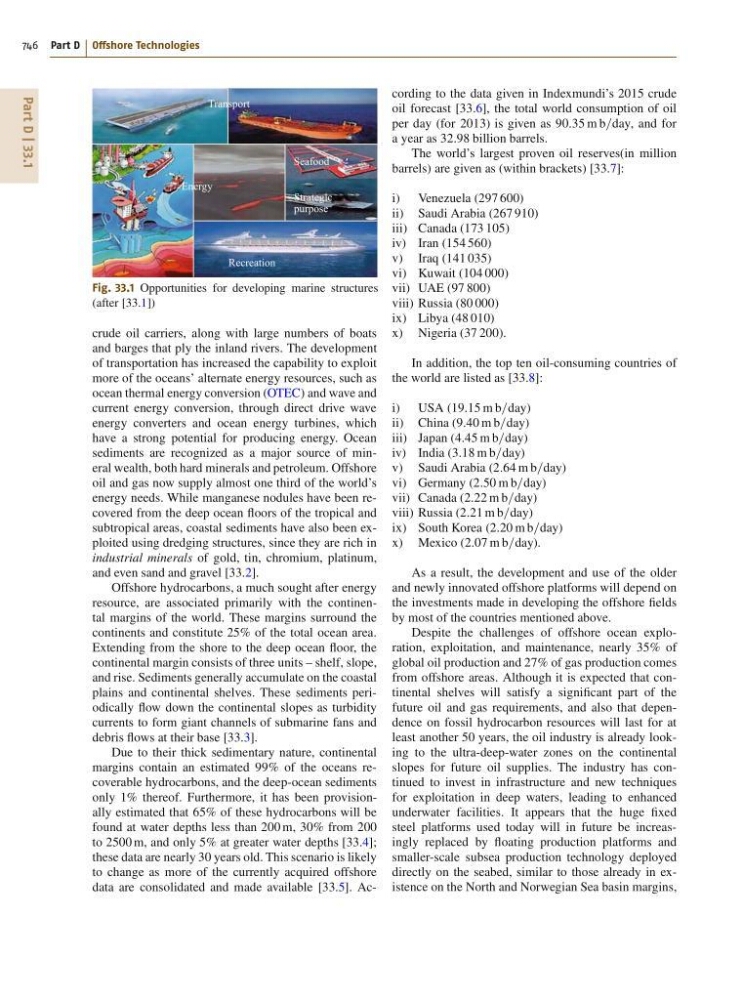
Fig. 33.1 Opportunities for developing marine structures
(after [33.1])
crude oil carriers, along with large numbers of boats
and barges that ply the inland rivers. The development
of transportation has increased the capability to exploit
more of the oceans’ alternate energy resources, such as
ocean thermal energy conversion (OTEC) and wave and
current energy conversion, through direct drive wave
energy converters and ocean energy turbines, which
have a strong potential for producing energy. Ocean
sediments are recognized as a major source of mineral wealth, both hard minerals and petroleum. Offshore
oil and gas now supply almost one third of the world’s
energy needs. While manganese nodules have been recovered from the deep ocean floors of the tropical and
subtropical areas, coastal sediments have also been exploited using dredging structures, since they are rich in
industrial minerals of gold, tin, chromium, platinum,
and even sand and gravel [33.2].
Offshore hydrocarbons, a much sought after energy
resource, are associated primarily with the continental margins of the world. These margins surround the
continents and constitute 25% of the total ocean area.
Extending from the shore to the deep ocean floor, the
continental margin consists of three units – shelf, slope,
and rise. Sediments generally accumulate on the coastal
plains and continental shelves. These sediments periodically flow down the continental slopes as turbidity
currents to form giant channels of submarine fans and
debris flows at their base [33.3].
Due to their thick sedimentary nature, continental
margins contain an estimated 99% of the oceans recoverable hydrocarbons, and the deep-ocean sediments
only 1% thereof. Furthermore, it has been provisionally estimated that 65% of these hydrocarbons will be
found at water depths less than 200 m, 30% from 200
to 2500 m, and only 5% at greater water depths [33.4];
these data are nearly 30 years old. This scenario is likely
to change as more of the currently acquired offshore
data are consolidated and made available [33.5]. According to the data given in Indexmundi’s 2015 crude
oil forecast [33.6], the total world consumption of oil
per day (for 2013) is given as 90:35 m b=day, and for
a year as 32.98 billion barrels.
The world’s largest proven oil reserves(in million
barrels) are given as (within brackets) [33.7]:
i) Venezuela (297 600)
ii) Saudi Arabia (267 910)
iii) Canada (173 105)
iv) Iran (154 560)
v) Iraq (141 035)
vi) Kuwait (104 000)
vii) UAE (97 800)
viii) Russia (80 000)
ix) Libya (48 010)
x) Nigeria (37 200).
In addition, the top ten oil-consuming countries of
the world are listed as [33.8]:
i) USA (19:15 m b=day)
ii) China (9:40 m b=day)
iii) Japan (4:45 m b=day)
iv) India (3:18 m b=day)
v) Saudi Arabia (2:64 m b=day)
vi) Germany (2:50 m b=day)
vii) Canada (2:22 m b=day)
viii) Russia (2:21 m b=day)
ix) South Korea (2:20 m b=day)
x) Mexico (2:07 m b=day).
As a result, the development and use of the older
and newly innovated offshore platforms will depend on
the investments made in developing the offshore fields
by most of the countries mentioned above.
Despite the challenges of offshore ocean exploration, exploitation, and maintenance, nearly 35% of
global oil production and 27% of gas production comes
from offshore areas. Although it is expected that continental shelves will satisfy a significant part of the
future oil and gas requirements, and also that dependence on fossil hydrocarbon resources will last for at
least another 50 years, the oil industry is already looking to the ultra-deep-water zones on the continental
slopes for future oil supplies. The industry has continued to invest in infrastructure and new techniques
for exploitation in deep waters, leading to enhanced
underwater facilities. It appears that the huge fixed
steel platforms used today will in future be increasingly replaced by floating production platforms and
smaller-scale subsea production technology deployed
directly on the seabed, similar to those already in existence on the North and Norwegian Sea basin margins,