

Part C | 29.2
636 Part C Coastal Design
Beach nourishment
Profile or berm
nourishment
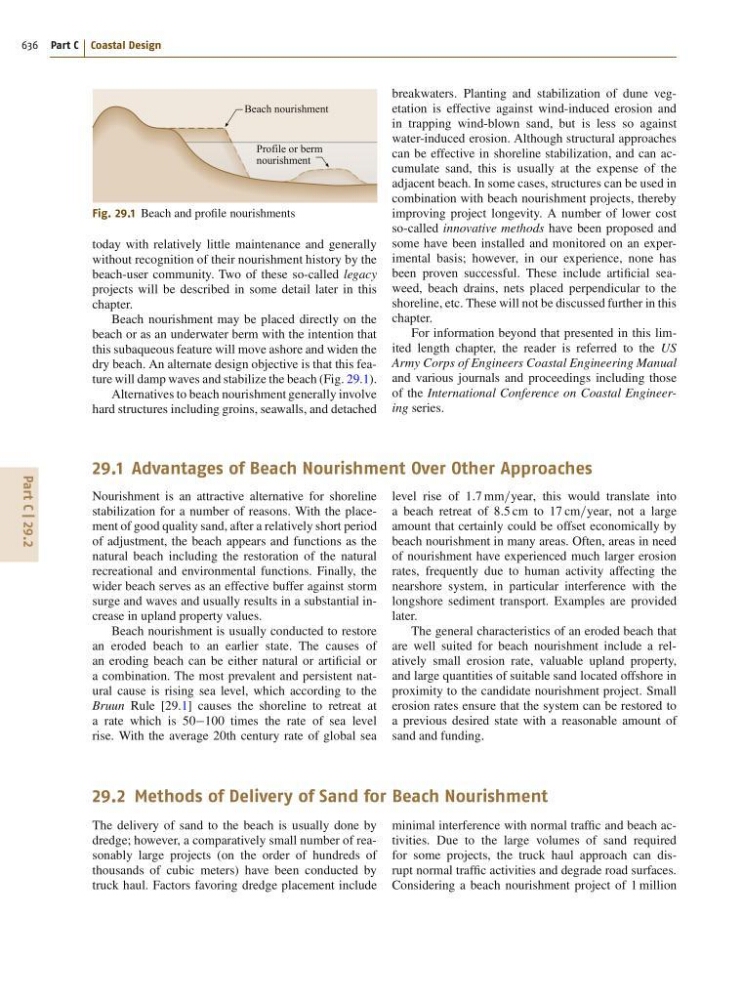
Fig. 29.1 Beach and profile nourishments
today with relatively little maintenance and generally
without recognition of their nourishment history by the
beach-user community. Two of these so-called legacy
projects will be described in some detail later in this
chapter.
Beach nourishment may be placed directly on the
beach or as an underwater berm with the intention that
this subaqueous feature will move ashore and widen the
dry beach. An alternate design objective is that this feature will damp waves and stabilize the beach (Fig. 29.1).
Alternatives to beach nourishment generally involve
hard structures including groins, seawalls, and detached
breakwaters. Planting and stabilization of dune vegetation is effective against wind-induced erosion and
in trapping wind-blown sand, but is less so against
water-induced erosion. Although structural approaches
can be effective in shoreline stabilization, and can accumulate sand, this is usually at the expense of the
adjacent beach. In some cases, structures can be used in
combination with beach nourishment projects, thereby
improving project longevity. A number of lower cost
so-called innovative methods have been proposed and
some have been installed and monitored on an experimental basis; however, in our experience, none has
been proven successful. These include artificial seaweed, beach drains, nets placed perpendicular to the
shoreline, etc. These will not be discussed further in this
chapter.
For information beyond that presented in this limited length chapter, the reader is referred to the US
Army Corps of Engineers Coastal Engineering Manual
and various journals and proceedings including those
of the International Conference on Coastal Engineering series.
29.1 Advantages of Beach Nourishment Over Other Approaches
Nourishment is an attractive alternative for shoreline
stabilization for a number of reasons. With the placement of good quality sand, after a relatively short period
of adjustment, the beach appears and functions as the
natural beach including the restoration of the natural
recreational and environmental functions. Finally, the
wider beach serves as an effective buffer against storm
surge and waves and usually results in a substantial increase in upland property values.
Beach nourishment is usually conducted to restore
an eroded beach to an earlier state. The causes of
an eroding beach can be either natural or artificial or
a combination. The most prevalent and persistent natural cause is rising sea level, which according to the
Bruun Rule [29.1] causes the shoreline to retreat at
a rate which is 50100 times the rate of sea level
rise. With the average 20th century rate of global sea
level rise of 1:7 mm=year, this would translate into
a beach retreat of 8:5 cm to 17 cm=year, not a large
amount that certainly could be offset economically by
beach nourishment in many areas. Often, areas in need
of nourishment have experienced much larger erosion
rates, frequently due to human activity affecting the
nearshore system, in particular interference with the
longshore sediment transport. Examples are provided
later.
The general characteristics of an eroded beach that
are well suited for beach nourishment include a relatively small erosion rate, valuable upland property,
and large quantities of suitable sand located offshore in
proximity to the candidate nourishment project. Small
erosion rates ensure that the system can be restored to
a previous desired state with a reasonable amount of
sand and funding.
29.2 Methods of Delivery of Sand for Beach Nourishment
The delivery of sand to the beach is usually done by
dredge; however, a comparatively small number of reasonably large projects (on the order of hundreds of
thousands of cubic meters) have been conducted by
truck haul. Factors favoring dredge placement include
minimal interference with normal traffic and beach activities. Due to the large volumes of sand required
for some projects, the truck haul approach can disrupt normal traffic activities and degrade road surfaces.
Considering a beach nourishment project of 1 million