

Part C | 26.A
592 Part C Coastal Design
Risk analysis
Risk assessment
Risk management
Risk evaluation
Risk communication
Risk identification
Risk estimation
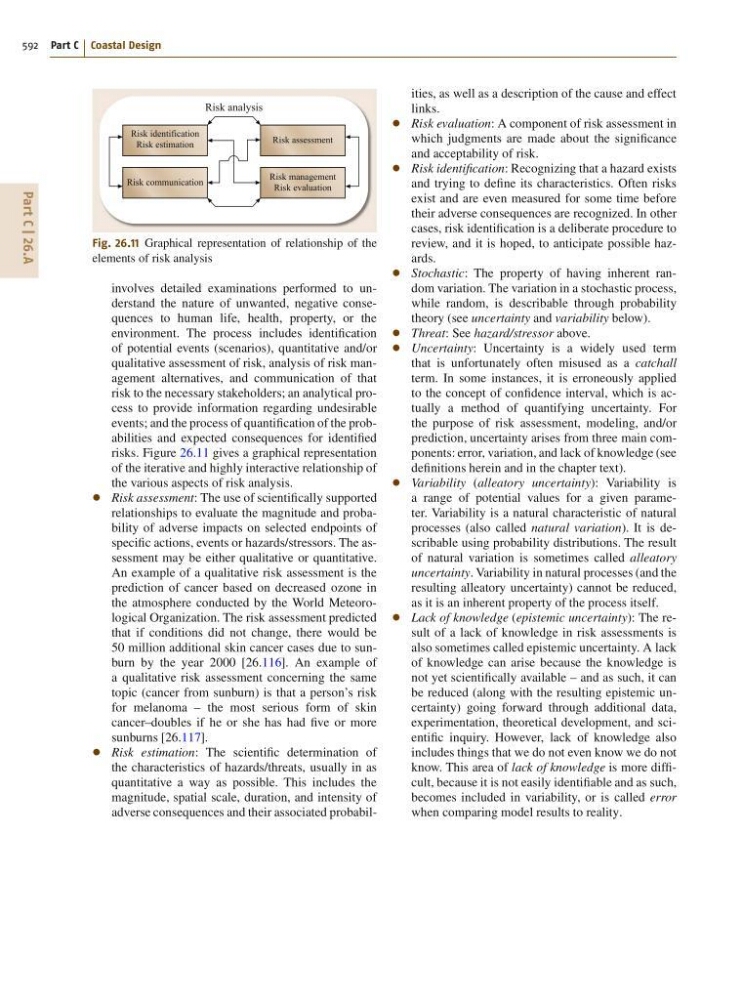
Fig. 26.11 Graphical representation of relationship of the
elements of risk analysis
involves detailed examinations performed to understand the nature of unwanted, negative consequences to human life, health, property, or the
environment. The process includes identification
of potential events (scenarios), quantitative and/or
qualitative assessment of risk, analysis of risk management alternatives, and communication of that
risk to the necessary stakeholders; an analytical process to provide information regarding undesirable
events; and the process of quantification of the probabilities and expected consequences for identified
risks. Figure 26.11 gives a graphical representation
of the iterative and highly interactive relationship of
the various aspects of risk analysis.
Risk assessment: The use of scientifically supported
relationships to evaluate the magnitude and probability of adverse impacts on selected endpoints of
specific actions, events or hazards/stressors. The assessment may be either qualitative or quantitative.
An example of a qualitative risk assessment is the
prediction of cancer based on decreased ozone in
the atmosphere conducted by the World Meteorological Organization. The risk assessment predicted
that if conditions did not change, there would be
50 million additional skin cancer cases due to sunburn by the year 2000 [26.116]. An example of
a qualitative risk assessment concerning the same
topic (cancer from sunburn) is that a person’s risk
for melanoma – the most serious form of skin
cancer–doubles if he or she has had five or more
sunburns [26.117].
Risk estimation: The scientific determination of
the characteristics of hazards/threats, usually in as
quantitative a way as possible. This includes the
magnitude, spatial scale, duration, and intensity of
adverse consequences and their associated probabilities, as well as a description of the cause and effect
links.
Risk evaluation: A component of risk assessment in
which judgments are made about the significance
and acceptability of risk.
Risk identification: Recognizing that a hazard exists
and trying to define its characteristics. Often risks
exist and are even measured for some time before
their adverse consequences are recognized. In other
cases, risk identification is a deliberate procedure to
review, and it is hoped, to anticipate possible hazards.
Stochastic: The property of having inherent random variation. The variation in a stochastic process,
while random, is describable through probability
theory (see uncertainty and variability below).
Threat: See hazard/stressor above.
Uncertainty: Uncertainty is a widely used term
that is unfortunately often misused as a catchall
term. In some instances, it is erroneously applied
to the concept of confidence interval, which is actually a method of quantifying uncertainty. For
the purpose of risk assessment, modeling, and/or
prediction, uncertainty arises from three main components: error, variation, and lack of knowledge (see
definitions herein and in the chapter text).
Variability (alleatory uncertainty): Variability is
a range of potential values for a given parameter. Variability is a natural characteristic of natural
processes (also called natural variation). It is describable using probability distributions. The result
of natural variation is sometimes called alleatory
uncertainty. Variability in natural processes (and the
resulting alleatory uncertainty) cannot be reduced,
as it is an inherent property of the process itself.
Lack of knowledge (epistemic uncertainty): The result of a lack of knowledge in risk assessments is
also sometimes called epistemic uncertainty. A lack
of knowledge can arise because the knowledge is
not yet scientifically available – and as such, it can
be reduced (along with the resulting epistemic uncertainty) going forward through additional data,
experimentation, theoretical development, and scientific inquiry. However, lack of knowledge also
includes things that we do not even know we do not
know. This area of lack of knowledge is more difficult, because it is not easily identifiable and as such,
becomes included in variability, or is called error
when comparing model results to reality.