

Part B | 23.3
522 Part B Autonomous Ocean Vehicles, Subsystems and Control
–50 m
0 m
50 m
a)
0 m
–50 m
–50 m
0 m
50 m
b)
0 m
–50 m
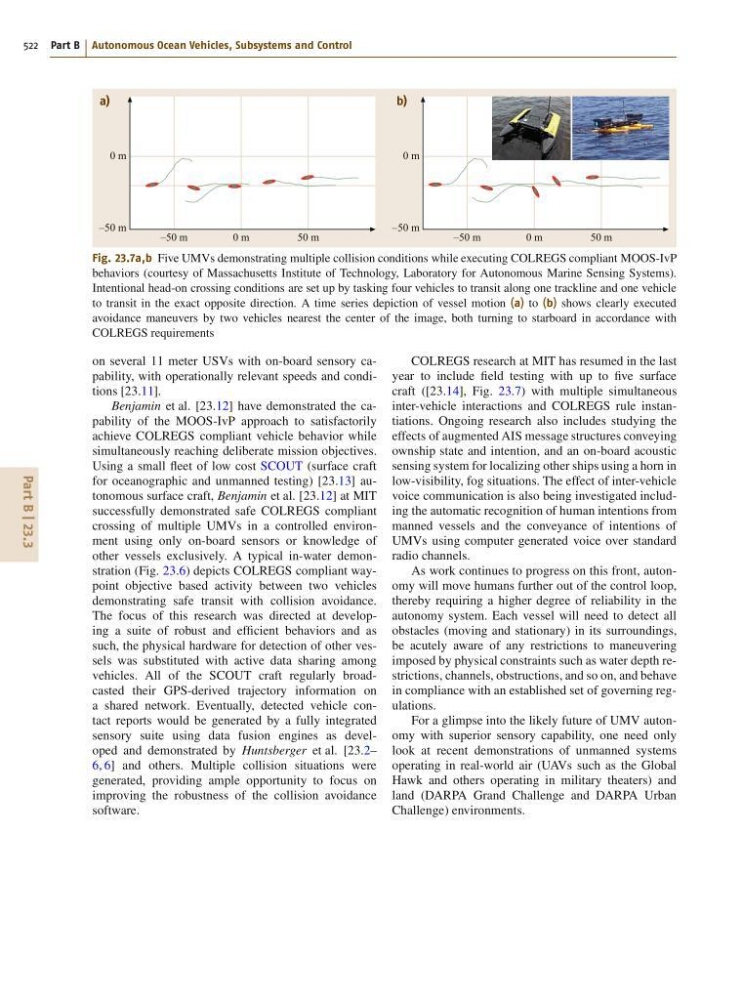
Fig. 23.7a,b Five UMVs demonstrating multiple collision conditions while executing COLREGS compliant MOOS-IvP
behaviors (courtesy of Massachusetts Institute of Technology, Laboratory for Autonomous Marine Sensing Systems).
Intentional head-on crossing conditions are set up by tasking four vehicles to transit along one trackline and one vehicle
to transit in the exact opposite direction. A time series depiction of vessel motion (a) to (b) shows clearly executed
avoidance maneuvers by two vehicles nearest the center of the image, both turning to starboard in accordance with
COLREGS requirements
on several 11 meter USVs with on-board sensory capability, with operationally relevant speeds and conditions [23.11].
Benjamin et al. [23.12] have demonstrated the capability of the MOOS-IvP approach to satisfactorily
achieve COLREGS compliant vehicle behavior while
simultaneously reaching deliberate mission objectives.
Using a small fleet of low cost SCOUT (surface craft
for oceanographic and unmanned testing) [23.13] autonomous surface craft, Benjamin et al. [23.12] at MIT
successfully demonstrated safe COLREGS compliant
crossing of multiple UMVs in a controlled environment using only on-board sensors or knowledge of
other vessels exclusively. A typical in-water demonstration (Fig. 23.6) depicts COLREGS compliant waypoint objective based activity between two vehicles
demonstrating safe transit with collision avoidance.
The focus of this research was directed at developing a suite of robust and efficient behaviors and as
such, the physical hardware for detection of other vessels was substituted with active data sharing among
vehicles. All of the SCOUT craft regularly broadcasted their GPS-derived trajectory information on
a shared network. Eventually, detected vehicle contact reports would be generated by a fully integrated
sensory suite using data fusion engines as developed and demonstrated by Huntsberger et al. [23.2–
6, 6] and others. Multiple collision situations were
generated, providing ample opportunity to focus on
improving the robustness of the collision avoidance
software.
COLREGS research at MIT has resumed in the last
year to include field testing with up to five surface
craft ([23.14], Fig. 23.7) with multiple simultaneous
inter-vehicle interactions and COLREGS rule instantiations. Ongoing research also includes studying the
effects of augmented AIS message structures conveying
ownship state and intention, and an on-board acoustic
sensing system for localizing other ships using a horn in
low-visibility, fog situations. The effect of inter-vehicle
voice communication is also being investigated including the automatic recognition of human intentions from
manned vessels and the conveyance of intentions of
UMVs using computer generated voice over standard
radio channels.
As work continues to progress on this front, autonomy will move humans further out of the control loop,
thereby requiring a higher degree of reliability in the
autonomy system. Each vessel will need to detect all
obstacles (moving and stationary) in its surroundings,
be acutely aware of any restrictions to maneuvering
imposed by physical constraints such as water depth restrictions, channels, obstructions, and so on, and behave
in compliance with an established set of governing regulations.
For a glimpse into the likely future of UMV autonomy with superior sensory capability, one need only
look at recent demonstrations of unmanned systems
operating in real-world air (UAVs such as the Global
Hawk and others operating in military theaters) and
land (DARPA Grand Challenge and DARPA Urban
Challenge) environments.
522 Part B Autonomous Ocean Vehicles, Subsystems and Control
–50 m
0 m
50 m
a)
0 m
–50 m
–50 m
0 m
50 m
b)
0 m
–50 m
Fig. 23.7a,b Five UMVs demonstrating multiple collision conditions while executing COLREGS compliant MOOS-IvP
behaviors (courtesy of Massachusetts Institute of Technology, Laboratory for Autonomous Marine Sensing Systems).
Intentional head-on crossing conditions are set up by tasking four vehicles to transit along one trackline and one vehicle
to transit in the exact opposite direction. A time series depiction of vessel motion (a) to (b) shows clearly executed
avoidance maneuvers by two vehicles nearest the center of the image, both turning to starboard in accordance with
COLREGS requirements
on several 11 meter USVs with on-board sensory capability, with operationally relevant speeds and conditions [23.11].
Benjamin et al. [23.12] have demonstrated the capability of the MOOS-IvP approach to satisfactorily
achieve COLREGS compliant vehicle behavior while
simultaneously reaching deliberate mission objectives.
Using a small fleet of low cost SCOUT (surface craft
for oceanographic and unmanned testing) [23.13] autonomous surface craft, Benjamin et al. [23.12] at MIT
successfully demonstrated safe COLREGS compliant
crossing of multiple UMVs in a controlled environment using only on-board sensors or knowledge of
other vessels exclusively. A typical in-water demonstration (Fig. 23.6) depicts COLREGS compliant waypoint objective based activity between two vehicles
demonstrating safe transit with collision avoidance.
The focus of this research was directed at developing a suite of robust and efficient behaviors and as
such, the physical hardware for detection of other vessels was substituted with active data sharing among
vehicles. All of the SCOUT craft regularly broadcasted their GPS-derived trajectory information on
a shared network. Eventually, detected vehicle contact reports would be generated by a fully integrated
sensory suite using data fusion engines as developed and demonstrated by Huntsberger et al. [23.2–
6, 6] and others. Multiple collision situations were
generated, providing ample opportunity to focus on
improving the robustness of the collision avoidance
software.
COLREGS research at MIT has resumed in the last
year to include field testing with up to five surface
craft ([23.14], Fig. 23.7) with multiple simultaneous
inter-vehicle interactions and COLREGS rule instantiations. Ongoing research also includes studying the
effects of augmented AIS message structures conveying
ownship state and intention, and an on-board acoustic
sensing system for localizing other ships using a horn in
low-visibility, fog situations. The effect of inter-vehicle
voice communication is also being investigated including the automatic recognition of human intentions from
manned vessels and the conveyance of intentions of
UMVs using computer generated voice over standard
radio channels.
As work continues to progress on this front, autonomy will move humans further out of the control loop,
thereby requiring a higher degree of reliability in the
autonomy system. Each vessel will need to detect all
obstacles (moving and stationary) in its surroundings,
be acutely aware of any restrictions to maneuvering
imposed by physical constraints such as water depth restrictions, channels, obstructions, and so on, and behave
in compliance with an established set of governing regulations.
For a glimpse into the likely future of UMV autonomy with superior sensory capability, one need only
look at recent demonstrations of unmanned systems
operating in real-world air (UAVs such as the Global
Hawk and others operating in military theaters) and
land (DARPA Grand Challenge and DARPA Urban
Challenge) environments.