

Part B | 20.1
460 Part B Autonomous Ocean Vehicles, Subsystems and Control
10
3
10
6
10
9
10
15
10
12
Communication capacity (byte km/min)
Distributed
autonomous control
Situational awareness
forecasting
maneuverability
tactical adaptation
collaboration
environmental adaptation
Intelligent
autonomy
System
performance
Space
exploration
Land and air
networks
Sub
Undersea
networks
Centralized
operator control
Sensor performance
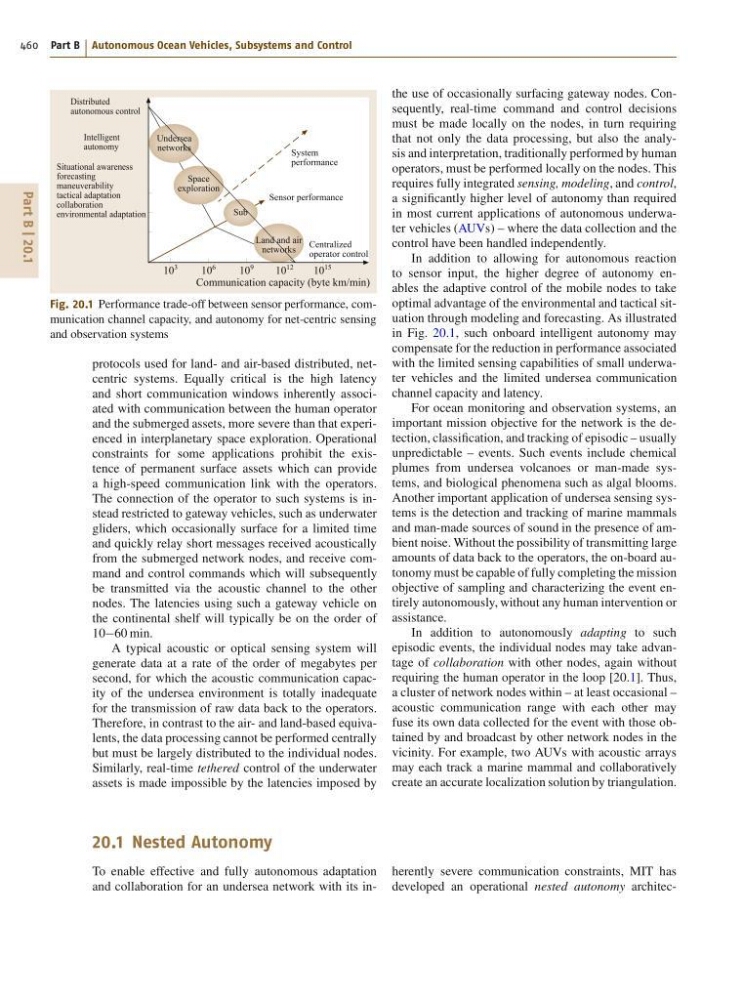
Fig. 20.1 Performance trade-off between sensor performance, communication channel capacity, and autonomy for net-centric sensing
and observation systems
protocols used for land- and air-based distributed, netcentric systems. Equally critical is the high latency
and short communication windows inherently associated with communication between the human operator
and the submerged assets, more severe than that experienced in interplanetary space exploration. Operational
constraints for some applications prohibit the existence of permanent surface assets which can provide
a high-speed communication link with the operators.
The connection of the operator to such systems is instead restricted to gateway vehicles, such as underwater
gliders, which occasionally surface for a limited time
and quickly relay short messages received acoustically
from the submerged network nodes, and receive command and control commands which will subsequently
be transmitted via the acoustic channel to the other
nodes. The latencies using such a gateway vehicle on
the continental shelf will typically be on the order of
1060 min.
A typical acoustic or optical sensing system will
generate data at a rate of the order of megabytes per
second, for which the acoustic communication capacity of the undersea environment is totally inadequate
for the transmission of raw data back to the operators.
Therefore, in contrast to the air- and land-based equivalents, the data processing cannot be performed centrally
but must be largely distributed to the individual nodes.
Similarly, real-time tethered control of the underwater
assets is made impossible by the latencies imposed by
the use of occasionally surfacing gateway nodes. Consequently, real-time command and control decisions
must be made locally on the nodes, in turn requiring
that not only the data processing, but also the analysis and interpretation, traditionally performed by human
operators, must be performed locally on the nodes. This
requires fully integrated sensing, modeling, and control,
a significantly higher level of autonomy than required
in most current applications of autonomous underwater vehicles (AUVs) – where the data collection and the
control have been handled independently.
In addition to allowing for autonomous reaction
to sensor input, the higher degree of autonomy enables the adaptive control of the mobile nodes to take
optimal advantage of the environmental and tactical situation through modeling and forecasting. As illustrated
in Fig. 20.1, such onboard intelligent autonomy may
compensate for the reduction in performance associated
with the limited sensing capabilities of small underwater vehicles and the limited undersea communication
channel capacity and latency.
For ocean monitoring and observation systems, an
important mission objective for the network is the detection, classification, and tracking of episodic – usually
unpredictable – events. Such events include chemical
plumes from undersea volcanoes or man-made systems, and biological phenomena such as algal blooms.
Another important application of undersea sensing systems is the detection and tracking of marine mammals
and man-made sources of sound in the presence of ambient noise. Without the possibility of transmitting large
amounts of data back to the operators, the on-board autonomy must be capable of fully completing the mission
objective of sampling and characterizing the event entirely autonomously, without any human intervention or
assistance.
In addition to autonomously adapting to such
episodic events, the individual nodes may take advantage of collaboration with other nodes, again without
requiring the human operator in the loop [20.1]. Thus,
a cluster of network nodes within – at least occasional –
acoustic communication range with each other may
fuse its own data collected for the event with those obtained by and broadcast by other network nodes in the
vicinity. For example, two AUVs with acoustic arrays
may each track a marine mammal and collaboratively
create an accurate localization solution by triangulation.
20.1 Nested Autonomy
To enable effective and fully autonomous adaptation
and collaboration for an undersea network with its inherently severe communication constraints, MIT has
developed an operational nested autonomy architec-
460 Part B Autonomous Ocean Vehicles, Subsystems and Control
10
3
10
6
10
9
10
15
10
12
Communication capacity (byte km/min)
Distributed
autonomous control
Situational awareness
forecasting
maneuverability
tactical adaptation
collaboration
environmental adaptation
Intelligent
autonomy
System
performance
Space
exploration
Land and air
networks
Sub
Undersea
networks
Centralized
operator control
Sensor performance
Fig. 20.1 Performance trade-off between sensor performance, communication channel capacity, and autonomy for net-centric sensing
and observation systems
protocols used for land- and air-based distributed, netcentric systems. Equally critical is the high latency
and short communication windows inherently associated with communication between the human operator
and the submerged assets, more severe than that experienced in interplanetary space exploration. Operational
constraints for some applications prohibit the existence of permanent surface assets which can provide
a high-speed communication link with the operators.
The connection of the operator to such systems is instead restricted to gateway vehicles, such as underwater
gliders, which occasionally surface for a limited time
and quickly relay short messages received acoustically
from the submerged network nodes, and receive command and control commands which will subsequently
be transmitted via the acoustic channel to the other
nodes. The latencies using such a gateway vehicle on
the continental shelf will typically be on the order of
1060 min.
A typical acoustic or optical sensing system will
generate data at a rate of the order of megabytes per
second, for which the acoustic communication capacity of the undersea environment is totally inadequate
for the transmission of raw data back to the operators.
Therefore, in contrast to the air- and land-based equivalents, the data processing cannot be performed centrally
but must be largely distributed to the individual nodes.
Similarly, real-time tethered control of the underwater
assets is made impossible by the latencies imposed by
the use of occasionally surfacing gateway nodes. Consequently, real-time command and control decisions
must be made locally on the nodes, in turn requiring
that not only the data processing, but also the analysis and interpretation, traditionally performed by human
operators, must be performed locally on the nodes. This
requires fully integrated sensing, modeling, and control,
a significantly higher level of autonomy than required
in most current applications of autonomous underwater vehicles (AUVs) – where the data collection and the
control have been handled independently.
In addition to allowing for autonomous reaction
to sensor input, the higher degree of autonomy enables the adaptive control of the mobile nodes to take
optimal advantage of the environmental and tactical situation through modeling and forecasting. As illustrated
in Fig. 20.1, such onboard intelligent autonomy may
compensate for the reduction in performance associated
with the limited sensing capabilities of small underwater vehicles and the limited undersea communication
channel capacity and latency.
For ocean monitoring and observation systems, an
important mission objective for the network is the detection, classification, and tracking of episodic – usually
unpredictable – events. Such events include chemical
plumes from undersea volcanoes or man-made systems, and biological phenomena such as algal blooms.
Another important application of undersea sensing systems is the detection and tracking of marine mammals
and man-made sources of sound in the presence of ambient noise. Without the possibility of transmitting large
amounts of data back to the operators, the on-board autonomy must be capable of fully completing the mission
objective of sampling and characterizing the event entirely autonomously, without any human intervention or
assistance.
In addition to autonomously adapting to such
episodic events, the individual nodes may take advantage of collaboration with other nodes, again without
requiring the human operator in the loop [20.1]. Thus,
a cluster of network nodes within – at least occasional –
acoustic communication range with each other may
fuse its own data collected for the event with those obtained by and broadcast by other network nodes in the
vicinity. For example, two AUVs with acoustic arrays
may each track a marine mammal and collaboratively
create an accurate localization solution by triangulation.
20.1 Nested Autonomy
To enable effective and fully autonomous adaptation
and collaboration for an undersea network with its inherently severe communication constraints, MIT has
developed an operational nested autonomy architec-