

Acoustic Communication 15.3 Existing Technology 363
Part B | 15.3
Table 15.1 A few acoustic modems
Product name
Max bit rate [bps]
Range [m]
Frequency band [kHz]
Teledyne Benthos ATM-916-MF1 [15.15]
15360
6000
16–21
WHOI Micromodem [15.16]
5400
3000
22.5–27.5
Linkquest UWM 1000 [15.17]
7000
1200
27–45
Evologics S2C R 48/78 [15.18]
31200
2000
48–78
Sercel MATS 3G 34 kHz [15.19]
24600
5000
30–39
L3 Oceania GPM-300 [15.20]
1000
45000
not specified
Tritech Micron Data Modem [15.21]
40
500
20–28
FAU Hermes [15.22]
87768
180
262–375
presented here is of excellent quality and reputation
and uses field-tested technologies. This short section
cannot provide a complete description of the acoustic
communications field. Many other acoustic communication systems have been developed over the past
three decades that could not be included due to space
limitations. Because underwater acoustic modems are
very specialized pieces of equipment produced in limited numbers, standardizing hardware and protocols
is a work in progress. Although most developers and
manufacturers use proprietary hardware and protocols,
a compact control language [15.23] has been developed
to make optimal use of the limited acoustic modem data
throughput installed on unmanned underwater vehicles.
In addition, three frequency bands, common between
a large number of underwater acoustic modems, have
been identified. Finally, some efforts have been made
in developing some level of inter-operability between
underwater acoustic modems produced by different
manufacturers. Although these efforts are encouraging,
combining devices originating from different companies in the same network is usually not desirable.
15.3.3 Field Tests
Field testing is a key step in evaluating the performance
of an underwater acoustic communication system. Because of the extensive cost of such tests (especially in
(1)
(4)
(3)
(2)
(5)
(6)
(7)
Fig. 15.2 A few examples of state-of-the-art underwater acoustic modems: (1) Evologics S2C R 48/78 (after [15.18]);
(2) FAU Hermes (after [15.22]); (3) Sercel MATS 3G 34 kHz (after [15.19]); (4) WHOI Micromodem (after [15.16]); (5)
Tritech Micron Data Modem (after [15.21]); (6) Teledyne Benthos ATM-916-MF1 (after [15.15]); (7) Linkquest UWM
1000 (after [15.17])
0
2
4
6
8
1 0
Data rate (baud)
Range (km)
30 000
25 000
20 000
15 000
10 000
5000
0
40–100 kbps @ 0.1 km
1 kbps @ 89 km
500 kbps @ 0.06 km
200 kbps @ 0.1 km
Range · rate
= 40 km–kbps
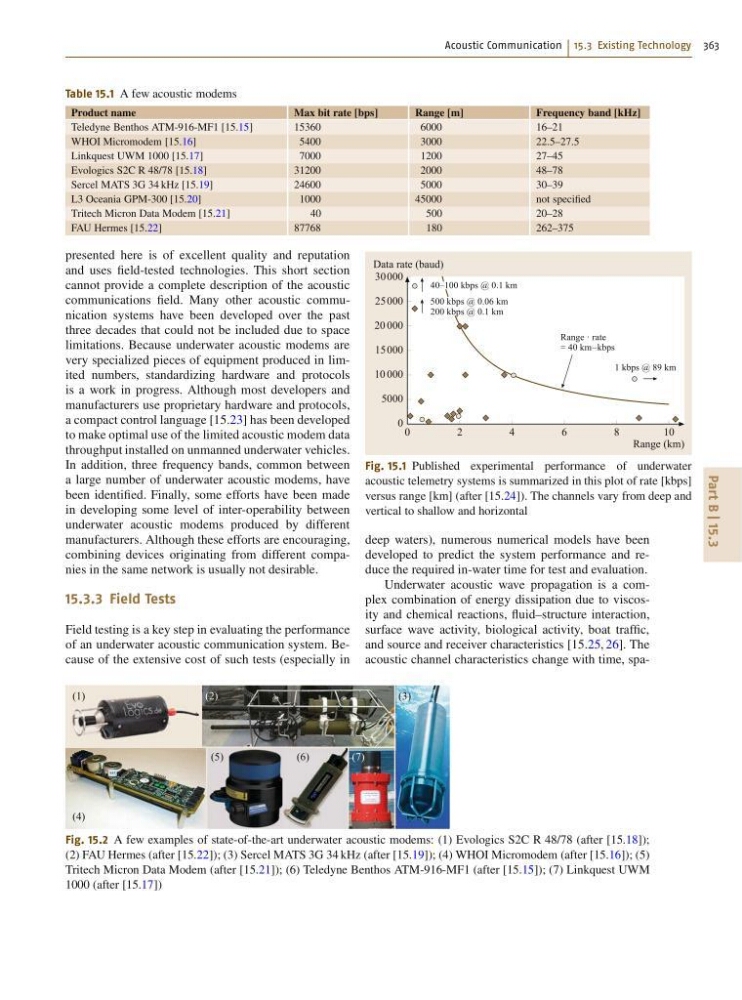
Fig. 15.1 Published experimental performance of underwater
acoustic telemetry systems is summarized in this plot of rate [kbps]
versus range [km] (after [15.24]). The channels vary from deep and
vertical to shallow and horizontal
deep waters), numerous numerical models have been
developed to predict the system performance and reduce the required in-water time for test and evaluation.
Underwater acoustic wave propagation is a complex combination of energy dissipation due to viscosity and chemical reactions, fluid–structure interaction,
surface wave activity, biological activity, boat traffic,
and source and receiver characteristics [15.25, 26]. The
acoustic channel characteristics change with time, spa-
Part B | 15.3
Table 15.1 A few acoustic modems
Product name
Max bit rate [bps]
Range [m]
Frequency band [kHz]
Teledyne Benthos ATM-916-MF1 [15.15]
15360
6000
16–21
WHOI Micromodem [15.16]
5400
3000
22.5–27.5
Linkquest UWM 1000 [15.17]
7000
1200
27–45
Evologics S2C R 48/78 [15.18]
31200
2000
48–78
Sercel MATS 3G 34 kHz [15.19]
24600
5000
30–39
L3 Oceania GPM-300 [15.20]
1000
45000
not specified
Tritech Micron Data Modem [15.21]
40
500
20–28
FAU Hermes [15.22]
87768
180
262–375
presented here is of excellent quality and reputation
and uses field-tested technologies. This short section
cannot provide a complete description of the acoustic
communications field. Many other acoustic communication systems have been developed over the past
three decades that could not be included due to space
limitations. Because underwater acoustic modems are
very specialized pieces of equipment produced in limited numbers, standardizing hardware and protocols
is a work in progress. Although most developers and
manufacturers use proprietary hardware and protocols,
a compact control language [15.23] has been developed
to make optimal use of the limited acoustic modem data
throughput installed on unmanned underwater vehicles.
In addition, three frequency bands, common between
a large number of underwater acoustic modems, have
been identified. Finally, some efforts have been made
in developing some level of inter-operability between
underwater acoustic modems produced by different
manufacturers. Although these efforts are encouraging,
combining devices originating from different companies in the same network is usually not desirable.
15.3.3 Field Tests
Field testing is a key step in evaluating the performance
of an underwater acoustic communication system. Because of the extensive cost of such tests (especially in
(1)
(4)
(3)
(2)
(5)
(6)
(7)
Fig. 15.2 A few examples of state-of-the-art underwater acoustic modems: (1) Evologics S2C R 48/78 (after [15.18]);
(2) FAU Hermes (after [15.22]); (3) Sercel MATS 3G 34 kHz (after [15.19]); (4) WHOI Micromodem (after [15.16]); (5)
Tritech Micron Data Modem (after [15.21]); (6) Teledyne Benthos ATM-916-MF1 (after [15.15]); (7) Linkquest UWM
1000 (after [15.17])
0
2
4
6
8
1 0
Data rate (baud)
Range (km)
30 000
25 000
20 000
15 000
10 000
5000
0
40–100 kbps @ 0.1 km
1 kbps @ 89 km
500 kbps @ 0.06 km
200 kbps @ 0.1 km
Range · rate
= 40 km–kbps
Fig. 15.1 Published experimental performance of underwater
acoustic telemetry systems is summarized in this plot of rate [kbps]
versus range [km] (after [15.24]). The channels vary from deep and
vertical to shallow and horizontal
deep waters), numerous numerical models have been
developed to predict the system performance and reduce the required in-water time for test and evaluation.
Underwater acoustic wave propagation is a complex combination of energy dissipation due to viscosity and chemical reactions, fluid–structure interaction,
surface wave activity, biological activity, boat traffic,
and source and receiver characteristics [15.25, 26]. The
acoustic channel characteristics change with time, spa-