

76
Although tethered, remotely operated vehicles (ROV) can be deployed from
diverse platforms, including docks and bridges, shipboard operation is common.
These vehicles are attached to the vessel or shore-side control system with an umbilical cable carrying power and data. Some ROVs operate on the ocean bottom rolling
on tracks but most are buoyant and carry three-axis propellers for navigation in the
water column. They are commonly equipped with video and audio, remote manipulators, and sample holding baskets. Shipboard or shore-based operators navigate
and manipulate samples or equipment remotely using the video feed. Some ROVs
are dedicated to coastal research, exploration or archeological research, but most are
used in industry for equipment inspection, maintenance, and repair.
An alternative to high cost research and survey vessels is that of ships of opportunity; cargo ships, ferries, cruise ships, or other commercial vessels traveling recurrent routes. Such manned vessels may be fitted with automated XBT launchers for
vertical temperature soundings and/or autonomous flow-through instrument suites
for monitoring near-surface conditions. The European FerryBox system, a standardized instrument package for operation aboard ships of opportunity, has proved to be
quite successful. These systems are fed from the ships sea chest or dedicated
through-hull water intakes and are fitted with de-bubblers to remove entrained air
bubbles from the seawater stream and filters to remove coarse sand and other
entrained mineral particulates. Analytical flow-through systems commonly include
T/S devices, chlorophyll fluorometers, oxygen optodes or polarographs and optical
turbidity sensors. If fitted with nutrient sensors, additional hollow fiber cross-flow
filters may be required to remove plankton and other finer particulates prior to analysis. The systems require periodic maintenance to remove debris and combat biofilm buildup (see Sect. 4.4).
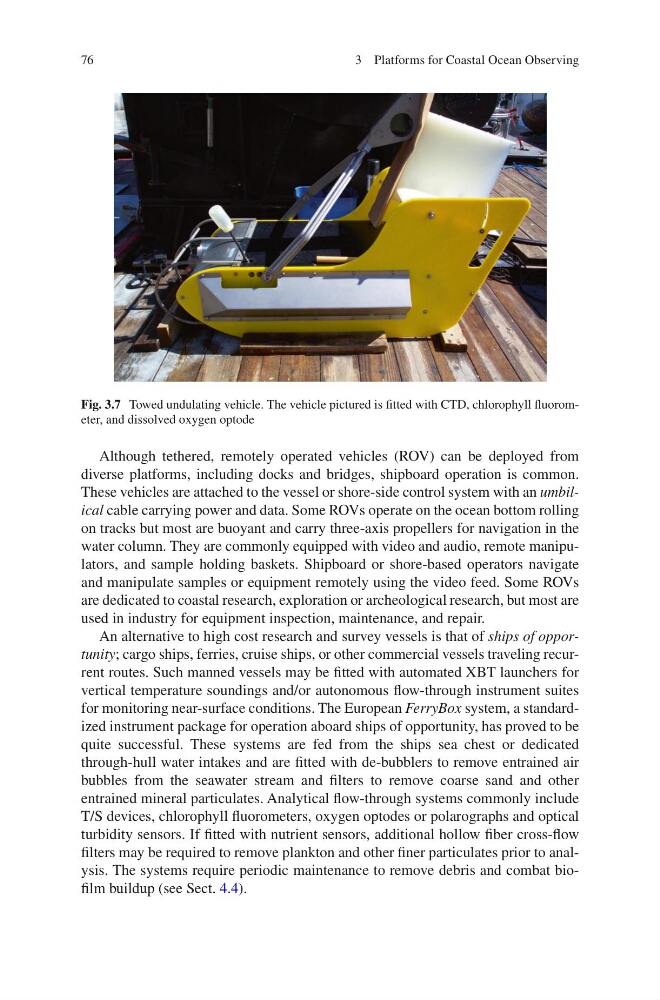
Fig. 3.7 Towed undulating vehicle. The vehicle pictured is fitted with CTD, chlorophyll fluorometer, and dissolved oxygen optode
3 Platforms for Coastal Ocean Observing
Although tethered, remotely operated vehicles (ROV) can be deployed from
diverse platforms, including docks and bridges, shipboard operation is common.
These vehicles are attached to the vessel or shore-side control system with an umbilical cable carrying power and data. Some ROVs operate on the ocean bottom rolling
on tracks but most are buoyant and carry three-axis propellers for navigation in the
water column. They are commonly equipped with video and audio, remote manipulators, and sample holding baskets. Shipboard or shore-based operators navigate
and manipulate samples or equipment remotely using the video feed. Some ROVs
are dedicated to coastal research, exploration or archeological research, but most are
used in industry for equipment inspection, maintenance, and repair.
An alternative to high cost research and survey vessels is that of ships of opportunity; cargo ships, ferries, cruise ships, or other commercial vessels traveling recurrent routes. Such manned vessels may be fitted with automated XBT launchers for
vertical temperature soundings and/or autonomous flow-through instrument suites
for monitoring near-surface conditions. The European FerryBox system, a standardized instrument package for operation aboard ships of opportunity, has proved to be
quite successful. These systems are fed from the ships sea chest or dedicated
through-hull water intakes and are fitted with de-bubblers to remove entrained air
bubbles from the seawater stream and filters to remove coarse sand and other
entrained mineral particulates. Analytical flow-through systems commonly include
T/S devices, chlorophyll fluorometers, oxygen optodes or polarographs and optical
turbidity sensors. If fitted with nutrient sensors, additional hollow fiber cross-flow
filters may be required to remove plankton and other finer particulates prior to analysis. The systems require periodic maintenance to remove debris and combat biofilm buildup (see Sect. 4.4).
Fig. 3.7 Towed undulating vehicle. The vehicle pictured is fitted with CTD, chlorophyll fluorometer, and dissolved oxygen optode
3 Platforms for Coastal Ocean Observing