

75
across a dedicated through-hull sampling port or from the vessel sea chest and is
served through a vortex debubbler mechanism since most flow-through instruments
are sensitive to bubbles in the stream. Instrument data is time-stamped and georeferenced using the ship’s navigation data. For gas exchange studies, bow-mounted
air samplers feed near-surface air to the shipboard laboratory. Extreme care must be
taken to avoid contamination from the ship’s exhaust.
Towed instruments achieve measurements that would otherwise be impossible
directly from the moving vessel. Specialized instruments may have a custom-built
vehicle but various commercial tow vehicles are also available. Towed vehicles,
purpose-built for single instruments, are commonly enclosed within a torpedo
shaped housing to minimize drag. Some may need to be towed close to the bottom
such as magnetometers that detect sub-bottom magnetic anomalies or side-scan
sonar devices that achieve 3D ocean imagery using high-frequency but short-range
acoustic pulses.
Other towed vehicles can achieve undulating patterns descending to depths
exceeding 100 m and ascending to near the ocean surface. Some undulating vehicles
take advantage of the ship movement to power a propeller-driven onboard dynamo.
This dynamo in turn powers a servo-operated elevator wing guided by the onboard
pressure sensor to achieve the undulating pattern within a preset depth range.
Winches used to deploy these platforms are equipped with conductor cable and sliprings for real-time vehicle control and data retrieval (Fig. 3.7).
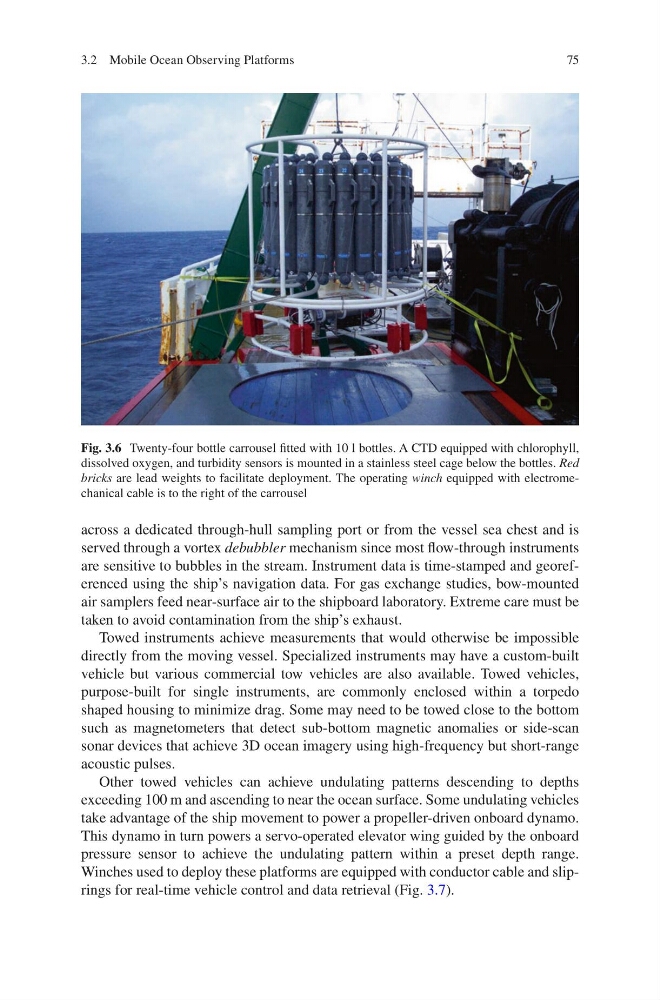
Fig. 3.6 Twenty-four bottle carrousel fitted with 10 l bottles. A CTD equipped with chlorophyll,
dissolved oxygen, and turbidity sensors is mounted in a stainless steel cage below the bottles. Red
bricks are lead weights to facilitate deployment. The operating winch equipped with electromechanical cable is to the right of the carrousel
3.2 Mobile Ocean Observing Platforms
across a dedicated through-hull sampling port or from the vessel sea chest and is
served through a vortex debubbler mechanism since most flow-through instruments
are sensitive to bubbles in the stream. Instrument data is time-stamped and georeferenced using the ship’s navigation data. For gas exchange studies, bow-mounted
air samplers feed near-surface air to the shipboard laboratory. Extreme care must be
taken to avoid contamination from the ship’s exhaust.
Towed instruments achieve measurements that would otherwise be impossible
directly from the moving vessel. Specialized instruments may have a custom-built
vehicle but various commercial tow vehicles are also available. Towed vehicles,
purpose-built for single instruments, are commonly enclosed within a torpedo
shaped housing to minimize drag. Some may need to be towed close to the bottom
such as magnetometers that detect sub-bottom magnetic anomalies or side-scan
sonar devices that achieve 3D ocean imagery using high-frequency but short-range
acoustic pulses.
Other towed vehicles can achieve undulating patterns descending to depths
exceeding 100 m and ascending to near the ocean surface. Some undulating vehicles
take advantage of the ship movement to power a propeller-driven onboard dynamo.
This dynamo in turn powers a servo-operated elevator wing guided by the onboard
pressure sensor to achieve the undulating pattern within a preset depth range.
Winches used to deploy these platforms are equipped with conductor cable and sliprings for real-time vehicle control and data retrieval (Fig. 3.7).
Fig. 3.6 Twenty-four bottle carrousel fitted with 10 l bottles. A CTD equipped with chlorophyll,
dissolved oxygen, and turbidity sensors is mounted in a stainless steel cage below the bottles. Red
bricks are lead weights to facilitate deployment. The operating winch equipped with electromechanical cable is to the right of the carrousel
3.2 Mobile Ocean Observing Platforms