

migratory agriculture, although much reduced in
areal distribution, is still one of the most important of the world’s agricultural systems.
8.2
410 Savanna Division
The latitude belt between 10
and 30
N is intermediate between the equatorial and middlelatitude climates. This produces the tropical
wet-dry savanna climate, which has a wet season
controlled by moist, warm, maritime, tropical air
masses at times of high sun, and a dry season
controlled by the continental tropical masses at
times of low sun (see Fig. 8.2, diagram for
Darwin, Australia). Trewartha (1968) classified
the tropical wet-dry climate as Aw, the latter
w signifying a dry winter.
Alternating wet and dry seasons result in the
growth of three distinctive vegetation types. In
some areas no grass grows at all, in others only
grass grows, and in other large areas grass and
trees intermingle.
The tropical scrub woodlands are made up of
trees standing far enough apart so the crown of
foliage fails to form a complete cover. The tree
trunks are gnarled with branches all the way to
the ground. The trees are deciduous, dropping all
their leaves in the dry season. There are areas of
low brush, called monte in Argentina. Where the
brush is thicker and mixed with trees it forms the
scrub woodland of the Chaco. In northeastern
Brazil, there is an area covered by thorny,
scrubby deciduous trees known as caatinga.
Similar scrub woodlands are found in Central
America and Mexico. There are also large areas
in Africa, Angola, Zambia, and Zimbabwe, and
also in India in the dry parts of the Deccan
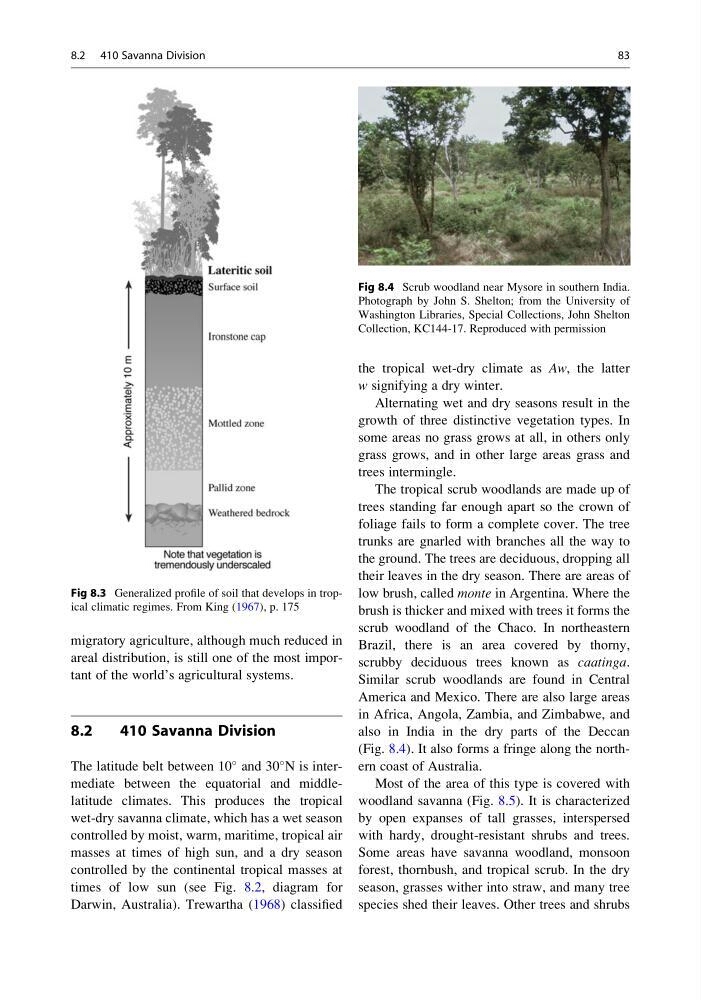
(Fig. 8.4). It also forms a fringe along the northern coast of Australia.
Most of the area of this type is covered with
woodland savanna (Fig. 8.5). It is characterized
by open expanses of tall grasses, interspersed
with hardy, drought-resistant shrubs and trees.
Some areas have savanna woodland, monsoon
forest, thornbush, and tropical scrub. In the dry
season, grasses wither into straw, and many tree
species shed their leaves. Other trees and shrubs
Fig 8.3 Generalized profile of soil that develops in tropical climatic regimes. From King (1967), p. 175
Fig 8.4 Scrub woodland near Mysore in southern India.
Photograph by John S. Shelton; from the University of
Washington Libraries, Special Collections, John Shelton
Collection, KC144-17. Reproduced with permission
8.2 410 Savanna Division
83
areal distribution, is still one of the most important of the world’s agricultural systems.
8.2
410 Savanna Division
The latitude belt between 10
and 30
N is intermediate between the equatorial and middlelatitude climates. This produces the tropical
wet-dry savanna climate, which has a wet season
controlled by moist, warm, maritime, tropical air
masses at times of high sun, and a dry season
controlled by the continental tropical masses at
times of low sun (see Fig. 8.2, diagram for
Darwin, Australia). Trewartha (1968) classified
the tropical wet-dry climate as Aw, the latter
w signifying a dry winter.
Alternating wet and dry seasons result in the
growth of three distinctive vegetation types. In
some areas no grass grows at all, in others only
grass grows, and in other large areas grass and
trees intermingle.
The tropical scrub woodlands are made up of
trees standing far enough apart so the crown of
foliage fails to form a complete cover. The tree
trunks are gnarled with branches all the way to
the ground. The trees are deciduous, dropping all
their leaves in the dry season. There are areas of
low brush, called monte in Argentina. Where the
brush is thicker and mixed with trees it forms the
scrub woodland of the Chaco. In northeastern
Brazil, there is an area covered by thorny,
scrubby deciduous trees known as caatinga.
Similar scrub woodlands are found in Central
America and Mexico. There are also large areas
in Africa, Angola, Zambia, and Zimbabwe, and
also in India in the dry parts of the Deccan
(Fig. 8.4). It also forms a fringe along the northern coast of Australia.
Most of the area of this type is covered with
woodland savanna (Fig. 8.5). It is characterized
by open expanses of tall grasses, interspersed
with hardy, drought-resistant shrubs and trees.
Some areas have savanna woodland, monsoon
forest, thornbush, and tropical scrub. In the dry
season, grasses wither into straw, and many tree
species shed their leaves. Other trees and shrubs
Fig 8.3 Generalized profile of soil that develops in tropical climatic regimes. From King (1967), p. 175
Fig 8.4 Scrub woodland near Mysore in southern India.
Photograph by John S. Shelton; from the University of
Washington Libraries, Special Collections, John Shelton
Collection, KC144-17. Reproduced with permission
8.2 410 Savanna Division
83