

5.2
110 Icecap Division
These are the ice sheets of Greenland, Ellesmere
Island, Baffin Island, and Antarctica. Mean
annual temperature is much lower than that of
any other climate, with no month above freezing,
defining this climate as Fi. Precipitation, almost
all occurring as snow, is small, but accumulates
because of the continuous cold. Driving blizzard
winds are frequent. These regions are subjected
to long periods of darkness and light.
Because of low monthly mean temperatures
throughout the year over the ice sheets, this environment is almost devoid of vegetation and soils
(Fig. 5.3). Only a few plant species can survive
the Antarctic climate. The dominant plants are
algae, lichens, and mosses—plants adapted to
limited water supply and scant nutrients and
soil. The few species of animals found on the
ice margins are associated with a marine habitat.
In the Antarctic regions, because of the absence
of predatory animals, the flightless penguins find
conditions on the coasts and on the isolated
islands of the southern oceans ideal as breeding
places.
Terrestrial invertebrates include a few species
such as nematodes and springtails. Some starve
and dehydrate themselves during cold weather
because any water left in their bodies would
encourage deadly ice crystals to form. Others
produce antifreeze chemicals.
5.3
120 Tundra Division
The northern continental fringes of North America, Iceland and Spitsbergen, coastal Greenland,
the Arctic coast of Eurasia from the Arctic Circle
northward to about the 75th parallel, lie within
the outer zone of control of Arctic air masses.
This produces the tundra climate that Trewartha
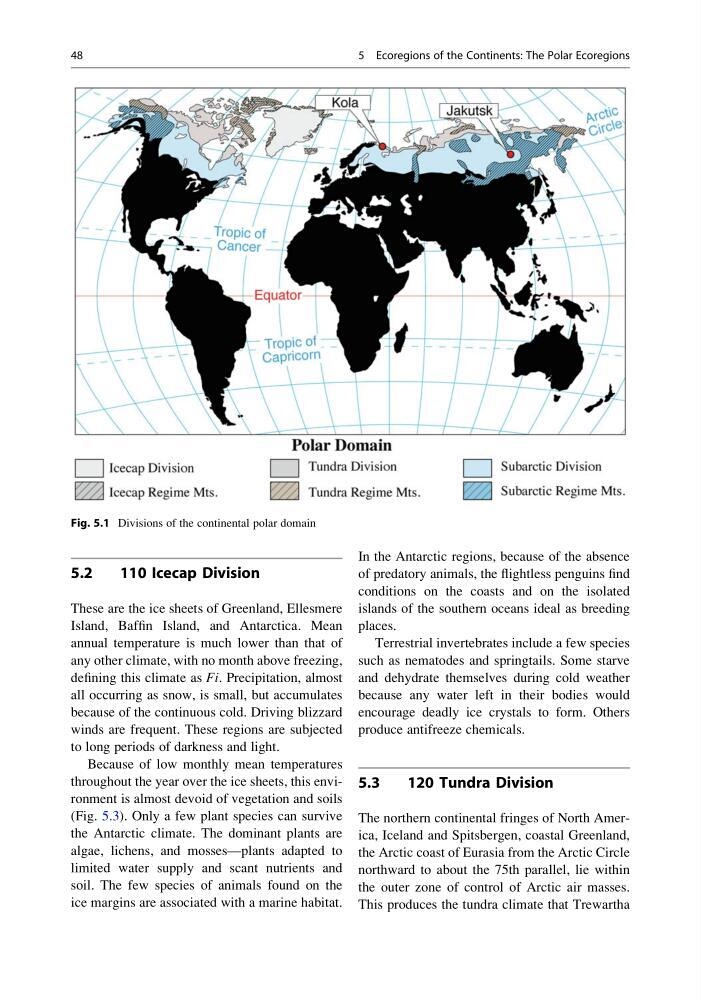
Fig. 5.1 Divisions of the continental polar domain
48
5 Ecoregions of the Continents: The Polar Ecoregions
110 Icecap Division
These are the ice sheets of Greenland, Ellesmere
Island, Baffin Island, and Antarctica. Mean
annual temperature is much lower than that of
any other climate, with no month above freezing,
defining this climate as Fi. Precipitation, almost
all occurring as snow, is small, but accumulates
because of the continuous cold. Driving blizzard
winds are frequent. These regions are subjected
to long periods of darkness and light.
Because of low monthly mean temperatures
throughout the year over the ice sheets, this environment is almost devoid of vegetation and soils
(Fig. 5.3). Only a few plant species can survive
the Antarctic climate. The dominant plants are
algae, lichens, and mosses—plants adapted to
limited water supply and scant nutrients and
soil. The few species of animals found on the
ice margins are associated with a marine habitat.
In the Antarctic regions, because of the absence
of predatory animals, the flightless penguins find
conditions on the coasts and on the isolated
islands of the southern oceans ideal as breeding
places.
Terrestrial invertebrates include a few species
such as nematodes and springtails. Some starve
and dehydrate themselves during cold weather
because any water left in their bodies would
encourage deadly ice crystals to form. Others
produce antifreeze chemicals.
5.3
120 Tundra Division
The northern continental fringes of North America, Iceland and Spitsbergen, coastal Greenland,
the Arctic coast of Eurasia from the Arctic Circle
northward to about the 75th parallel, lie within
the outer zone of control of Arctic air masses.
This produces the tundra climate that Trewartha
Fig. 5.1 Divisions of the continental polar domain
48
5 Ecoregions of the Continents: The Polar Ecoregions