

patterns. This is shown in Fig. 4.12, which
compares locations in the Rocky Mountains. In
the semiarid steppe climatic portion, the
lowermost zone is a sagebrush basal plain; this
is followed by a montane zone of Douglas-fir and
spruce and fir. Above is the subalpine zone,
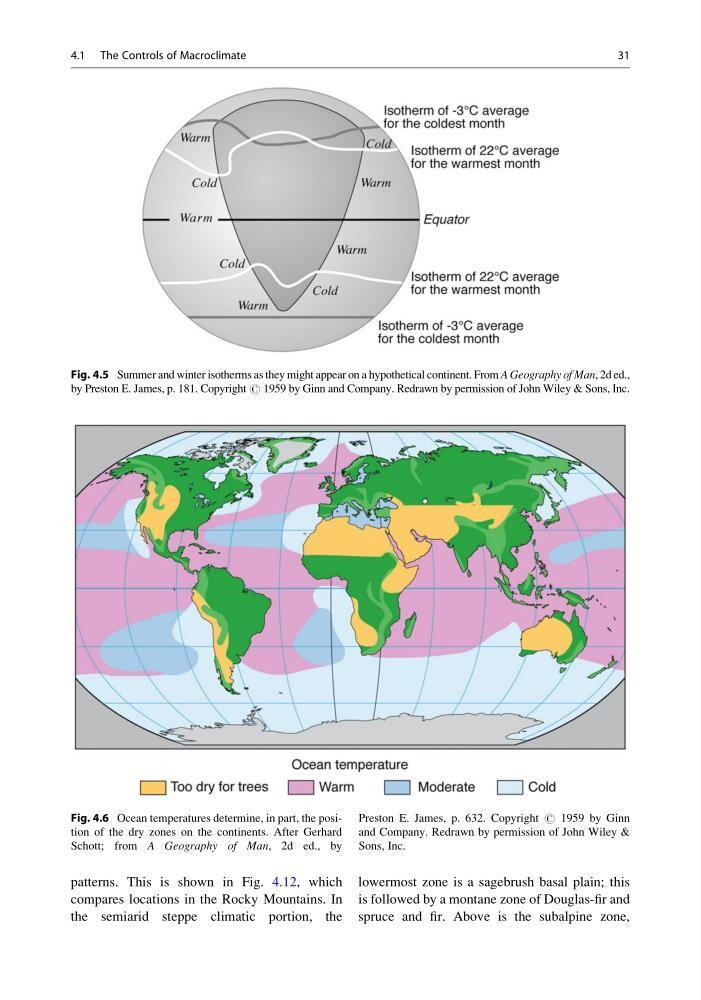
Fig. 4.5 Summer and winter isotherms as they might appear on a hypothetical continent. From A Geography of Man, 2d ed.,
by Preston E. James, p. 181. Copyright # 1959 by Ginn and Company. Redrawn by permission of John Wiley & Sons, Inc.
Fig. 4.6 Ocean temperatures determine, in part, the position of the dry zones on the continents. After Gerhard
Schott; from A Geography of Man, 2d ed., by
Preston E. James, p. 632. Copyright # 1959 by Ginn
and Company. Redrawn by permission of John Wiley &
Sons, Inc.
4.1 The Controls of Macroclimate
31
compares locations in the Rocky Mountains. In
the semiarid steppe climatic portion, the
lowermost zone is a sagebrush basal plain; this
is followed by a montane zone of Douglas-fir and
spruce and fir. Above is the subalpine zone,
Fig. 4.5 Summer and winter isotherms as they might appear on a hypothetical continent. From A Geography of Man, 2d ed.,
by Preston E. James, p. 181. Copyright # 1959 by Ginn and Company. Redrawn by permission of John Wiley & Sons, Inc.
Fig. 4.6 Ocean temperatures determine, in part, the position of the dry zones on the continents. After Gerhard
Schott; from A Geography of Man, 2d ed., by
Preston E. James, p. 632. Copyright # 1959 by Ginn
and Company. Redrawn by permission of John Wiley &
Sons, Inc.
4.1 The Controls of Macroclimate
31