

globally important ecoregions. The majority of
North American forests and grasslands are
adapted to fire of varying frequencies and
intensities; but fire—ecologically misunderstood
and therefore ecologically misinterpreted—has
been suppressed so routinely for so long that
some ecosystems are now likely to burn at catastrophic levels rather than at natural ecosystemsustaining levels. Such fires favor post-fire invasion by fire-loving alien plants that once
established inhibit regrowth of native vegetation,
which makes recovery to the original natural
ecosystem impossible. A good example is the
nonnative cheatgrass that has invaded and
continues to expand in sagebrush steppe in the
western United States.
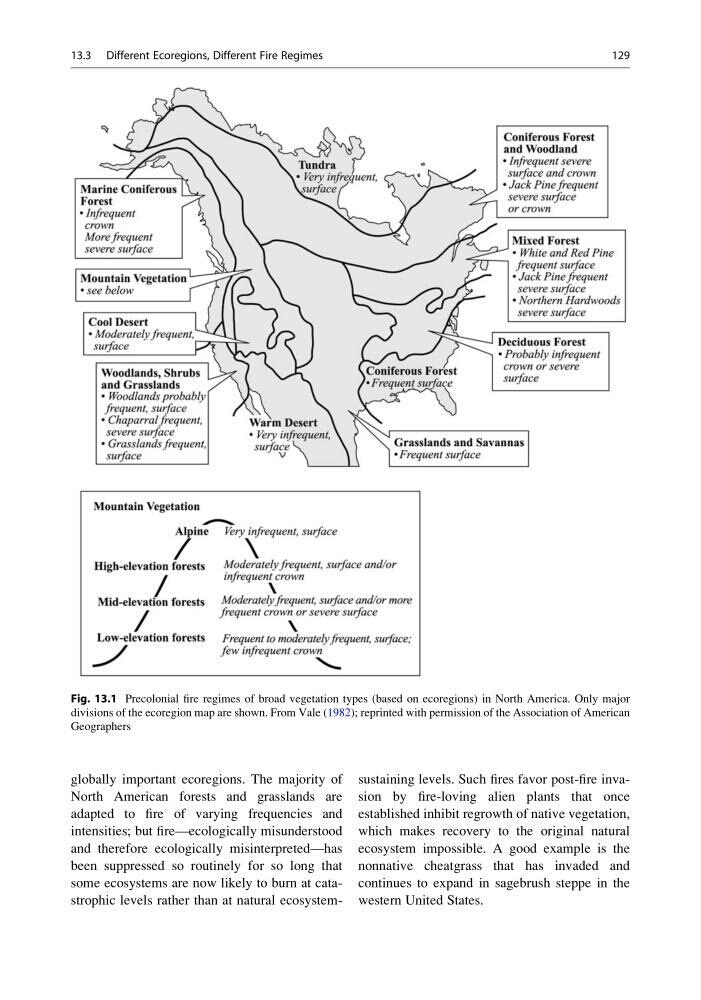
Fig. 13.1 Precolonial fire regimes of broad vegetation types (based on ecoregions) in North America. Only major
divisions of the ecoregion map are shown. From Vale (1982); reprinted with permission of the Association of American
Geographers
13.3 Different Ecoregions, Different Fire Regimes
129
North American forests and grasslands are
adapted to fire of varying frequencies and
intensities; but fire—ecologically misunderstood
and therefore ecologically misinterpreted—has
been suppressed so routinely for so long that
some ecosystems are now likely to burn at catastrophic levels rather than at natural ecosystemsustaining levels. Such fires favor post-fire invasion by fire-loving alien plants that once
established inhibit regrowth of native vegetation,
which makes recovery to the original natural
ecosystem impossible. A good example is the
nonnative cheatgrass that has invaded and
continues to expand in sagebrush steppe in the
western United States.
Fig. 13.1 Precolonial fire regimes of broad vegetation types (based on ecoregions) in North America. Only major
divisions of the ecoregion map are shown. From Vale (1982); reprinted with permission of the Association of American
Geographers
13.3 Different Ecoregions, Different Fire Regimes
129