

similar research sites, such as Long-Term Ecological Research (LTER) sites, Long-Term
Agro-Ecosystem Research (LTAR) sites,
Research Natural Areas, National Ecological
Observatory Network (NEON) sites, and the
like. This analysis could reveal gaps in coverage
both across and within ecoregions.
3
12.3.1 Restructuring Research
Programs
The many useful applications of the study of ecosystem patterns suggest new scientific directions
for research and points the way for restructuring
research programs. To address critical ecological
issues, it is essential to move from the traditional
single-scale management and research on plots
and stands to mosaics of ecosystems (landscapes
and ecoregions) and from streams and lakes to
integrated terrestrial-aquatic systems (i.e., geographical ecosystems). FIA thematic maps (e.g.,
biomass, forest types, etc.) could assist with this.
12.3.2 Some Research Questions
These studies reveal useful applications of ecosystem patterns. There still remain many relevant
research questions associated with these patterns,
including: What are the natural ecosystem patterns
in a particular ecoregion? What are the effects of
climatic variation on ecoregional patterns and
boundaries? And, what are the relationships
between vegetation and landform in different
ecoregions? While some workers have suggested
that GIS analysis can assist in answering these
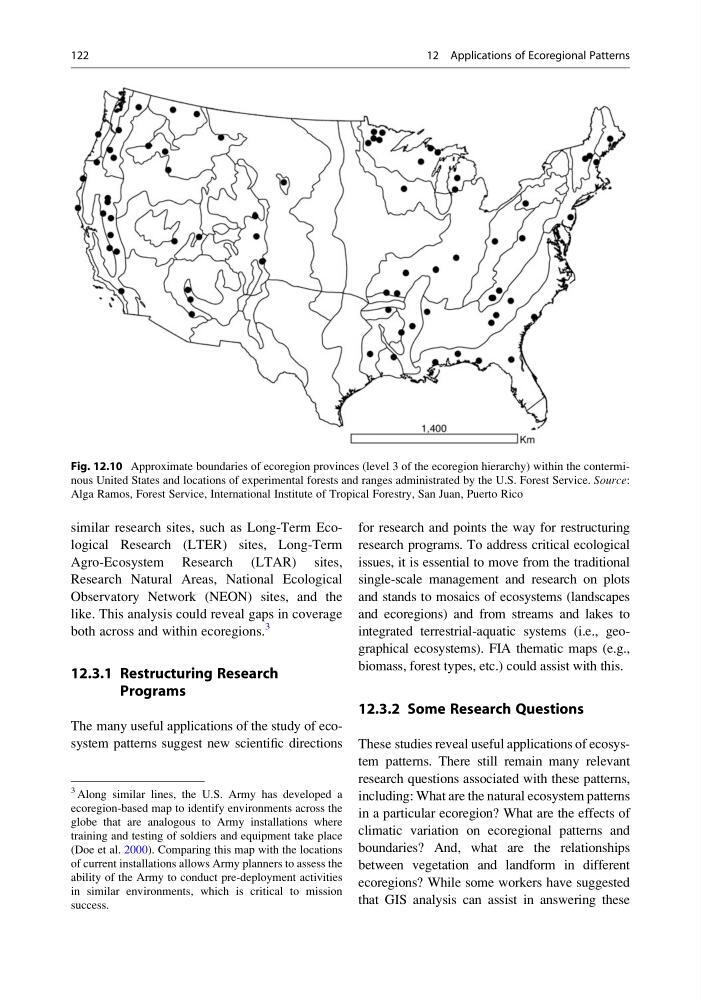
Fig. 12.10 Approximate boundaries of ecoregion provinces (level 3 of the ecoregion hierarchy) within the conterminous United States and locations of experimental forests and ranges administrated by the U.S. Forest Service. Source:
Alga Ramos, Forest Service, International Institute of Tropical Forestry, San Juan, Puerto Rico
3 Along similar lines, the U.S. Army has developed a
ecoregion-based map to identify environments across the
globe that are analogous to Army installations where
training and testing of soldiers and equipment take place
(Doe et al. 2000). Comparing this map with the locations
of current installations allows Army planners to assess the
ability of the Army to conduct pre-deployment activities
in similar environments, which is critical to mission
success.
122
12 Applications of Ecoregional Patterns
Agro-Ecosystem Research (LTAR) sites,
Research Natural Areas, National Ecological
Observatory Network (NEON) sites, and the
like. This analysis could reveal gaps in coverage
both across and within ecoregions.
3
12.3.1 Restructuring Research
Programs
The many useful applications of the study of ecosystem patterns suggest new scientific directions
for research and points the way for restructuring
research programs. To address critical ecological
issues, it is essential to move from the traditional
single-scale management and research on plots
and stands to mosaics of ecosystems (landscapes
and ecoregions) and from streams and lakes to
integrated terrestrial-aquatic systems (i.e., geographical ecosystems). FIA thematic maps (e.g.,
biomass, forest types, etc.) could assist with this.
12.3.2 Some Research Questions
These studies reveal useful applications of ecosystem patterns. There still remain many relevant
research questions associated with these patterns,
including: What are the natural ecosystem patterns
in a particular ecoregion? What are the effects of
climatic variation on ecoregional patterns and
boundaries? And, what are the relationships
between vegetation and landform in different
ecoregions? While some workers have suggested
that GIS analysis can assist in answering these
Fig. 12.10 Approximate boundaries of ecoregion provinces (level 3 of the ecoregion hierarchy) within the conterminous United States and locations of experimental forests and ranges administrated by the U.S. Forest Service. Source:
Alga Ramos, Forest Service, International Institute of Tropical Forestry, San Juan, Puerto Rico
3 Along similar lines, the U.S. Army has developed a
ecoregion-based map to identify environments across the
globe that are analogous to Army installations where
training and testing of soldiers and equipment take place
(Doe et al. 2000). Comparing this map with the locations
of current installations allows Army planners to assess the
ability of the Army to conduct pre-deployment activities
in similar environments, which is critical to mission
success.
122
12 Applications of Ecoregional Patterns