

As discussed in Chap. 10, climate exerts a
very strong effect on ecoregion patterns, and
climate change may cause shifts in those
patterns. As the climate changes so will changes
in the distribution of ecoregions as well as the
boundaries between ecoregions.
References
Bailey RG (1996) Ecosystem geography. Springer,
New York. 204 pp. 2 pl. in pocket
Bailey RG (2004) Identifying ecoregion boundaries.
Environ Manage 34(Suppl 1):S14–S26
Corbel J (1964) L’erosion terrestre etude quantitative
(methodes-technques-resultats).
Ann
Geogr
73:385–412
Hills A (1952) The classification and evaluation of site for
forestry. Research Report 24. Ontario Department of
Lands and Forest, Toronto, 41 pp
Hunt CB (1974) Natural regions of the United States and
Canada. W.H. Freeman, San Francisco, 725 pp
Hustich I (1953) The boreal limits of conifers. Arct J
6:149–162
James PE (1959) A geography of man, 2nd edn. Ginn,
Boston, 656 pp
Major J (1951) A functional, factorial approach to plant
ecology. Ecology 32:392–412
Thornthwaite CW (1954) Topoclimatology. In:
Proceedings of the Toronto meteorological conference, Royal Meterological Society, Toronto, 9–15
Sept 1953, pp 227–232
Viereck LA, Dyrness CT, Batten AR, Wenzlick KL
(1992) The Alaska vegetation classification. General
Technical Report PNW-GTR-286, USDA Forest Service, Pacific Northwest Research Station, Portland,
OR, 278 pp
Walter H, Lieth H (1960–1967) Klimadiagramm
weltatlas. G. Fischer, Jena. Maps, diagrams, profiles.
Irregular pagination
Walter H, Harnickell E, Mueller-Dombois D (1975)
Climate-diagram maps of the individual continents
and the ecological climatic regions of the earth.
Springer, Berlin. 36 pp. with 9 maps
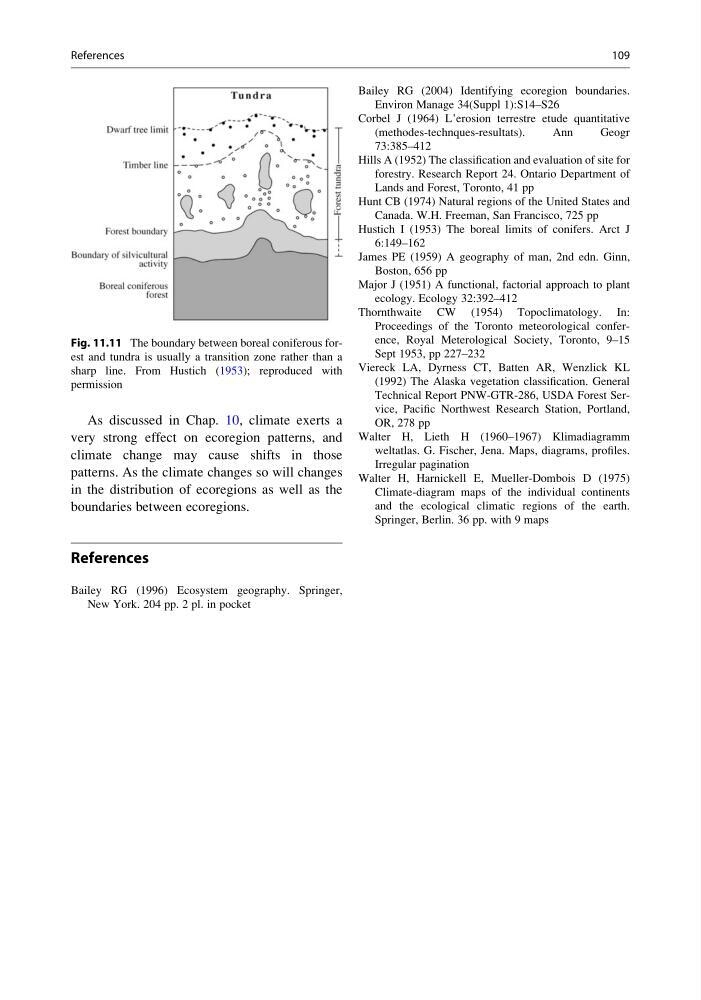
Fig. 11.11 The boundary between boreal coniferous forest and tundra is usually a transition zone rather than a
sharp line. From Hustich (1953); reproduced with
permission
References
109
very strong effect on ecoregion patterns, and
climate change may cause shifts in those
patterns. As the climate changes so will changes
in the distribution of ecoregions as well as the
boundaries between ecoregions.
References
Bailey RG (1996) Ecosystem geography. Springer,
New York. 204 pp. 2 pl. in pocket
Bailey RG (2004) Identifying ecoregion boundaries.
Environ Manage 34(Suppl 1):S14–S26
Corbel J (1964) L’erosion terrestre etude quantitative
(methodes-technques-resultats).
Ann
Geogr
73:385–412
Hills A (1952) The classification and evaluation of site for
forestry. Research Report 24. Ontario Department of
Lands and Forest, Toronto, 41 pp
Hunt CB (1974) Natural regions of the United States and
Canada. W.H. Freeman, San Francisco, 725 pp
Hustich I (1953) The boreal limits of conifers. Arct J
6:149–162
James PE (1959) A geography of man, 2nd edn. Ginn,
Boston, 656 pp
Major J (1951) A functional, factorial approach to plant
ecology. Ecology 32:392–412
Thornthwaite CW (1954) Topoclimatology. In:
Proceedings of the Toronto meteorological conference, Royal Meterological Society, Toronto, 9–15
Sept 1953, pp 227–232
Viereck LA, Dyrness CT, Batten AR, Wenzlick KL
(1992) The Alaska vegetation classification. General
Technical Report PNW-GTR-286, USDA Forest Service, Pacific Northwest Research Station, Portland,
OR, 278 pp
Walter H, Lieth H (1960–1967) Klimadiagramm
weltatlas. G. Fischer, Jena. Maps, diagrams, profiles.
Irregular pagination
Walter H, Harnickell E, Mueller-Dombois D (1975)
Climate-diagram maps of the individual continents
and the ecological climatic regions of the earth.
Springer, Berlin. 36 pp. with 9 maps
Fig. 11.11 The boundary between boreal coniferous forest and tundra is usually a transition zone rather than a
sharp line. From Hustich (1953); reproduced with
permission
References
109