

228 Deep-Sea Sediments - Patterns, Processes, and Stratigraphic Methods
Rate 01 Supply of CarbonateD r--_-c ""..}-""' Ii""02,""N""!:. T"" :t""'I!..""RIL""C""I!"" ll.'"". T'"'lO"".!!--'
.t:;
g.3
c
5
Rate of Dissolution -
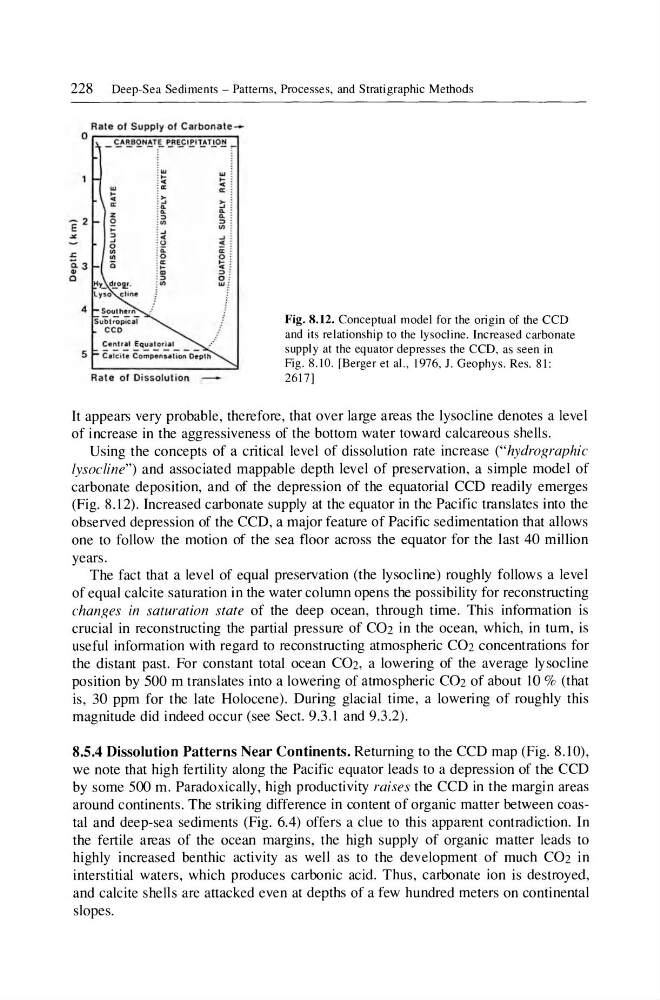
Fig. 8.12. Conceptual model for the origin of the CCO
and its relationship to the lysocline. Increased carbonate
supply at the equator depresses the CCO, as seen in
Fig. 8.10. [Berger et aI. , 1976, J. Geophys. Res. 81:
2617]
It appears very probable, therefore, that over large areas the lysocline denotes a level
of increase in the aggressiveness of the bottom water toward calcareous shells.
Using the concepts of a critical level of dissolution rate increase ("hydrographic
lysocline") and associated mappable depth level of preservation, a simple model of
carbonate deposition, and of the depression of the equatorial CCD readily emerges
(Fig. 8.12). Increased carbonate supply at the equator in the Pacific translates into the
observed depression of the CCD, a major feature of Pacific sedimentation that allows
one to follow the motion of the sea floor across the equator for the last 40 million
years.
The fact that a level of equal preservation (the lysocline) roughly follows a level
of equal calcite saturation in the water column opens the possibility for reconstructing
changes in saturation state of the deep ocean, through time. This information is
crucial in reconstructing the partial pressure of C02 in the ocean, which, in tum, is
useful information with regard to reconstructing atmospheric C02 concentrations for
the distant past. For constant total ocean C02, a lowering of the average lysocline
position by 500 m translates into a lowering of atmospheric C02 of about \0 % (that
is, 30 ppm for the late Holocene). During glacial time, a lowering of roughly this
magnitude did indeed occur (see Sect. 9.3.1 and 9.3.2).
8.5.4 Dissolution Patterns Near Continents. Returning to the CCO map (Fig. 8.10),
we note that high fertility along the Pacific equator leads to a depression of the CCD
by some 500 m. Paradoxically, high productivity raises the CCO in the margin areas
around continents. The striking difference in content of organic matter between coastal and deep-sea sediments (Fig. 6.4) offers a clue to this apparent contradiction. In
the fertile areas of the ocean margins, the high supply of organic matter leads to
highly increased benthic activity as well as to the development of much C02 in
interstitial waters, which produces carbonic acid. Thus, carbonate ion is destroyed,
and calcite shells are attacked even at depths of a few hundred meters on continental
slopes.
Rate 01 Supply of CarbonateD r--_-c ""..}-""' Ii""02,""N""!:. T"" :t""'I!..""RIL""C""I!"" ll.'"". T'"'lO"".!!--'
.t:;
g.3
c
5
Rate of Dissolution -
Fig. 8.12. Conceptual model for the origin of the CCO
and its relationship to the lysocline. Increased carbonate
supply at the equator depresses the CCO, as seen in
Fig. 8.10. [Berger et aI. , 1976, J. Geophys. Res. 81:
2617]
It appears very probable, therefore, that over large areas the lysocline denotes a level
of increase in the aggressiveness of the bottom water toward calcareous shells.
Using the concepts of a critical level of dissolution rate increase ("hydrographic
lysocline") and associated mappable depth level of preservation, a simple model of
carbonate deposition, and of the depression of the equatorial CCD readily emerges
(Fig. 8.12). Increased carbonate supply at the equator in the Pacific translates into the
observed depression of the CCD, a major feature of Pacific sedimentation that allows
one to follow the motion of the sea floor across the equator for the last 40 million
years.
The fact that a level of equal preservation (the lysocline) roughly follows a level
of equal calcite saturation in the water column opens the possibility for reconstructing
changes in saturation state of the deep ocean, through time. This information is
crucial in reconstructing the partial pressure of C02 in the ocean, which, in tum, is
useful information with regard to reconstructing atmospheric C02 concentrations for
the distant past. For constant total ocean C02, a lowering of the average lysocline
position by 500 m translates into a lowering of atmospheric C02 of about \0 % (that
is, 30 ppm for the late Holocene). During glacial time, a lowering of roughly this
magnitude did indeed occur (see Sect. 9.3.1 and 9.3.2).
8.5.4 Dissolution Patterns Near Continents. Returning to the CCO map (Fig. 8.10),
we note that high fertility along the Pacific equator leads to a depression of the CCD
by some 500 m. Paradoxically, high productivity raises the CCO in the margin areas
around continents. The striking difference in content of organic matter between coastal and deep-sea sediments (Fig. 6.4) offers a clue to this apparent contradiction. In
the fertile areas of the ocean margins, the high supply of organic matter leads to
highly increased benthic activity as well as to the development of much C02 in
interstitial waters, which produces carbonic acid. Thus, carbonate ion is destroyed,
and calcite shells are attacked even at depths of a few hundred meters on continental
slopes.