

a
b
186 Imprint of Climatic Zonation on Marine Sediments
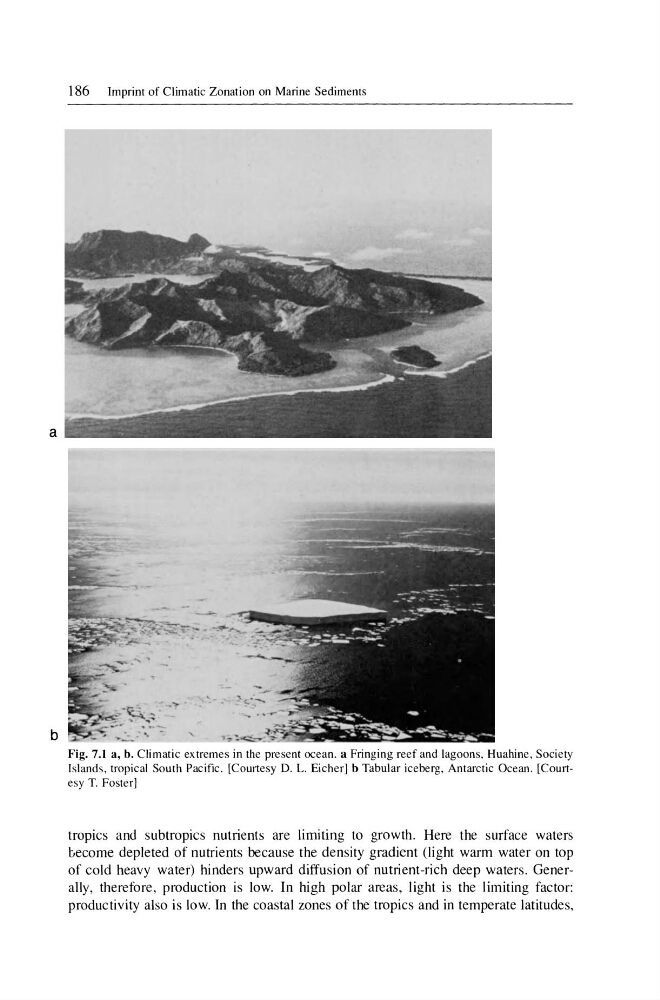
Fig. 7.1 a, b. Climatic extremes in the present ocean. a Fringing reef and lagoons. Huahine. Society
Islands. tropical South Pacific. [Courtesy D. L. Eicher] b Tabular iceberg, Antarctic Ocean. [Counesy T. Foster]
tropics and sUbtropics nutrients are limiting to growth. Here the surface waters
become depleted of nutrients because the density gradient (light warm water on top
of cold heavy water) hinders upward diffusion of nutrient-rich deep waters. Generally, therefore, production is low. In high polar areas, light is the limiting factor:
productivity also is low. In the coastal zones of the tropics and in temperate latitudes,
b
186 Imprint of Climatic Zonation on Marine Sediments
Fig. 7.1 a, b. Climatic extremes in the present ocean. a Fringing reef and lagoons. Huahine. Society
Islands. tropical South Pacific. [Courtesy D. L. Eicher] b Tabular iceberg, Antarctic Ocean. [Counesy T. Foster]
tropics and sUbtropics nutrients are limiting to growth. Here the surface waters
become depleted of nutrients because the density gradient (light warm water on top
of cold heavy water) hinders upward diffusion of nutrient-rich deep waters. Generally, therefore, production is low. In high polar areas, light is the limiting factor:
productivity also is low. In the coastal zones of the tropics and in temperate latitudes,