

Muddy Bottom Substrate
173
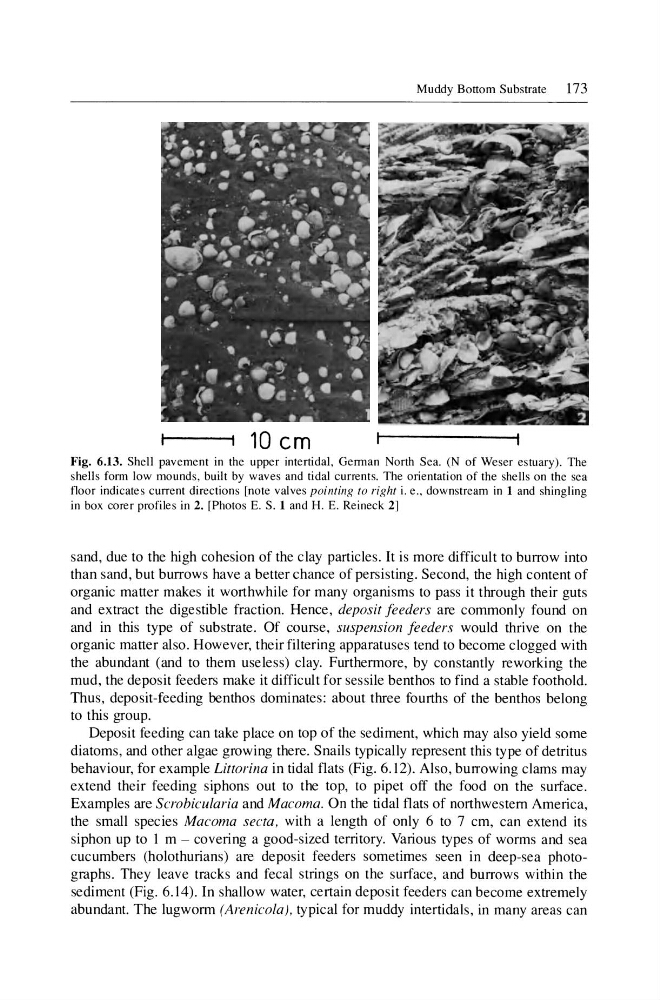
Fig. 6.13. Shell pavement in the upper intertidal, German North Sea. (N of Weser estuary). The
shells form low mounds, built by waves and tidal currents. The orientation of the shells on the sea
floor indicates current directions [note valves pointing to right i. e ., downstream in 1 and shingling
in box corer profiles in 2. [Photos E. S. 1 and H. E. Reineck 2]
sand, due to the high cohesion of the clay particles. It is more difficult to burrow into
than sand, but burrows have a better chance of persisting. Second, the high content of
organic matter makes it worthwhile for many organisms to pass it through their guts
and extract the digestible fraction. Hence, deposit feeders are commonly found on
and in this type of substrate. Of course, suspension feeders would thrive on the
organic matter also. However, their filtering apparatuses tend to become clogged with
the abundant (and to them useless) clay. Furthermore, by constantly reworking the
mud, the deposit feeders make it difficult for sessile benthos to find a stable foothold.
Thus, deposit-feeding benthos dominates: about three fourths of the benthos belong
to this group.
Deposit feeding can take place on top of the sediment, which may also yield some
diatoms , and other algae growing there. Snails typically represent this type of detritus
behaviour, for example Littorina in tidal flats (Fig. 6.12). Also, burrowing clams may
extend their feeding siphons out to the top, to pipet off the food on the surface.
Examples are Scrobicularia and Macoma. On the tidal flats of northwestern America,
the small species Macoma secta, with a length of only 6 to 7 cm, can extend its
siphon up to 1 m - covering a good-sized territory. Various types of worms and sea
cucumbers (holothurians) are deposit feeders sometimes seen in deep-sea photographs. They leave tracks and fecal strings on the surface, and burrows within the
sediment (Fig. 6.14). In shallow water, certain deposit feeders can become extremely
abundant. The lugworm (Arenicola) , typical for muddy intertidals, in many areas can
173
Fig. 6.13. Shell pavement in the upper intertidal, German North Sea. (N of Weser estuary). The
shells form low mounds, built by waves and tidal currents. The orientation of the shells on the sea
floor indicates current directions [note valves pointing to right i. e ., downstream in 1 and shingling
in box corer profiles in 2. [Photos E. S. 1 and H. E. Reineck 2]
sand, due to the high cohesion of the clay particles. It is more difficult to burrow into
than sand, but burrows have a better chance of persisting. Second, the high content of
organic matter makes it worthwhile for many organisms to pass it through their guts
and extract the digestible fraction. Hence, deposit feeders are commonly found on
and in this type of substrate. Of course, suspension feeders would thrive on the
organic matter also. However, their filtering apparatuses tend to become clogged with
the abundant (and to them useless) clay. Furthermore, by constantly reworking the
mud, the deposit feeders make it difficult for sessile benthos to find a stable foothold.
Thus, deposit-feeding benthos dominates: about three fourths of the benthos belong
to this group.
Deposit feeding can take place on top of the sediment, which may also yield some
diatoms , and other algae growing there. Snails typically represent this type of detritus
behaviour, for example Littorina in tidal flats (Fig. 6.12). Also, burrowing clams may
extend their feeding siphons out to the top, to pipet off the food on the surface.
Examples are Scrobicularia and Macoma. On the tidal flats of northwestern America,
the small species Macoma secta, with a length of only 6 to 7 cm, can extend its
siphon up to 1 m - covering a good-sized territory. Various types of worms and sea
cucumbers (holothurians) are deposit feeders sometimes seen in deep-sea photographs. They leave tracks and fecal strings on the surface, and burrows within the
sediment (Fig. 6.14). In shallow water, certain deposit feeders can become extremely
abundant. The lugworm (Arenicola) , typical for muddy intertidals, in many areas can