

6 Isotope Geochemistry of Clay Minerals 167
demonstrate, as do the oxygen isotope ratios, that this new mineral formation has
not taken place in contact with seawater. The various grain sizes represent isotopic
mixtures and direct age dating is not possible. Clauer et al. (1990) showed
however one possibility for indirect dating in their work. They compared the
apparent ages with the relative amount of lath-type crystals (Fig. 6.12).
If these mixing lines are thus extrapolated to relative proportion of
laths'=100%, then the approximate age of recrystallization can be deduced. These
extrapolated ages all lie between 100 and 60 Ma and are practically identical to
the likely stratigraphic ages.
These studies make it plain that reconstructing the age of recrystallization of
detrital sediments using the Rb-Sr or the K-Ar methods is extremely tricky but
that these methods can, on the other hand, provide us with valuable information
regarding sediment petrogenesis. In Chap. 7, we will look once again in detail at
the problems of dating detrital sediments, using the Sm-Nd isotopic system.
E
.x: 3
t'w
1
2
o,1
~t
r.
5 ...I
d"
* !
.s
9
'~ o
-6
-Ill
I
~
-'r
I
U
4
~ a l . =
..a
Ii
f l
..'1
p"
.
, D'~
\Whole rock
d
' '
'
3
'
~'
5.0
'
'
2 0
0
~.0
6.0
'~
(10"m moles)
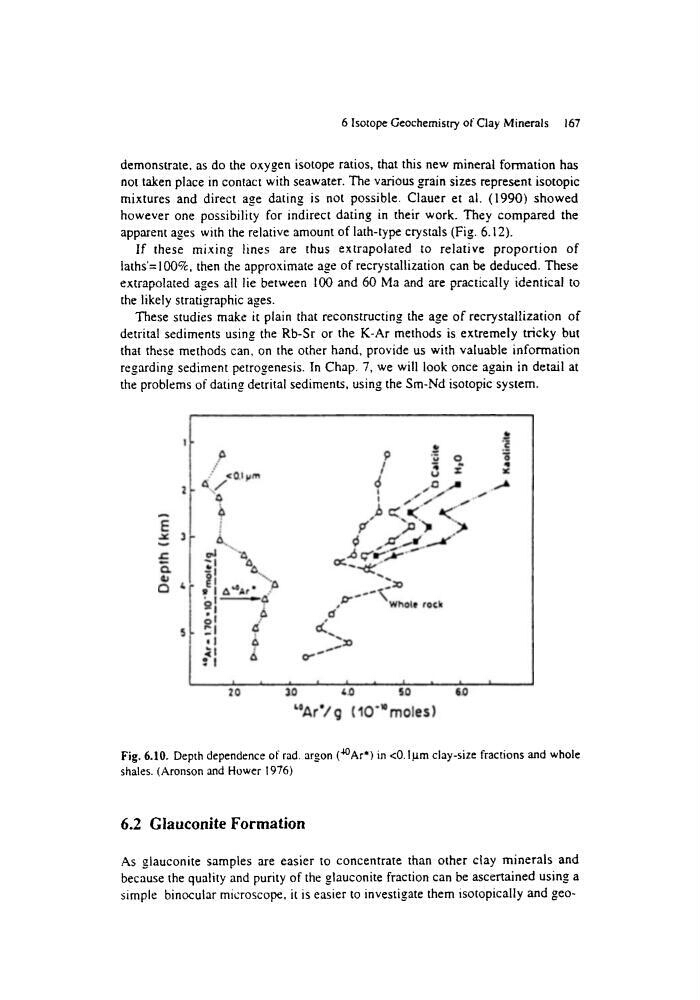
Fig. 6.10. Depth dependence of rad. argon (4~
in <0.1urn clay-size fractions and whole
shales. (Aronson and Hower 1976)
6.2 Glauconite Formation
As glauconite samples are easier to concentrate than other clay minerals and
because the quality and purity of the glauconite fraction can be ascertained using a
simple binocular microscope, it is easier to investigate them isotopically and geo-
demonstrate, as do the oxygen isotope ratios, that this new mineral formation has
not taken place in contact with seawater. The various grain sizes represent isotopic
mixtures and direct age dating is not possible. Clauer et al. (1990) showed
however one possibility for indirect dating in their work. They compared the
apparent ages with the relative amount of lath-type crystals (Fig. 6.12).
If these mixing lines are thus extrapolated to relative proportion of
laths'=100%, then the approximate age of recrystallization can be deduced. These
extrapolated ages all lie between 100 and 60 Ma and are practically identical to
the likely stratigraphic ages.
These studies make it plain that reconstructing the age of recrystallization of
detrital sediments using the Rb-Sr or the K-Ar methods is extremely tricky but
that these methods can, on the other hand, provide us with valuable information
regarding sediment petrogenesis. In Chap. 7, we will look once again in detail at
the problems of dating detrital sediments, using the Sm-Nd isotopic system.
E
.x: 3
t'w
1
2
o,1
~t
r.
5 ...I
d"
* !
.s
9
'~ o
-6
-Ill
I
~
-'r
I
U
4
~ a l . =
..a
Ii
f l
..'1
p"
.
, D'~
\Whole rock
d
' '
'
3
'
~'
5.0
'
'
2 0
0
~.0
6.0
'~
(10"m moles)
Fig. 6.10. Depth dependence of rad. argon (4~
in <0.1urn clay-size fractions and whole
shales. (Aronson and Hower 1976)
6.2 Glauconite Formation
As glauconite samples are easier to concentrate than other clay minerals and
because the quality and purity of the glauconite fraction can be ascertained using a
simple binocular microscope, it is easier to investigate them isotopically and geo-