

I64 Peter Stille and Graham Shields
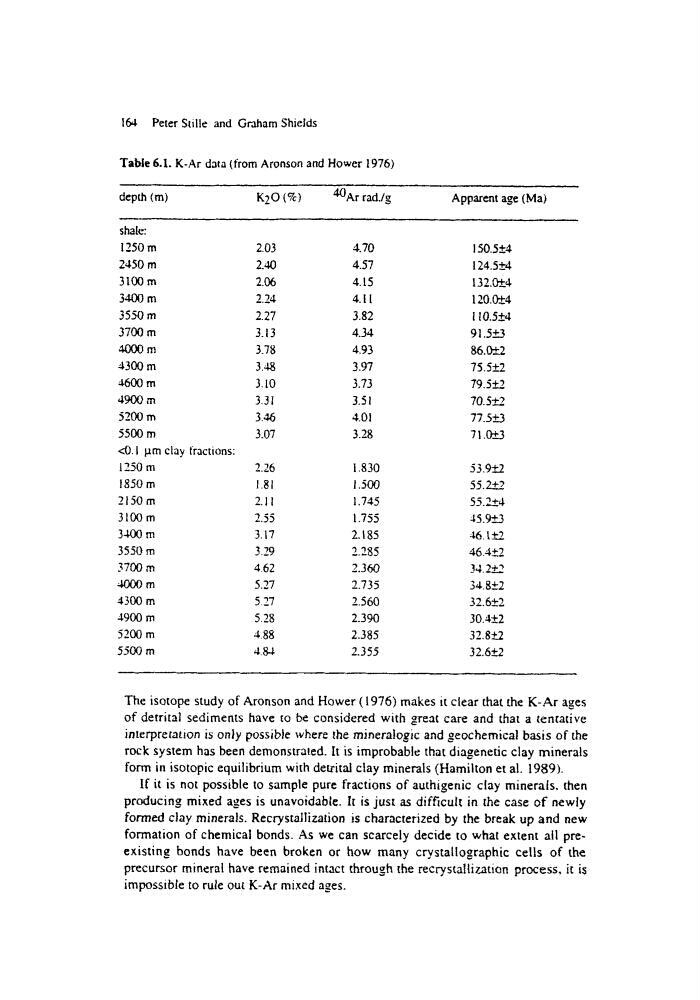
Table 6.1. K-Ar data (from Aronson and Hower 1976)
depth (m)
K20 (%)
40Ar rad./g
Apparent age (Ma)
shale:
1250 m
2.03
4.70
150.5+4
2450 m
2.40
4.57
124.5_-~4
3100 m
2.06
4.15
132.0+_4
3400 m
2.24
4.11
120.0~_4
3550 m
2.27
3.82
110.5+4
3700 m
3. t 3
4.34
9 t .5+_.3
4000 m
3.78
4.93
86.0+..2
4300 m
3.48
3.97
75.5+2
4600 m
3.10
3.73
79.5+9
4900 m
3.3I
3.51
70.5+_2
5200 m
3.46
4.01
77.5+_.3
5500 m
3.07
3.28
71.0+...3
<0. I lain clay tractions:
1250 m
2.26
1.830
53.9+_2
1850 m
1.81
1.500
55.2~
2150 m
2.11
1.745
55.2__.4
3100 m
2.55
1.755
45.9+_3
3400 m
3.17
2.185
46. t-+2
3550 m
3.29
2.285
46.4_+2
3700 m
4,62
2.360
34.2+_2
-4000 m
5.27
2.735
34.8_+2
4300 m
527
2.560
32.6_+2
4900 m
5.28
2.390
30.4+2
5200 m
4.88
2.385
32.8+__2
5500 m
4,84
2.355
32.6__.2
The isotope study of Aronson and Hower (1976) makes it clear that the K - A r ages
of detrital sediments have to be considered with great care and that a tentative
interpretation is only possib)e where ~he mineralogic and geochemical basis of the
rock system has been demonstrated. It is improbable that diagenetic clay minerals
form in isotopic equilibrium with detrital clay minerals (Hamilton et al. 1989).
If it is not possible to sample pure fractions of authigenic clay minerals, then
producing mixed ages is unavoidable. It is just as difficult in the case o f newly
formed clay minerals. Recrystallization is characterized by the break up and new
formation of chemical bonds. As we can scarcely decide to what extent all preexisting bonds have been broken or how many crystallographic cells of the
precursor mineral have remained intact through the recrystallizati~n process, it is
impossible to rule out K-Ar mixed ages.
Table 6.1. K-Ar data (from Aronson and Hower 1976)
depth (m)
K20 (%)
40Ar rad./g
Apparent age (Ma)
shale:
1250 m
2.03
4.70
150.5+4
2450 m
2.40
4.57
124.5_-~4
3100 m
2.06
4.15
132.0+_4
3400 m
2.24
4.11
120.0~_4
3550 m
2.27
3.82
110.5+4
3700 m
3. t 3
4.34
9 t .5+_.3
4000 m
3.78
4.93
86.0+..2
4300 m
3.48
3.97
75.5+2
4600 m
3.10
3.73
79.5+9
4900 m
3.3I
3.51
70.5+_2
5200 m
3.46
4.01
77.5+_.3
5500 m
3.07
3.28
71.0+...3
<0. I lain clay tractions:
1250 m
2.26
1.830
53.9+_2
1850 m
1.81
1.500
55.2~
2150 m
2.11
1.745
55.2__.4
3100 m
2.55
1.755
45.9+_3
3400 m
3.17
2.185
46. t-+2
3550 m
3.29
2.285
46.4_+2
3700 m
4,62
2.360
34.2+_2
-4000 m
5.27
2.735
34.8_+2
4300 m
527
2.560
32.6_+2
4900 m
5.28
2.390
30.4+2
5200 m
4.88
2.385
32.8+__2
5500 m
4,84
2.355
32.6__.2
The isotope study of Aronson and Hower (1976) makes it clear that the K - A r ages
of detrital sediments have to be considered with great care and that a tentative
interpretation is only possib)e where ~he mineralogic and geochemical basis of the
rock system has been demonstrated. It is improbable that diagenetic clay minerals
form in isotopic equilibrium with detrital clay minerals (Hamilton et al. 1989).
If it is not possible to sample pure fractions of authigenic clay minerals, then
producing mixed ages is unavoidable. It is just as difficult in the case o f newly
formed clay minerals. Recrystallization is characterized by the break up and new
formation of chemical bonds. As we can scarcely decide to what extent all preexisting bonds have been broken or how many crystallographic cells of the
precursor mineral have remained intact through the recrystallizati~n process, it is
impossible to rule out K-Ar mixed ages.