

5 Isotopic Composition of Seawater
95
peloids which is precisely the same age that can be ascertained using
biostratigraphic methods.
Samples from the uppermost part of the profile, which has been interpreted by
sedimentologists as a Pleistocene-Holocene condensation horizon, show a clearly
homogeneous Sr isotope composition providing an age of about 17.2 Ma. This
indicates that the phosphate here has been reworked and originated in the Miocene
beds. The isotope investigations of the whole profile make it possible for us to
make some important sedimentologic and stratigraphic conclusions.
SEOUENCE STRATIGRA PHY
( Seismic )
@IOS TRA TIGRA PHY
CHRONOSTRA TIG,~ A PHY
ZANCLEAN
SERRAVALLIAN
8ofue ~ k j
$~t<)mmce
158.$1
LANGHIAN
Onslo~ 8a7
$eqvence
IOBS}
8UROIGALIAN
Frym9 P+n
Sequence
I u )
late CHA.TTIAN
$dre~lale
$c~.et~e
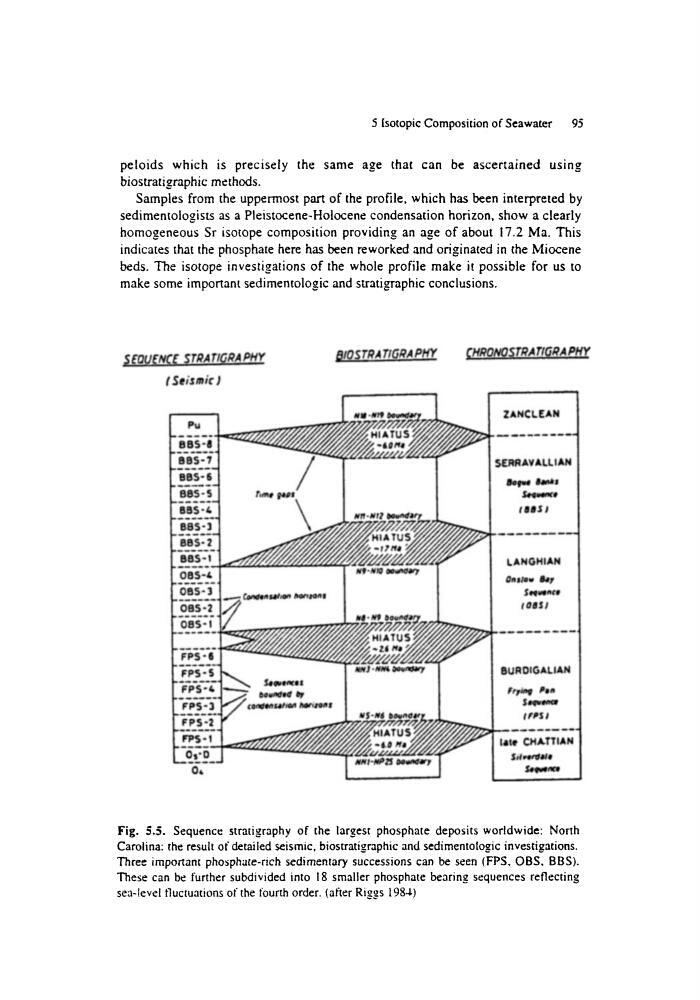
Fig. 5.5. Sequence stratigraphy of the largest phosphate deposits worldwide: North
Carolina: the result of detailed seismic, biostratigraphic and sedimentologic investigations.
Three important phosphate-rich sedimentary successions can be seen (FPS. OBS, BBS).
These can be further subdivided into 18 smaller phosphate bearing sequences reflecting
sea-level fluctuations of the fourth order. (after Riggs 198.,t)
95
peloids which is precisely the same age that can be ascertained using
biostratigraphic methods.
Samples from the uppermost part of the profile, which has been interpreted by
sedimentologists as a Pleistocene-Holocene condensation horizon, show a clearly
homogeneous Sr isotope composition providing an age of about 17.2 Ma. This
indicates that the phosphate here has been reworked and originated in the Miocene
beds. The isotope investigations of the whole profile make it possible for us to
make some important sedimentologic and stratigraphic conclusions.
SEOUENCE STRATIGRA PHY
( Seismic )
@IOS TRA TIGRA PHY
CHRONOSTRA TIG,~ A PHY
ZANCLEAN
SERRAVALLIAN
8ofue ~ k j
$~t<)mmce
158.$1
LANGHIAN
Onslo~ 8a7
$eqvence
IOBS}
8UROIGALIAN
Frym9 P+n
Sequence
I u )
late CHA.TTIAN
$dre~lale
$c~.et~e
Fig. 5.5. Sequence stratigraphy of the largest phosphate deposits worldwide: North
Carolina: the result of detailed seismic, biostratigraphic and sedimentologic investigations.
Three important phosphate-rich sedimentary successions can be seen (FPS. OBS, BBS).
These can be further subdivided into 18 smaller phosphate bearing sequences reflecting
sea-level fluctuations of the fourth order. (after Riggs 198.,t)