

13 Input from the Deep: Hot Vents and Cold Seeps
462
13.2 Onset of Hydrothermal Activity
In order for high-temperature hydrothermal fluids
to discharge, they must first displace a large
volume of cold seawater that occupies fractures
and pore spaces within the permeable upper crust.
The initial flushing of the system may be very
rapid, especially on medium- and fast-spreading
ridges that are undergoing extension at rates of
tens of centimeters per year. Where there are
frequent intrusions of magma close to the seafloor
and fissure-fed eruptions along the axial rift,
seafloor hydrothermal activity may begin with the
sudden release of a large volume of hydrothermal
fluid forming a “megaplume” in the overlying
water column. Observations at hydrothermal fields
on the Juan de Fuca Ridge (Embley et al. 1993;
Baker 1995) and the East Pacific Rise (Haymon et
al. 1993) suggest that the initiation of hydrothermal activity is directly linked to discrete volcanic
eruptions and that megaplumes are triggered by
dike emplacement (Embley and Chadwick 1994;
Baker 1995). The intrusion of the dikes close to
the seafloor and major eruptions of lava are
coincident with the displacement of large volumes
of hydrothermal fluid. Shortly after these eruptions, widespread diffuse flow of low-temperature
(<100 o C) fluids begins through fractures in the
fresh lavas and between new pillows (Butterfield
and Massoth 1994). Within a period of about 5-10
years, a low-temperature vent field may be sealed
by hydrothermal precipitates, allowing sub-seafloor temperatures to rise and fluid discharge to
become focussed into deeper fractures. On a fastspreading ridge such as the East Pacific Rise, the
cycle of dike injection, eruption, and hydrothermal
discharge may repeat itself with each new
eruption, perhaps as often as every 3-5 years
(Haymon et al. 1993).
Diffuse venting typically occurs throughout
the life of a hydrothermal system. It may be the
earliest form of discharge in a new hydrothermal
field (see above) but commonly also occurs at the
margins of existing high-temperature upflow where
rising hydrothermal fluids mix with cold seawater.
Diffuse venting also typically dominates the last
stages of activity in a waning hydrothermal system as high-temperature upflow collapses around
a cooling subvolcanic intrusion. Periods of diffuse
flow can sustain large biological communities, but
are not generally associated with extensive sulfide
mineralization because the low temperatures of the
fluids (<10°C to 50°C) do not allow transport of
significant concentrations of dissolved metals.
The mineral precipitates associated with diffuse
venting typically consist of amorphous Feoxyhydroxides, Mn-oxides, and silica.
13.3 Growth of Black Smokers and
Massive Sulfide Mounds
Black smoker activity begins when the hydrothermal fluids contain enough metals and sulfur to
cause precipitation of sulfide particles during
mixing at the vent orifice. In order to carry these
metals in solution, fluids arriving at the seafloor
are usually hotter than 300°C. At many black
smoker chimneys measurements of vent temperatures in the range of 350°-400°C are common.
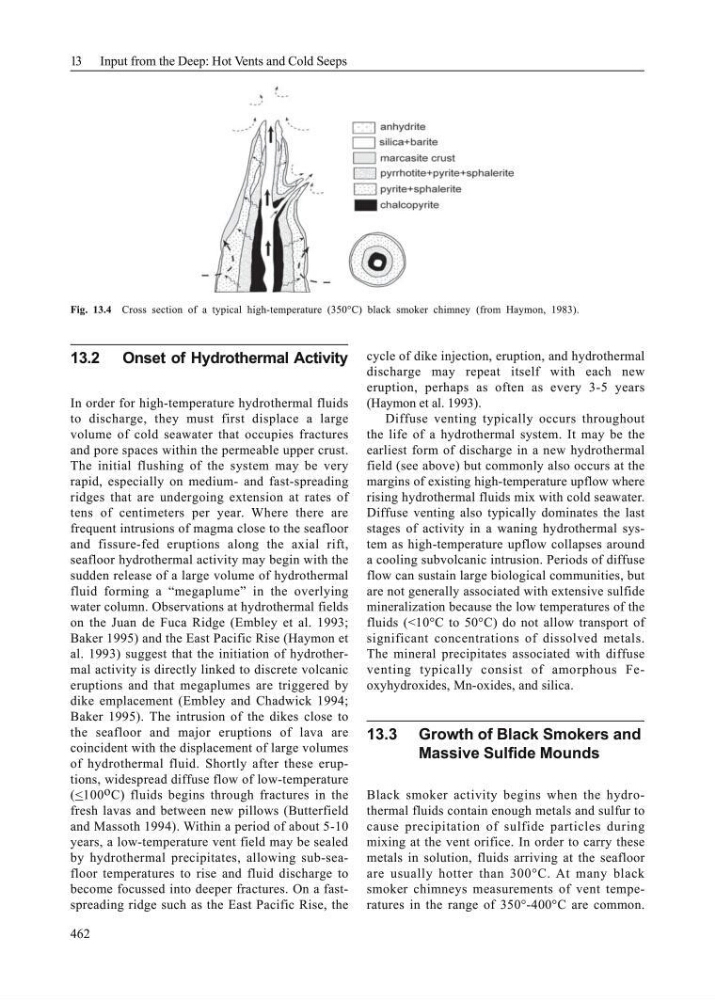
Fig. 13.4 Cross section of a typical high-temperature (350°C) black smoker chimney (from Haymon, 1983).
462
13.2 Onset of Hydrothermal Activity
In order for high-temperature hydrothermal fluids
to discharge, they must first displace a large
volume of cold seawater that occupies fractures
and pore spaces within the permeable upper crust.
The initial flushing of the system may be very
rapid, especially on medium- and fast-spreading
ridges that are undergoing extension at rates of
tens of centimeters per year. Where there are
frequent intrusions of magma close to the seafloor
and fissure-fed eruptions along the axial rift,
seafloor hydrothermal activity may begin with the
sudden release of a large volume of hydrothermal
fluid forming a “megaplume” in the overlying
water column. Observations at hydrothermal fields
on the Juan de Fuca Ridge (Embley et al. 1993;
Baker 1995) and the East Pacific Rise (Haymon et
al. 1993) suggest that the initiation of hydrothermal activity is directly linked to discrete volcanic
eruptions and that megaplumes are triggered by
dike emplacement (Embley and Chadwick 1994;
Baker 1995). The intrusion of the dikes close to
the seafloor and major eruptions of lava are
coincident with the displacement of large volumes
of hydrothermal fluid. Shortly after these eruptions, widespread diffuse flow of low-temperature
(<100 o C) fluids begins through fractures in the
fresh lavas and between new pillows (Butterfield
and Massoth 1994). Within a period of about 5-10
years, a low-temperature vent field may be sealed
by hydrothermal precipitates, allowing sub-seafloor temperatures to rise and fluid discharge to
become focussed into deeper fractures. On a fastspreading ridge such as the East Pacific Rise, the
cycle of dike injection, eruption, and hydrothermal
discharge may repeat itself with each new
eruption, perhaps as often as every 3-5 years
(Haymon et al. 1993).
Diffuse venting typically occurs throughout
the life of a hydrothermal system. It may be the
earliest form of discharge in a new hydrothermal
field (see above) but commonly also occurs at the
margins of existing high-temperature upflow where
rising hydrothermal fluids mix with cold seawater.
Diffuse venting also typically dominates the last
stages of activity in a waning hydrothermal system as high-temperature upflow collapses around
a cooling subvolcanic intrusion. Periods of diffuse
flow can sustain large biological communities, but
are not generally associated with extensive sulfide
mineralization because the low temperatures of the
fluids (<10°C to 50°C) do not allow transport of
significant concentrations of dissolved metals.
The mineral precipitates associated with diffuse
venting typically consist of amorphous Feoxyhydroxides, Mn-oxides, and silica.
13.3 Growth of Black Smokers and
Massive Sulfide Mounds
Black smoker activity begins when the hydrothermal fluids contain enough metals and sulfur to
cause precipitation of sulfide particles during
mixing at the vent orifice. In order to carry these
metals in solution, fluids arriving at the seafloor
are usually hotter than 300°C. At many black
smoker chimneys measurements of vent temperatures in the range of 350°-400°C are common.
Fig. 13.4 Cross section of a typical high-temperature (350°C) black smoker chimney (from Haymon, 1983).