

459
te m p e r atu re :
2 ° C →
> 4 00 ° C m a g m a c h a m b er ( 1 2 0 0 ° C )
pH ( a c id ity ) :
7 .8 →
< 4
H2O → O H
- + H
+
2 O H
- + M g
2 + → M g (O H) 2
( > 3 5 0 ° C : C a ins te a d o f M g )
M g (O H) 2 fixe d in
sm e c tite (< 20 0 ° C )
c h lo rite ( > 2 0 0 ° C )
e xc e ss H
+ = p H d e c r e a se
E H ( r e d o x sta te ) :
+
→
-
F e
2 + → F e
3 + ( in b a sa lt)
s ea wa te r S O 4
2 - → S
2 - ( H2S )
a t > 2 5 0 ° C
n o te : a sig n ific an t a m o u nt o f the
r e d uc e d S
2 - in th e h y d r o the r m a l
fluid r esu lts fr o m le a c h in g o f
s ulfid e in c lu sio ns in th e ba sa lt
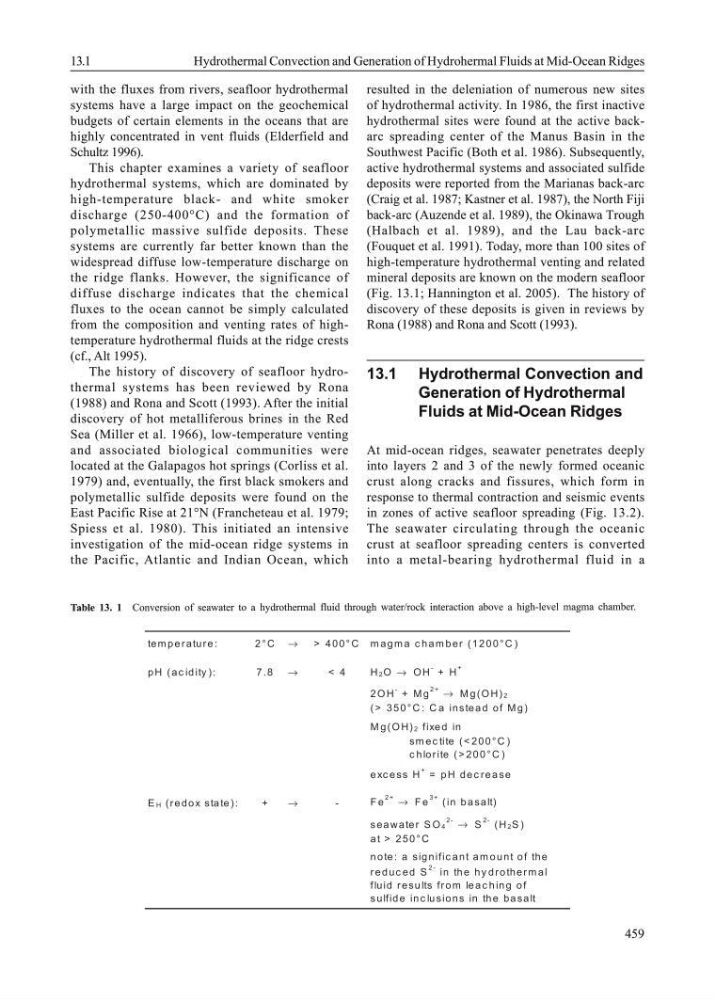
Table 13. 1 Conversion of seawater to a hydrothermal fluid through water/rock interaction above a high-level magma chamber.
with the fluxes from rivers, seafloor hydrothermal
systems have a large impact on the geochemical
budgets of certain elements in the oceans that are
highly concentrated in vent fluids (Elderfield and
Schultz 1996).
This chapter examines a variety of seafloor
hydrothermal systems, which are dominated by
high-temperature black- and white smoker
discharge (250-400°C) and the formation of
polymetallic massive sulfide deposits. These
systems are currently far better known than the
widespread diffuse low-temperature discharge on
the ridge flanks. However, the significance of
diffuse discharge indicates that the chemical
fluxes to the ocean cannot be simply calculated
from the composition and venting rates of hightemperature hydrothermal fluids at the ridge crests
(cf., Alt 1995).
The history of discovery of seafloor hydrothermal systems has been reviewed by Rona
(1988) and Rona and Scott (1993). After the initial
discovery of hot metalliferous brines in the Red
Sea (Miller et al. 1966), low-temperature venting
and associated biological communities were
located at the Galapagos hot springs (Corliss et al.
1979) and, eventually, the first black smokers and
polymetallic sulfide deposits were found on the
East Pacific Rise at 21°N (Francheteau et al. 1979;
Spiess et al. 1980). This initiated an intensive
investigation of the mid-ocean ridge systems in
the Pacific, Atlantic and Indian Ocean, which
resulted in the deleniation of numerous new sites
of hydrothermal activity. In 1986, the first inactive
hydrothermal sites were found at the active backarc spreading center of the Manus Basin in the
Southwest Pacific (Both et al. 1986). Subsequently,
active hydrothermal systems and associated sulfide
deposits were reported from the Marianas back-arc
(Craig et al. 1987; Kastner et al. 1987), the North Fiji
back-arc (Auzende et al. 1989), the Okinawa Trough
(Halbach et al. 1989), and the Lau back-arc
(Fouquet et al. 1991). Today, more than 100 sites of
high-temperature hydrothermal venting and related
mineral deposits are known on the modern seafloor
(Fig. 13.1; Hannington et al. 2005). The history of
discovery of these deposits is given in reviews by
Rona (1988) and Rona and Scott (1993).
13.1 Hydrothermal Convection and
Generation of Hydrothermal
Fluids at Mid-Ocean Ridges
At mid-ocean ridges, seawater penetrates deeply
into layers 2 and 3 of the newly formed oceanic
crust along cracks and fissures, which form in
response to thermal contraction and seismic events
in zones of active seafloor spreading (Fig. 13.2).
The seawater circulating through the oceanic
crust at seafloor spreading centers is converted
into a metal-bearing hydrothermal fluid in a
13.1
Hydrothermal Convection and Generation of Hydrohermal Fluids at Mid-Ocean Ridges
te m p e r atu re :
2 ° C →
> 4 00 ° C m a g m a c h a m b er ( 1 2 0 0 ° C )
pH ( a c id ity ) :
7 .8 →
< 4
H2O → O H
- + H
+
2 O H
- + M g
2 + → M g (O H) 2
( > 3 5 0 ° C : C a ins te a d o f M g )
M g (O H) 2 fixe d in
sm e c tite (< 20 0 ° C )
c h lo rite ( > 2 0 0 ° C )
e xc e ss H
+ = p H d e c r e a se
E H ( r e d o x sta te ) :
+
→
-
F e
2 + → F e
3 + ( in b a sa lt)
s ea wa te r S O 4
2 - → S
2 - ( H2S )
a t > 2 5 0 ° C
n o te : a sig n ific an t a m o u nt o f the
r e d uc e d S
2 - in th e h y d r o the r m a l
fluid r esu lts fr o m le a c h in g o f
s ulfid e in c lu sio ns in th e ba sa lt
Table 13. 1 Conversion of seawater to a hydrothermal fluid through water/rock interaction above a high-level magma chamber.
with the fluxes from rivers, seafloor hydrothermal
systems have a large impact on the geochemical
budgets of certain elements in the oceans that are
highly concentrated in vent fluids (Elderfield and
Schultz 1996).
This chapter examines a variety of seafloor
hydrothermal systems, which are dominated by
high-temperature black- and white smoker
discharge (250-400°C) and the formation of
polymetallic massive sulfide deposits. These
systems are currently far better known than the
widespread diffuse low-temperature discharge on
the ridge flanks. However, the significance of
diffuse discharge indicates that the chemical
fluxes to the ocean cannot be simply calculated
from the composition and venting rates of hightemperature hydrothermal fluids at the ridge crests
(cf., Alt 1995).
The history of discovery of seafloor hydrothermal systems has been reviewed by Rona
(1988) and Rona and Scott (1993). After the initial
discovery of hot metalliferous brines in the Red
Sea (Miller et al. 1966), low-temperature venting
and associated biological communities were
located at the Galapagos hot springs (Corliss et al.
1979) and, eventually, the first black smokers and
polymetallic sulfide deposits were found on the
East Pacific Rise at 21°N (Francheteau et al. 1979;
Spiess et al. 1980). This initiated an intensive
investigation of the mid-ocean ridge systems in
the Pacific, Atlantic and Indian Ocean, which
resulted in the deleniation of numerous new sites
of hydrothermal activity. In 1986, the first inactive
hydrothermal sites were found at the active backarc spreading center of the Manus Basin in the
Southwest Pacific (Both et al. 1986). Subsequently,
active hydrothermal systems and associated sulfide
deposits were reported from the Marianas back-arc
(Craig et al. 1987; Kastner et al. 1987), the North Fiji
back-arc (Auzende et al. 1989), the Okinawa Trough
(Halbach et al. 1989), and the Lau back-arc
(Fouquet et al. 1991). Today, more than 100 sites of
high-temperature hydrothermal venting and related
mineral deposits are known on the modern seafloor
(Fig. 13.1; Hannington et al. 2005). The history of
discovery of these deposits is given in reviews by
Rona (1988) and Rona and Scott (1993).
13.1 Hydrothermal Convection and
Generation of Hydrothermal
Fluids at Mid-Ocean Ridges
At mid-ocean ridges, seawater penetrates deeply
into layers 2 and 3 of the newly formed oceanic
crust along cracks and fissures, which form in
response to thermal contraction and seismic events
in zones of active seafloor spreading (Fig. 13.2).
The seawater circulating through the oceanic
crust at seafloor spreading centers is converted
into a metal-bearing hydrothermal fluid in a
13.1
Hydrothermal Convection and Generation of Hydrohermal Fluids at Mid-Ocean Ridges