

12 Quantification and Regionalization of Benthic Reflux
434
system are very difficult to perform. Nevertheless,
information on both factors is very important for
assessing the comparability of results obtained
from single case studies. For instance, the reproduction of measurements carried out at ‘identical’
locations, but performed in successive years and
in different seasons, in fact exhibit a significant
variation of concentrations within the nearsurface zone (e.g. Zabel et al. 1998). Two reasons
for this phenomenon are presently being discussed: a) seasonal and interannual variations of the
particle flux to the ocean floor and b) differences
in relatively small natural environments.
Temporal variations of export production are
well known from long-term sediment trap experiments (e.g. Wefer and Fischer 1993) and can
nowadays also be deduced by satellite monitoring.
However, important effects of sediment pulses on
biogeochemical reactions at the sediment surface
are primarily confined to eutrophic areas, predominately along continental margins (Sayles et al.
1994). Such rapid deposition events of organic-rich
aggregates known as ‘marine snow’ induce a very
strong increase of benthic reaction rates, especially
as far as the oxygen consumption is concerned
(Witte et al. 2003a/b, Bühring et al. 2005;
Aspetsberger et al. subm. a/b; cf. Fig. 6.21). In
contrast, interannual variation of benthic flux rates
in the pelagic zone of the deep-sea has been
estimated to be rather low (Smith et al. 1992).
Apart from the variances in particulate input,
there are also small-scale micro-environmental
variations at the ocean floor, which primarily
depend on the morphology of the sediment
surface and the intensity of the bottom water
current (see Fig. 3.22; compare with Chapters 3
and 6). Time-lapse recordings of the ocean floor
revealed that depending on the relief of the
sediment surface marked sedimentation events are
recorded to varying extent (e.g. Lampitt 1996).
Hence, the so-called ‘fluffy’ layer is not a
homogenous layer on top of the sediment,
instead, deposits of phytodetritus accumulate in
little hollows. It is evident that, in such a case,
significantly different rates are determined,
depending on the precise spot of sediment
recovery or micro-electrode measurement.
In addition to these heterogeneities, pore
water profiles can also be significantly affected by
chemical variations on even smaller scale, which
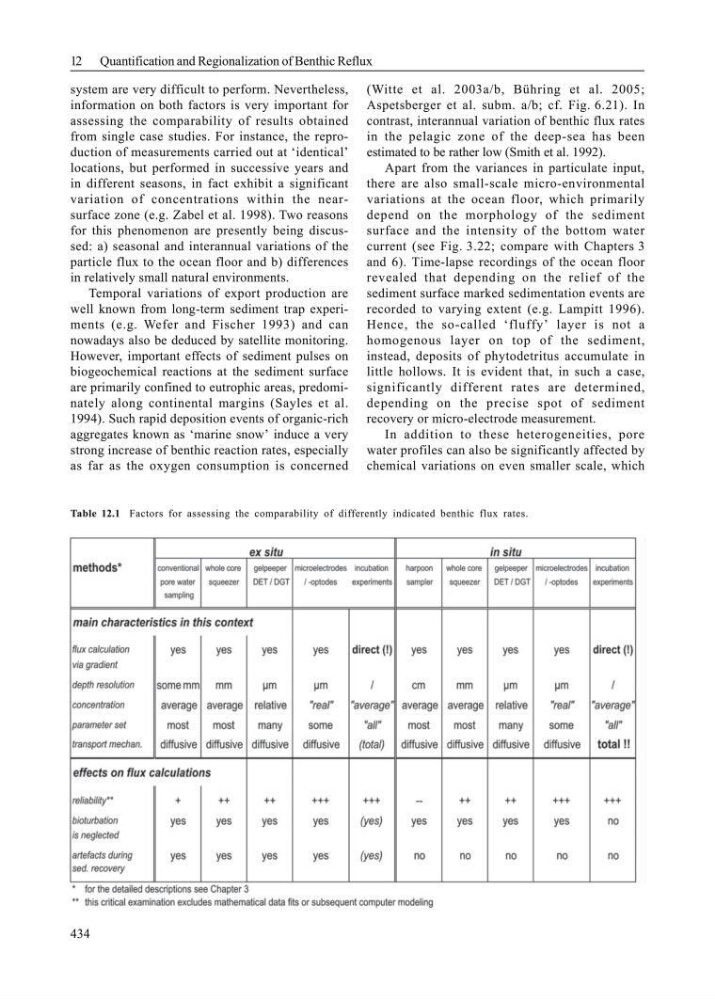
Table 12.1 Factors for assessing the comparability of differently indicated benthic flux rates.
434
system are very difficult to perform. Nevertheless,
information on both factors is very important for
assessing the comparability of results obtained
from single case studies. For instance, the reproduction of measurements carried out at ‘identical’
locations, but performed in successive years and
in different seasons, in fact exhibit a significant
variation of concentrations within the nearsurface zone (e.g. Zabel et al. 1998). Two reasons
for this phenomenon are presently being discussed: a) seasonal and interannual variations of the
particle flux to the ocean floor and b) differences
in relatively small natural environments.
Temporal variations of export production are
well known from long-term sediment trap experiments (e.g. Wefer and Fischer 1993) and can
nowadays also be deduced by satellite monitoring.
However, important effects of sediment pulses on
biogeochemical reactions at the sediment surface
are primarily confined to eutrophic areas, predominately along continental margins (Sayles et al.
1994). Such rapid deposition events of organic-rich
aggregates known as ‘marine snow’ induce a very
strong increase of benthic reaction rates, especially
as far as the oxygen consumption is concerned
(Witte et al. 2003a/b, Bühring et al. 2005;
Aspetsberger et al. subm. a/b; cf. Fig. 6.21). In
contrast, interannual variation of benthic flux rates
in the pelagic zone of the deep-sea has been
estimated to be rather low (Smith et al. 1992).
Apart from the variances in particulate input,
there are also small-scale micro-environmental
variations at the ocean floor, which primarily
depend on the morphology of the sediment
surface and the intensity of the bottom water
current (see Fig. 3.22; compare with Chapters 3
and 6). Time-lapse recordings of the ocean floor
revealed that depending on the relief of the
sediment surface marked sedimentation events are
recorded to varying extent (e.g. Lampitt 1996).
Hence, the so-called ‘fluffy’ layer is not a
homogenous layer on top of the sediment,
instead, deposits of phytodetritus accumulate in
little hollows. It is evident that, in such a case,
significantly different rates are determined,
depending on the precise spot of sediment
recovery or micro-electrode measurement.
In addition to these heterogeneities, pore
water profiles can also be significantly affected by
chemical variations on even smaller scale, which
Table 12.1 Factors for assessing the comparability of differently indicated benthic flux rates.