

8
Sulfur Cycling and Methane Oxidation
288
increasing sediment depth. Mineral precipitation
at sulfidization fronts can also occur cyclically
within the sedimentary sequence – superimposed
by episodic changes in depositional or other
environmental conditions.
8.4.3
Magnetite and Barite
Besides the precipitation of mineral phases, dissolution of numerous minerals initially supplied to
the seafloor can occur in sediments that experience sulfate reduction and/or sulfate-depleted
conditions. Iron (oxyhydr)oxides and barite
(BaSO 4 ) are two examples with particular relevance
for paleoceanographic research.
Magnetic iron (oxyhydr)oxides, especially
magnetite (Fe 3 O 4 ), are the main carriers of
remanent magnetization in sediments. Magnetostratigraphy of deep sea sediment cores is a
valuable method of dating and comparing sedimentary records. Dissolution of the magnetic
minerals under sulfate- and iron-reducing conditions and/or subsequent precipitation of authigenic iron minerals may, however, alter the initial
remanent magnetization and seriously compromise
the interpretation of the sedimentary geomagnetic
record (e.g. Karlin and Levi 1983, 1985; Funk et al.
2003a, 2003b; Reitz et al. 2004). The effects of
AOM-driven sulfate reduction on the transformation of iron minerals and the associated modification of rock magnetic properties will be demonstrated below using examples from the Amazon
Fan and the western Argentine Basin.
A second sedimentary component important
for paleoceanographic reconstructions, which is
prone to dissolution under conditions of sulfate
reduction – or more precisely in sulfate-depleted
sediments - is the barium sulfate mineral, barite
(BaSO 4 ). Since a correlation has been detected
between barite deposition and the flux of organic
matter through the water column, the concentration of barite in sediments has been proposed
and applied as a geochemical tracer to reconstruct
past changes in ocean productivity (e.g., Bishop
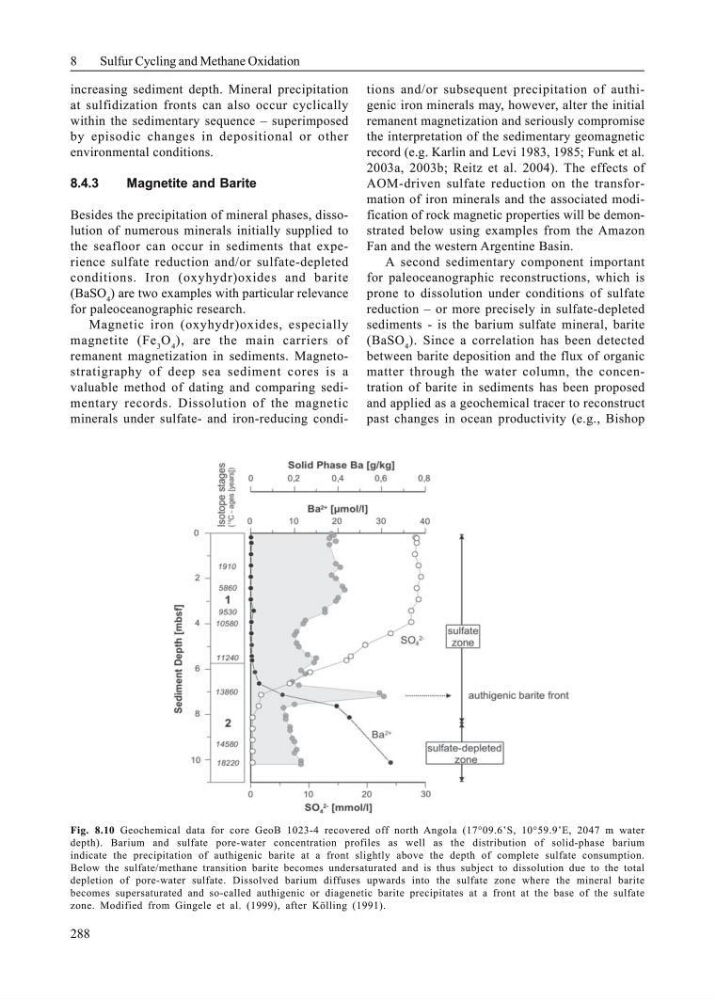
Fig. 8.10 Geochemical data for core GeoB 1023-4 recovered off north Angola (17°09.6’S, 10°59.9’E, 2047 m water
depth). Barium and sulfate pore-water concentration profiles as well as the distribution of solid-phase barium
indicate the precipitation of authigenic barite at a front slightly above the depth of complete sulfate consumption.
Below the sulfate/methane transition barite becomes undersaturated and is thus subject to dissolution due to the total
depletion of pore-water sulfate. Dissolved barium diffuses upwards into the sulfate zone where the mineral barite
becomes supersaturated and so-called authigenic or diagenetic barite precipitates at a front at the base of the sulfate
zone. Modified from Gingele et al. (1999), after Kölling (1991).
Sulfur Cycling and Methane Oxidation
288
increasing sediment depth. Mineral precipitation
at sulfidization fronts can also occur cyclically
within the sedimentary sequence – superimposed
by episodic changes in depositional or other
environmental conditions.
8.4.3
Magnetite and Barite
Besides the precipitation of mineral phases, dissolution of numerous minerals initially supplied to
the seafloor can occur in sediments that experience sulfate reduction and/or sulfate-depleted
conditions. Iron (oxyhydr)oxides and barite
(BaSO 4 ) are two examples with particular relevance
for paleoceanographic research.
Magnetic iron (oxyhydr)oxides, especially
magnetite (Fe 3 O 4 ), are the main carriers of
remanent magnetization in sediments. Magnetostratigraphy of deep sea sediment cores is a
valuable method of dating and comparing sedimentary records. Dissolution of the magnetic
minerals under sulfate- and iron-reducing conditions and/or subsequent precipitation of authigenic iron minerals may, however, alter the initial
remanent magnetization and seriously compromise
the interpretation of the sedimentary geomagnetic
record (e.g. Karlin and Levi 1983, 1985; Funk et al.
2003a, 2003b; Reitz et al. 2004). The effects of
AOM-driven sulfate reduction on the transformation of iron minerals and the associated modification of rock magnetic properties will be demonstrated below using examples from the Amazon
Fan and the western Argentine Basin.
A second sedimentary component important
for paleoceanographic reconstructions, which is
prone to dissolution under conditions of sulfate
reduction – or more precisely in sulfate-depleted
sediments - is the barium sulfate mineral, barite
(BaSO 4 ). Since a correlation has been detected
between barite deposition and the flux of organic
matter through the water column, the concentration of barite in sediments has been proposed
and applied as a geochemical tracer to reconstruct
past changes in ocean productivity (e.g., Bishop
Fig. 8.10 Geochemical data for core GeoB 1023-4 recovered off north Angola (17°09.6’S, 10°59.9’E, 2047 m water
depth). Barium and sulfate pore-water concentration profiles as well as the distribution of solid-phase barium
indicate the precipitation of authigenic barite at a front slightly above the depth of complete sulfate consumption.
Below the sulfate/methane transition barite becomes undersaturated and is thus subject to dissolution due to the total
depletion of pore-water sulfate. Dissolved barium diffuses upwards into the sulfate zone where the mineral barite
becomes supersaturated and so-called authigenic or diagenetic barite precipitates at a front at the base of the sulfate
zone. Modified from Gingele et al. (1999), after Kölling (1991).