

6
Benthic Cycling of Oxygen, Nitrogen and Phosphorus
208
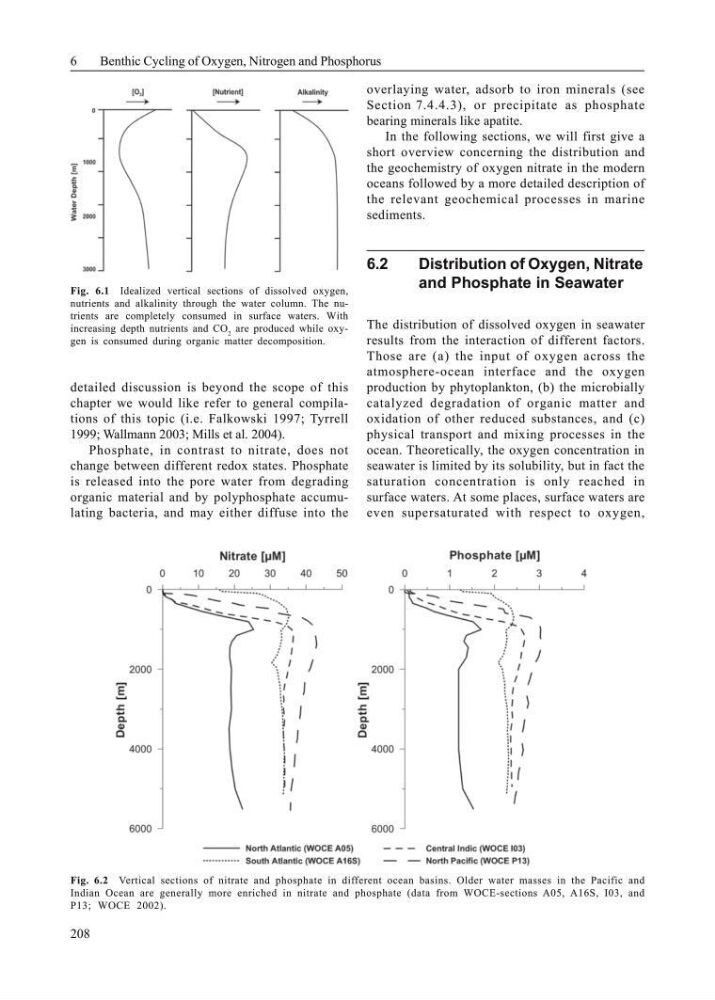
Fig. 6.1 Idealized vertical sections of dissolved oxygen,
nutrients and alkalinity through the water column. The nutrients are completely consumed in surface waters. With
increasing depth nutrients and CO 2 are produced while oxygen is consumed during organic matter decomposition.
detailed discussion is beyond the scope of this
chapter we would like refer to general compilations of this topic (i.e. Falkowski 1997; Tyrrell
1999; Wallmann 2003; Mills et al. 2004).
Phosphate, in contrast to nitrate, does not
change between different redox states. Phosphate
is released into the pore water from degrading
organic material and by polyphosphate accumulating bacteria, and may either diffuse into the
overlaying water, adsorb to iron minerals (see
Section 7.4.4.3), or precipitate as phosphate
bearing minerals like apatite.
In the following sections, we will first give a
short overview concerning the distribution and
the geochemistry of oxygen nitrate in the modern
oceans followed by a more detailed description of
the relevant geochemical processes in marine
sediments.
6.2
Distribution of Oxygen, Nitrate
and Phosphate in Seawater
The distribution of dissolved oxygen in seawater
results from the interaction of different factors.
Those are (a) the input of oxygen across the
atmosphere-ocean interface and the oxygen
production by phytoplankton, (b) the microbially
catalyzed degradation of organic matter and
oxidation of other reduced substances, and (c)
physical transport and mixing processes in the
ocean. Theoretically, the oxygen concentration in
seawater is limited by its solubility, but in fact the
saturation concentration is only reached in
surface waters. At some places, surface waters are
even supersaturated with respect to oxygen,
Fig. 6.2 Vertical sections of nitrate and phosphate in different ocean basins. Older water masses in the Pacific and
Indian Ocean are generally more enriched in nitrate and phosphate (data from WOCE-sections A05, A16S, I03, and
P13; WOCE 2002).
Benthic Cycling of Oxygen, Nitrogen and Phosphorus
208
Fig. 6.1 Idealized vertical sections of dissolved oxygen,
nutrients and alkalinity through the water column. The nutrients are completely consumed in surface waters. With
increasing depth nutrients and CO 2 are produced while oxygen is consumed during organic matter decomposition.
detailed discussion is beyond the scope of this
chapter we would like refer to general compilations of this topic (i.e. Falkowski 1997; Tyrrell
1999; Wallmann 2003; Mills et al. 2004).
Phosphate, in contrast to nitrate, does not
change between different redox states. Phosphate
is released into the pore water from degrading
organic material and by polyphosphate accumulating bacteria, and may either diffuse into the
overlaying water, adsorb to iron minerals (see
Section 7.4.4.3), or precipitate as phosphate
bearing minerals like apatite.
In the following sections, we will first give a
short overview concerning the distribution and
the geochemistry of oxygen nitrate in the modern
oceans followed by a more detailed description of
the relevant geochemical processes in marine
sediments.
6.2
Distribution of Oxygen, Nitrate
and Phosphate in Seawater
The distribution of dissolved oxygen in seawater
results from the interaction of different factors.
Those are (a) the input of oxygen across the
atmosphere-ocean interface and the oxygen
production by phytoplankton, (b) the microbially
catalyzed degradation of organic matter and
oxidation of other reduced substances, and (c)
physical transport and mixing processes in the
ocean. Theoretically, the oxygen concentration in
seawater is limited by its solubility, but in fact the
saturation concentration is only reached in
surface waters. At some places, surface waters are
even supersaturated with respect to oxygen,
Fig. 6.2 Vertical sections of nitrate and phosphate in different ocean basins. Older water masses in the Pacific and
Indian Ocean are generally more enriched in nitrate and phosphate (data from WOCE-sections A05, A16S, I03, and
P13; WOCE 2002).