

197
assimilating the labeled compound. Since phosphorus does not undergo redox processes in
sediments,
32
P (or
33
P) is mostly used to study the
dynamics and uptake of phosphate by microorganisms.
35
S has been used widely to study
processes of the sulfur cycle in sediments, in
particular to measure sulfate reduction.
Although radiotracer techniques may offer
many advantages, they also have inherent problems. For example, applications of
35
S to trace the
pathways of H 2 S oxidation have been flawed by
isotope exchange reactions between the inorganic
reduced sulfur species such as elemental sulfur,
polysulfides and iron sulfide (Fossing et al. 1992;
Fossing 1995). This isotope exchange means that
the sulfur atoms swap places between two
compounds without a concomitant net chemical
reaction between them. If a
35
S atom in H 2 S changes
place with a
32
S atom in S
0
, the resulting change in
radioactivity will appear as if
35
S-labelled H 2 S were
oxidized to S
0
, although there may be no change in
the concentrations of H 2 S or S
0
. When the
distribution of
35
S radiolabel is followed with time
the results can hardly be distinguished from a true
net process and may be incorrectly interpreted as
such. There is no similar isotopic exchange with
sulfate at normal environmental temperatures,
which would otherwise prevent its use for the
measurement of sulfate reduction rates.
The radioisotopes of iron or manganese,
55
Fe,
59
Fe and
54
Mn, have had only limited application as
tracers in biogeochemical studies. Experiments with
55
Fe (or
59
Fe) as a tracer for Fe(III) reduction in
marine sediments showed problems of unspecific
binding and possibly isotope exchange (King 1983;
Roden and Lovley 1993), which has discouraged
other researchers from the use of this isotope. Similar problems complicate experiments with manganese
as a radiotracer. The iron isotope,
57
Fe, has been
used in a completely different manner for the analysis of iron speciation in marine sediments. The isotope,
57
Fe, is added to a sediment and is allowed to
equilibrate with the iron species. It can then be used
to analyze the oxidation state and the mineralogy of
iron by Mössbauer spectroscopy and thus to study
the oxidation and reduction of iron minerals.
It has been a serious draw-back in studies of
nitrogen transformations that a useful radioisotope
of nitrogen does not exist. The isotope,
13
N, is
available only at accelerator facilities and has a
half-life of 5 min, which strongly limits its
applicability. Instead, the stable isotope,
15
N, has
been used successfully as a tracer in studies of
nitrogen transformations in the marine environment. For example, the use of
15
NO 3
–
by the ‘isotope
pairing’ technique has offered possibilities to study
the process of denitrification of
15
NO 3
–
to N 2
(Nielsen 1992). The
15
NO 3
–
is added to the water
phase over the sediment and is allowed to diffuse
into the sediment and gradually equilibrate with
14
NO 3
–
in the pore water. By analyzing the isotopic
composition of the formed N 2 , i.e.
14
N
14
N,
14
N
15
N
5.6
Methods in Biogeochemistry
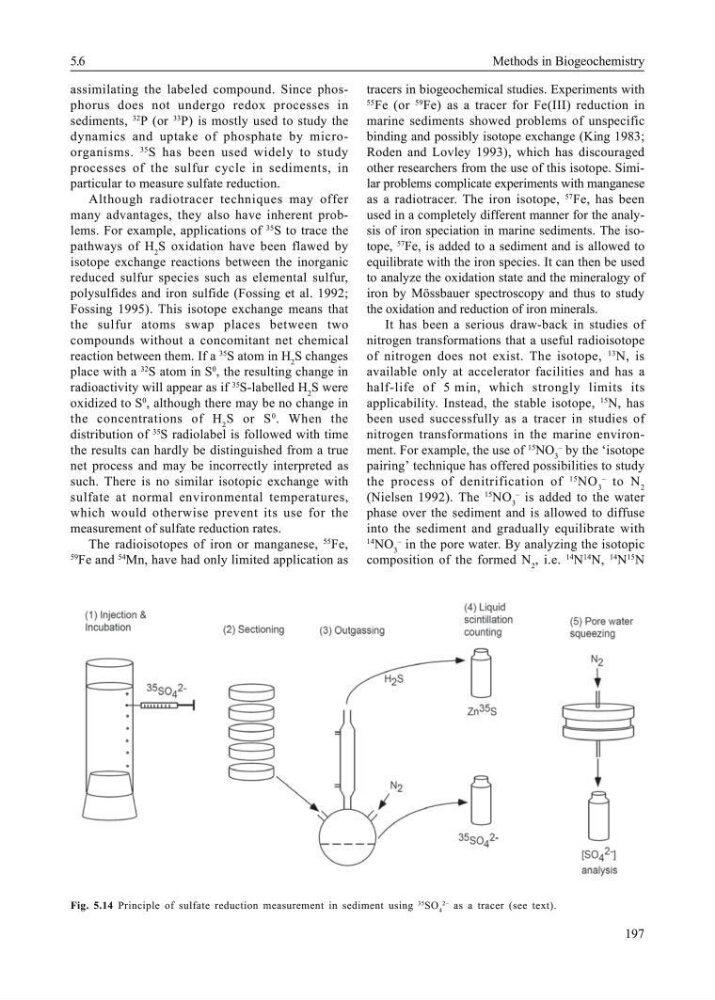
Fig. 5.14 Principle of sulfate reduction measurement in sediment using
35 SO 4
2– as a tracer (see text).
assimilating the labeled compound. Since phosphorus does not undergo redox processes in
sediments,
32
P (or
33
P) is mostly used to study the
dynamics and uptake of phosphate by microorganisms.
35
S has been used widely to study
processes of the sulfur cycle in sediments, in
particular to measure sulfate reduction.
Although radiotracer techniques may offer
many advantages, they also have inherent problems. For example, applications of
35
S to trace the
pathways of H 2 S oxidation have been flawed by
isotope exchange reactions between the inorganic
reduced sulfur species such as elemental sulfur,
polysulfides and iron sulfide (Fossing et al. 1992;
Fossing 1995). This isotope exchange means that
the sulfur atoms swap places between two
compounds without a concomitant net chemical
reaction between them. If a
35
S atom in H 2 S changes
place with a
32
S atom in S
0
, the resulting change in
radioactivity will appear as if
35
S-labelled H 2 S were
oxidized to S
0
, although there may be no change in
the concentrations of H 2 S or S
0
. When the
distribution of
35
S radiolabel is followed with time
the results can hardly be distinguished from a true
net process and may be incorrectly interpreted as
such. There is no similar isotopic exchange with
sulfate at normal environmental temperatures,
which would otherwise prevent its use for the
measurement of sulfate reduction rates.
The radioisotopes of iron or manganese,
55
Fe,
59
Fe and
54
Mn, have had only limited application as
tracers in biogeochemical studies. Experiments with
55
Fe (or
59
Fe) as a tracer for Fe(III) reduction in
marine sediments showed problems of unspecific
binding and possibly isotope exchange (King 1983;
Roden and Lovley 1993), which has discouraged
other researchers from the use of this isotope. Similar problems complicate experiments with manganese
as a radiotracer. The iron isotope,
57
Fe, has been
used in a completely different manner for the analysis of iron speciation in marine sediments. The isotope,
57
Fe, is added to a sediment and is allowed to
equilibrate with the iron species. It can then be used
to analyze the oxidation state and the mineralogy of
iron by Mössbauer spectroscopy and thus to study
the oxidation and reduction of iron minerals.
It has been a serious draw-back in studies of
nitrogen transformations that a useful radioisotope
of nitrogen does not exist. The isotope,
13
N, is
available only at accelerator facilities and has a
half-life of 5 min, which strongly limits its
applicability. Instead, the stable isotope,
15
N, has
been used successfully as a tracer in studies of
nitrogen transformations in the marine environment. For example, the use of
15
NO 3
–
by the ‘isotope
pairing’ technique has offered possibilities to study
the process of denitrification of
15
NO 3
–
to N 2
(Nielsen 1992). The
15
NO 3
–
is added to the water
phase over the sediment and is allowed to diffuse
into the sediment and gradually equilibrate with
14
NO 3
–
in the pore water. By analyzing the isotopic
composition of the formed N 2 , i.e.
14
N
14
N,
14
N
15
N
5.6
Methods in Biogeochemistry
Fig. 5.14 Principle of sulfate reduction measurement in sediment using
35 SO 4
2– as a tracer (see text).