

187
bacteria such as Beggiatoa or Thioploca may
often form mats of large biomass at the sediment
surface and thereby influence the whole community of benthic organisms as well as the
chemistry of the sediment (Fossing et al. 1995).
Among the aerobic chemolithotrophs, colorless
sulfur bacteria may oxidize H 2 S, S
0
, S 2 O 3
2or FeS 2 to
sulfate. Many H 2 S oxidizers, such as Beggiatoa,
accumulate S
0
in the cells and are conspicuous due
to the highly light-refractive S
0
-globules which give
Beggiatoa mats a bright white appearence. Nitrifying bacteria consist of two groups, those which
oxidize NH 4
+
to NO 2
-
and those which oxidize NO 2
-
to
NO 3
-
. The hydrogen oxidizing ‘Knallgas-bacteria’
mentioned before (Eq. 5.14) oxidize H 2 to water. They
have a higher efficiency of ATP formation than other
chemolithotrophs because their electron donor, H 2 ,
is highly reducing which provides a large energy
yield when feeding electrons into the respiratory
chain (see below). A variety of iron and manganese
oxidizing bacteria play an important role for metal
cycling in the suboxic zone, but this group of
organisms is still very incompletely known. Much
research has been done on the important acidophilic
forms, e.g. Thiobacillus ferrooxidans, associated
with acid mine drainage, due to their significance
and because it is possible to grow these in a
chemically stable medium without excessive precipitation of iron oxides.
The anaerobic chemolithotrophs use alternative electron acceptors such as nitrate, sulfate
or CO 2 for the oxidation of their electron donor.
Thus, several sulfur bacteria can respire with
nitrate (denitrifiers) and thereby oxidize reduced
sulfur species such as H 2 S, S
0
or S 2 O 3
2to sulfate.
Also the above mentioned iron oxidizing nitrate
reducing bacteria belong in this group. Many
sulfate reducing bacteria can use H 2 as electron
donor and thus live as anaerobic chemolithotrophs. Two very important groups of organisms
are the methanogens and the acetogens. The
former, which are archaea and not bacteria, form
methane from CO 2 and H 2 :
CO 2 + 4H 2 → CH 4 + H 2 O
(5.21)
while the latter form acetate:
2CO 2 + 4H 2 → CH 3 COO - + H +
(5.22)
In marine sediments below the sulfate zone,
methanogenesis is the predominant terminal
pathway of organic carbon degradation. Methane
may also be formed from acetate or from organic
C 1 -compounds such as methanol or methylamines:
CH 3 COO - + H + → CH 4 + CO 2
(5.23)
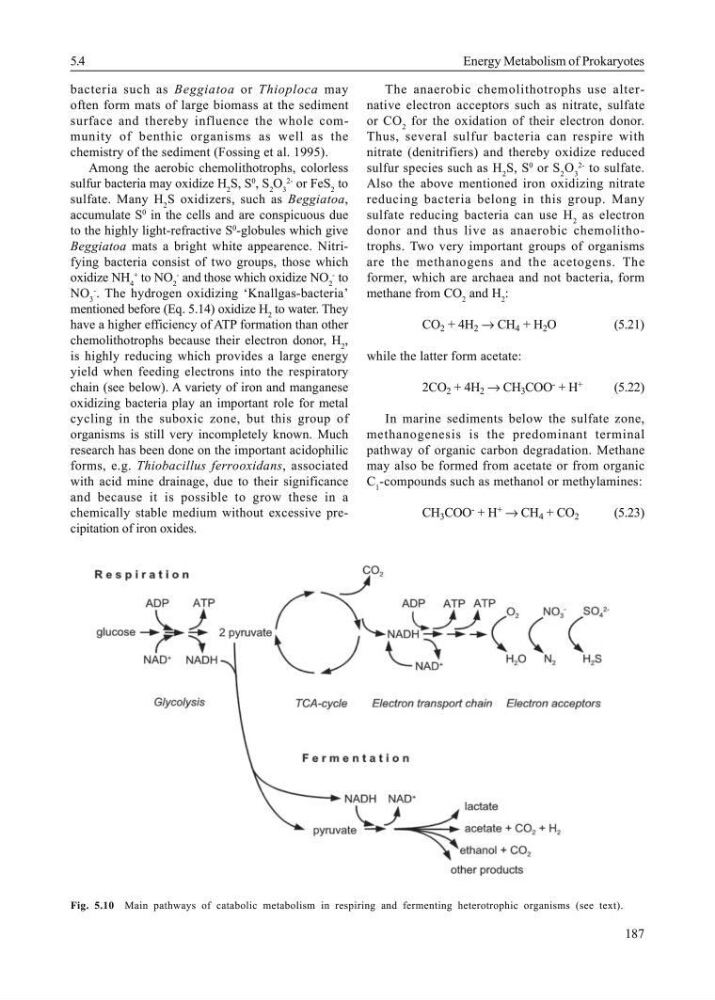
Fig. 5.10 Main pathways of catabolic metabolism in respiring and fermenting heterotrophic organisms (see text).
5.4
Energy Metabolism of Prokaryotes
bacteria such as Beggiatoa or Thioploca may
often form mats of large biomass at the sediment
surface and thereby influence the whole community of benthic organisms as well as the
chemistry of the sediment (Fossing et al. 1995).
Among the aerobic chemolithotrophs, colorless
sulfur bacteria may oxidize H 2 S, S
0
, S 2 O 3
2or FeS 2 to
sulfate. Many H 2 S oxidizers, such as Beggiatoa,
accumulate S
0
in the cells and are conspicuous due
to the highly light-refractive S
0
-globules which give
Beggiatoa mats a bright white appearence. Nitrifying bacteria consist of two groups, those which
oxidize NH 4
+
to NO 2
-
and those which oxidize NO 2
-
to
NO 3
-
. The hydrogen oxidizing ‘Knallgas-bacteria’
mentioned before (Eq. 5.14) oxidize H 2 to water. They
have a higher efficiency of ATP formation than other
chemolithotrophs because their electron donor, H 2 ,
is highly reducing which provides a large energy
yield when feeding electrons into the respiratory
chain (see below). A variety of iron and manganese
oxidizing bacteria play an important role for metal
cycling in the suboxic zone, but this group of
organisms is still very incompletely known. Much
research has been done on the important acidophilic
forms, e.g. Thiobacillus ferrooxidans, associated
with acid mine drainage, due to their significance
and because it is possible to grow these in a
chemically stable medium without excessive precipitation of iron oxides.
The anaerobic chemolithotrophs use alternative electron acceptors such as nitrate, sulfate
or CO 2 for the oxidation of their electron donor.
Thus, several sulfur bacteria can respire with
nitrate (denitrifiers) and thereby oxidize reduced
sulfur species such as H 2 S, S
0
or S 2 O 3
2to sulfate.
Also the above mentioned iron oxidizing nitrate
reducing bacteria belong in this group. Many
sulfate reducing bacteria can use H 2 as electron
donor and thus live as anaerobic chemolithotrophs. Two very important groups of organisms
are the methanogens and the acetogens. The
former, which are archaea and not bacteria, form
methane from CO 2 and H 2 :
CO 2 + 4H 2 → CH 4 + H 2 O
(5.21)
while the latter form acetate:
2CO 2 + 4H 2 → CH 3 COO - + H +
(5.22)
In marine sediments below the sulfate zone,
methanogenesis is the predominant terminal
pathway of organic carbon degradation. Methane
may also be formed from acetate or from organic
C 1 -compounds such as methanol or methylamines:
CH 3 COO - + H + → CH 4 + CO 2
(5.23)
Fig. 5.10 Main pathways of catabolic metabolism in respiring and fermenting heterotrophic organisms (see text).
5.4
Energy Metabolism of Prokaryotes