

5
Bacteria and Marine Biogeochemistry
186
inorganic compounds. Many are autotrophic and
assimilate CO 2 via the Calvin cycle similar to the
plants. Some are heterotrophic and assimilate
organic carbon, whereas some can alter between
these carbon sources and are termed mixotrophs.
Many respire with O 2 , while others are anaerobic
and use nitrate, sulfate, CO 2 or metal oxides as
electron acceptors.
It is important to note that the autotrophic
chemolithotrophs have a rather low growth yield
(amount of biomass produced per mol of substrate
consumed). For example, the sulfur bacteria use
most of the electrons and energy from sulfide
oxidation to generate ATP. They need this
transient energy storage for CO 2 assimilation via
the Calvin cycle (reductive pentose phosphate
cycle) which energetically is a rather inefficient
pathway in spite of its widespread ocurrence
among autotrophic organisms. Only some 10-20%
of the electrons derived from H 2 S oxidation flow
into CO 2 and are used for autotrophic growth
(Kelly 1982). As a consequence, it has a limited
significance for the overall organic carbon budget
of marine sediments whether sulfide is oxidized
autocatalytically without bacterial involvement or
biologically with a resulting formation of new
bacterial biomass (Jørgensen and Nelson 2004). In
spite of this low growth yield, filamentous sulfur
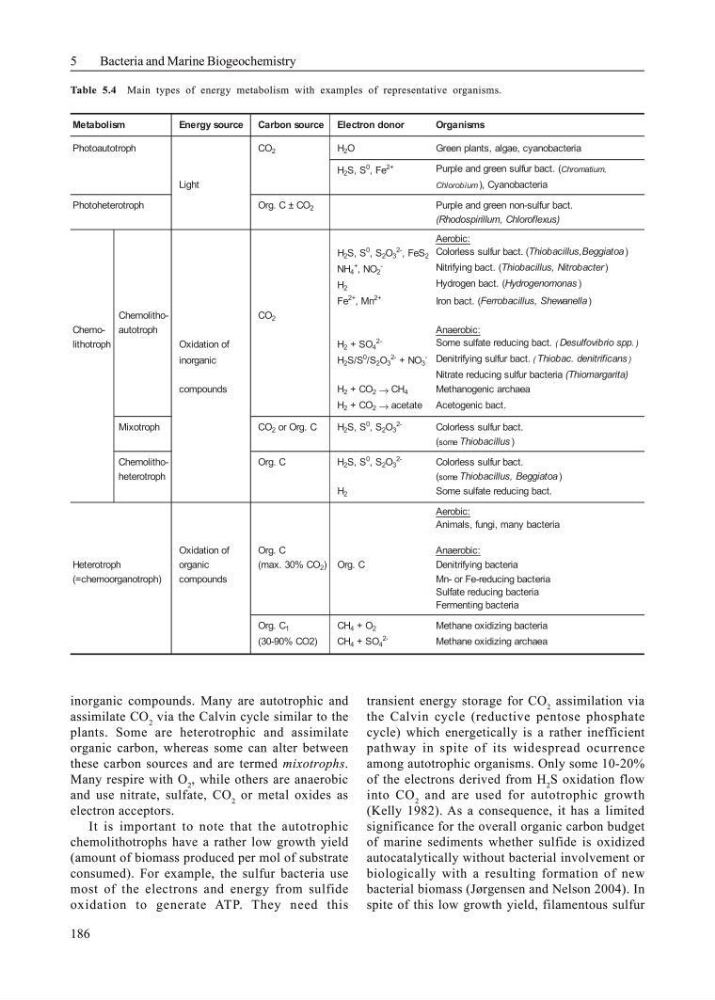
Table 5.4 Main types of energy metabolism with examples of representative organisms.
Metabolism
Energy source Carbon source Electron donor
Organisms
Photoautotroph
CO 2
H 2 O
Green plants, algae, cyanobacteria
H 2 S, S
0
, Fe
2+
Purple and green sulfur bact. (Chromatium,
Light
Chlorobium ), Cyanobacteria
Photoheterotroph
Org. C ± CO 2
Purple and green non-sulfur bact.
(Rhodospirillum, Chloroflexus)
Aerobic:
H 2 S, S
0
, S 2 O 3
2, FeS 2 Colorless sulfur bact. (Thiobacillus,Beggiatoa)
NH 4
+
, NO 2
-
Nitrifying bact. (Thiobacillus, Nitrobacter )
H 2
Hydrogen bact. (Hydrogenomonas )
Fe
2+
, Mn
2+
Iron bact. (Ferrobacillus, Shewanella )
ChemolithoCO 2
Chemo- autotroph
Anaerobic:
lithotroph
Oxidation of
H 2 + SO 4
2Some sulfate reducing bact. ( Desulfovibrio spp. )
inorganic
H 2 S/S
0
/S 2 O 3
2- + NO 3
- Denitrifying sulfur bact. ( Thiobac. denitrificans )
Nitrate reducing sulfur bacteria (Thiomargarita)
compounds
H 2 + CO 2 → CH 4
Methanogenic archaea
H 2 + CO 2 → acetate Acetogenic bact.
Mixotroph
CO 2 or Org. C
H 2 S, S
0
, S 2 O 3
2Colorless sulfur bact.
(some Thiobacillus )
ChemolithoOrg. C
H 2 S, S
0
, S 2 O 3
2Colorless sulfur bact.
heterotroph
(some Thiobacillus, Beggiatoa )
H 2
Some sulfate reducing bact.
Aerobic:
Animals, fungi, many bacteria
Oxidation of
Org. C
Anaerobic:
Heterotroph
organic
(max. 30% CO 2 ) Org. C
Denitrifying bacteria
(=chemoorganotroph)
compounds
Mn- or Fe-reducing bacteria
Sulfate reducing bacteria
Fermenting bacteria
Org. C 1
CH 4 + O 2
Methane oxidizing bacteria
(30-90% CO2)
CH 4 + SO 4
2Methane oxidizing archaea
Bacteria and Marine Biogeochemistry
186
inorganic compounds. Many are autotrophic and
assimilate CO 2 via the Calvin cycle similar to the
plants. Some are heterotrophic and assimilate
organic carbon, whereas some can alter between
these carbon sources and are termed mixotrophs.
Many respire with O 2 , while others are anaerobic
and use nitrate, sulfate, CO 2 or metal oxides as
electron acceptors.
It is important to note that the autotrophic
chemolithotrophs have a rather low growth yield
(amount of biomass produced per mol of substrate
consumed). For example, the sulfur bacteria use
most of the electrons and energy from sulfide
oxidation to generate ATP. They need this
transient energy storage for CO 2 assimilation via
the Calvin cycle (reductive pentose phosphate
cycle) which energetically is a rather inefficient
pathway in spite of its widespread ocurrence
among autotrophic organisms. Only some 10-20%
of the electrons derived from H 2 S oxidation flow
into CO 2 and are used for autotrophic growth
(Kelly 1982). As a consequence, it has a limited
significance for the overall organic carbon budget
of marine sediments whether sulfide is oxidized
autocatalytically without bacterial involvement or
biologically with a resulting formation of new
bacterial biomass (Jørgensen and Nelson 2004). In
spite of this low growth yield, filamentous sulfur
Table 5.4 Main types of energy metabolism with examples of representative organisms.
Metabolism
Energy source Carbon source Electron donor
Organisms
Photoautotroph
CO 2
H 2 O
Green plants, algae, cyanobacteria
H 2 S, S
0
, Fe
2+
Purple and green sulfur bact. (Chromatium,
Light
Chlorobium ), Cyanobacteria
Photoheterotroph
Org. C ± CO 2
Purple and green non-sulfur bact.
(Rhodospirillum, Chloroflexus)
Aerobic:
H 2 S, S
0
, S 2 O 3
2, FeS 2 Colorless sulfur bact. (Thiobacillus,Beggiatoa)
NH 4
+
, NO 2
-
Nitrifying bact. (Thiobacillus, Nitrobacter )
H 2
Hydrogen bact. (Hydrogenomonas )
Fe
2+
, Mn
2+
Iron bact. (Ferrobacillus, Shewanella )
ChemolithoCO 2
Chemo- autotroph
Anaerobic:
lithotroph
Oxidation of
H 2 + SO 4
2Some sulfate reducing bact. ( Desulfovibrio spp. )
inorganic
H 2 S/S
0
/S 2 O 3
2- + NO 3
- Denitrifying sulfur bact. ( Thiobac. denitrificans )
Nitrate reducing sulfur bacteria (Thiomargarita)
compounds
H 2 + CO 2 → CH 4
Methanogenic archaea
H 2 + CO 2 → acetate Acetogenic bact.
Mixotroph
CO 2 or Org. C
H 2 S, S
0
, S 2 O 3
2Colorless sulfur bact.
(some Thiobacillus )
ChemolithoOrg. C
H 2 S, S
0
, S 2 O 3
2Colorless sulfur bact.
heterotroph
(some Thiobacillus, Beggiatoa )
H 2
Some sulfate reducing bact.
Aerobic:
Animals, fungi, many bacteria
Oxidation of
Org. C
Anaerobic:
Heterotroph
organic
(max. 30% CO 2 ) Org. C
Denitrifying bacteria
(=chemoorganotroph)
compounds
Mn- or Fe-reducing bacteria
Sulfate reducing bacteria
Fermenting bacteria
Org. C 1
CH 4 + O 2
Methane oxidizing bacteria
(30-90% CO2)
CH 4 + SO 4
2Methane oxidizing archaea