

5
Bacteria and Marine Biogeochemistry
172
Among the important contributions of microbiologists to biogeochemistry is to quantify the
populations of bacteria, isolate new types of
microorganisms from the marine environment,
study their physiology and biochemistry in laboratory cultures, and thereby describe the microbial
diversity and metabolic potential of natural
microbial communities. There are currently about a
thousand species of prokaryotes described from
the sea and the number is steadily increasing. The
rather time-consuming task of isolating and
describing new bacterial species, however, sets a
limit to the rate of progress. The classical microbiological approaches also have shortcomings,
among others that only the viable or culturable
bacteria are recognized, and that the counting
procedures for these viable bacteria, furthermore,
underestimate the true population size by several
orders of magnitude.
In recent years, the rapid developments in
molecular biology have opened new possibilities
for the study of bacterial populations and their
metabolic activity without cultivation, even at the
level of individual cells. A new classification of
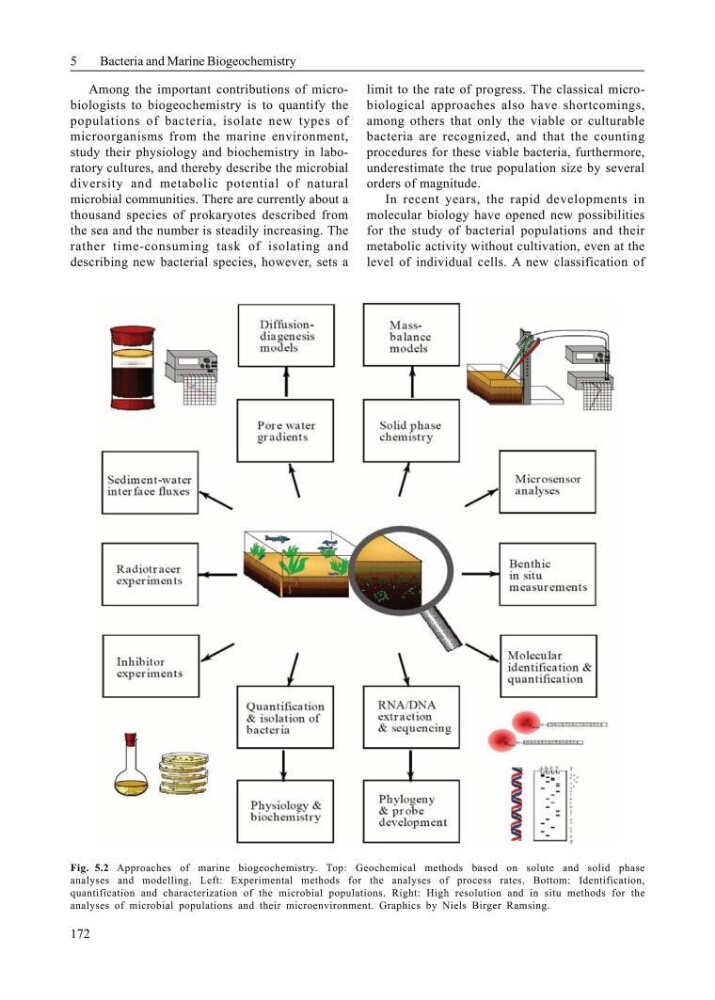
Fig. 5.2 Approaches of marine biogeochemistry. Top: Geochemical methods based on solute and solid phase
analyses and modelling. Left: Experimental methods for the analyses of process rates. Bottom: Identification,
quantification and characterization of the microbial populations. Right: High resolution and in situ methods for the
analyses of microbial populations and their microenvironment. Graphics by Niels Birger Ramsing.
Bacteria and Marine Biogeochemistry
172
Among the important contributions of microbiologists to biogeochemistry is to quantify the
populations of bacteria, isolate new types of
microorganisms from the marine environment,
study their physiology and biochemistry in laboratory cultures, and thereby describe the microbial
diversity and metabolic potential of natural
microbial communities. There are currently about a
thousand species of prokaryotes described from
the sea and the number is steadily increasing. The
rather time-consuming task of isolating and
describing new bacterial species, however, sets a
limit to the rate of progress. The classical microbiological approaches also have shortcomings,
among others that only the viable or culturable
bacteria are recognized, and that the counting
procedures for these viable bacteria, furthermore,
underestimate the true population size by several
orders of magnitude.
In recent years, the rapid developments in
molecular biology have opened new possibilities
for the study of bacterial populations and their
metabolic activity without cultivation, even at the
level of individual cells. A new classification of
Fig. 5.2 Approaches of marine biogeochemistry. Top: Geochemical methods based on solute and solid phase
analyses and modelling. Left: Experimental methods for the analyses of process rates. Bottom: Identification,
quantification and characterization of the microbial populations. Right: High resolution and in situ methods for the
analyses of microbial populations and their microenvironment. Graphics by Niels Birger Ramsing.