

92
3
Quantification of Early Diagenesis: Dissolved Constituents in Marine Pore Water
made by various manufacturers are in use, whereby ‘Rumohr corer’ is a model frequently used. In
most cases, a plastic tube (mostly an acrylic
polymerization product) with a diameter of about
6 cm and a variable weight, is pressed 0.5 m to 1 m
deep into the sediment. Upon pulling the tube
out, the top aperture is shut whereby the bottom
water that just covers the sediment becomes
entrapped. The tube is not sealed at the bottom
because (mostly) the closure at the top suffices
to prevent the sediment from falling out. But, as
soon as the high-momentum gravity corer is held
out of the water, the bottom aperture of the tube
must be sealed with an adequate rubber stopper.
The high-momentum gravity corer is most
frequently used in shallow waters, on the shelf
and from the decks of smaller ships, since it does
happen from time to time that the bulk sample
slides out of the bottom prior to its closure with
the rubber stopper, and owing to the fact that the
corer has only one tube that is filled with sample
of sediment. In greater depths, and whenever a
larger ship is available, the multicorer will be used
in preference. Otherwise, the quality of the
samples is entirely comparable. Furthermore, the
high-momentum gravity corer is capable of extracting sample cores of up to 1 m in length.
The Gravity Corer and the Piston Corer
Upon using the gravity corer, a steel tube of about
13 cm in diameter is pressed between 6 m and 23 m
deep into the sediment with the aid of a lead weight
weighing about 3 - 4 t. Inside the steel tube, a plastic liner made of HD-PVC is situated that encompasses the core. Upon extraction from the sediment
and raising the tube upwards through the water
column, the tube’s top aperture is kept shut by a
valve. Below, another valve-like shutter - the core
catcher - prevents the core material from falling out.
Generally, cores of about 10 - 15 m in length are
obtained in pelagic sediments, although at times
they reach up to 20 m.
In a piston corer the same steel tubes and
plastic liners are employed, but with a lighter lead
weight. However, this corer is additionally equipped with a shear-action mechanism that moves a
piston upwards through the tube when the tool is
immersed into the sediment. The piston stroke
produces a vacuum that facilitates the penetration
of core into the tube. By using the piston corer,
core lengths can be achieved which are frequently
20 - 30 m in length and thus several meters longer
than the ones obtained with the gravity corer. Yet,
it is observed that the cores obtained with the
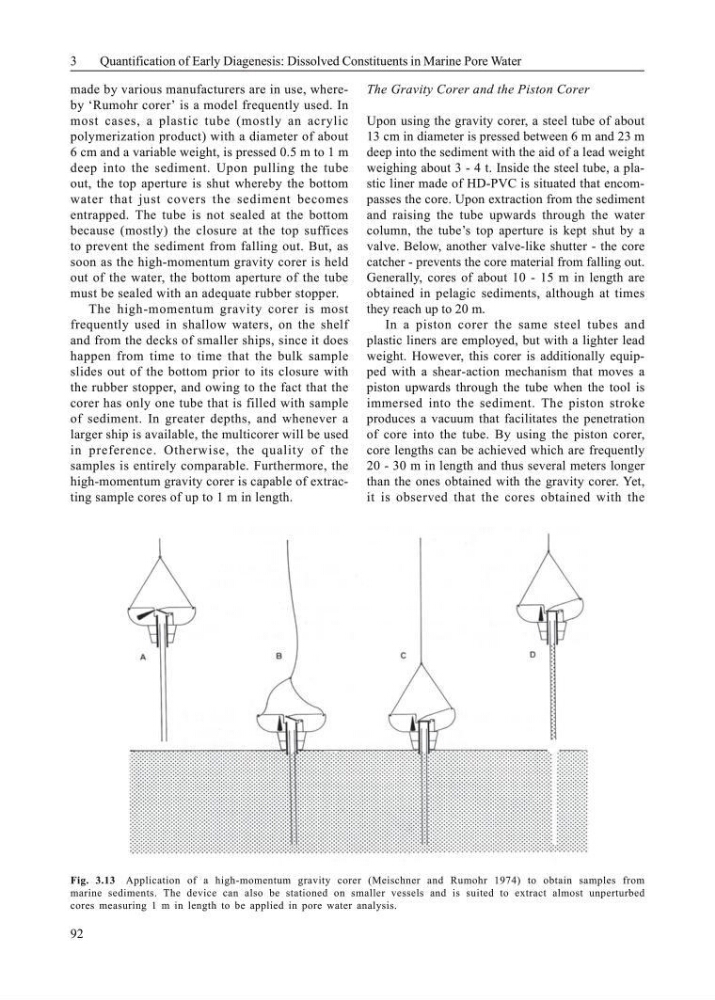
Fig. 3.13 Application of a high-momentum gravity corer (Meischner and Rumohr 1974) to obtain samples from
marine sediments. The device can also be stationed on smaller vessels and is suited to extract almost unperturbed
cores measuring 1 m in length to be applied in pore water analysis.
3
Quantification of Early Diagenesis: Dissolved Constituents in Marine Pore Water
made by various manufacturers are in use, whereby ‘Rumohr corer’ is a model frequently used. In
most cases, a plastic tube (mostly an acrylic
polymerization product) with a diameter of about
6 cm and a variable weight, is pressed 0.5 m to 1 m
deep into the sediment. Upon pulling the tube
out, the top aperture is shut whereby the bottom
water that just covers the sediment becomes
entrapped. The tube is not sealed at the bottom
because (mostly) the closure at the top suffices
to prevent the sediment from falling out. But, as
soon as the high-momentum gravity corer is held
out of the water, the bottom aperture of the tube
must be sealed with an adequate rubber stopper.
The high-momentum gravity corer is most
frequently used in shallow waters, on the shelf
and from the decks of smaller ships, since it does
happen from time to time that the bulk sample
slides out of the bottom prior to its closure with
the rubber stopper, and owing to the fact that the
corer has only one tube that is filled with sample
of sediment. In greater depths, and whenever a
larger ship is available, the multicorer will be used
in preference. Otherwise, the quality of the
samples is entirely comparable. Furthermore, the
high-momentum gravity corer is capable of extracting sample cores of up to 1 m in length.
The Gravity Corer and the Piston Corer
Upon using the gravity corer, a steel tube of about
13 cm in diameter is pressed between 6 m and 23 m
deep into the sediment with the aid of a lead weight
weighing about 3 - 4 t. Inside the steel tube, a plastic liner made of HD-PVC is situated that encompasses the core. Upon extraction from the sediment
and raising the tube upwards through the water
column, the tube’s top aperture is kept shut by a
valve. Below, another valve-like shutter - the core
catcher - prevents the core material from falling out.
Generally, cores of about 10 - 15 m in length are
obtained in pelagic sediments, although at times
they reach up to 20 m.
In a piston corer the same steel tubes and
plastic liners are employed, but with a lighter lead
weight. However, this corer is additionally equipped with a shear-action mechanism that moves a
piston upwards through the tube when the tool is
immersed into the sediment. The piston stroke
produces a vacuum that facilitates the penetration
of core into the tube. By using the piston corer,
core lengths can be achieved which are frequently
20 - 30 m in length and thus several meters longer
than the ones obtained with the gravity corer. Yet,
it is observed that the cores obtained with the
Fig. 3.13 Application of a high-momentum gravity corer (Meischner and Rumohr 1974) to obtain samples from
marine sediments. The device can also be stationed on smaller vessels and is suited to extract almost unperturbed
cores measuring 1 m in length to be applied in pore water analysis.