

Fractionation Mechanisms
35
/j 31.S of total sulfur
0 . 1 ' - - - - - - - - - - - - - - - - - - '
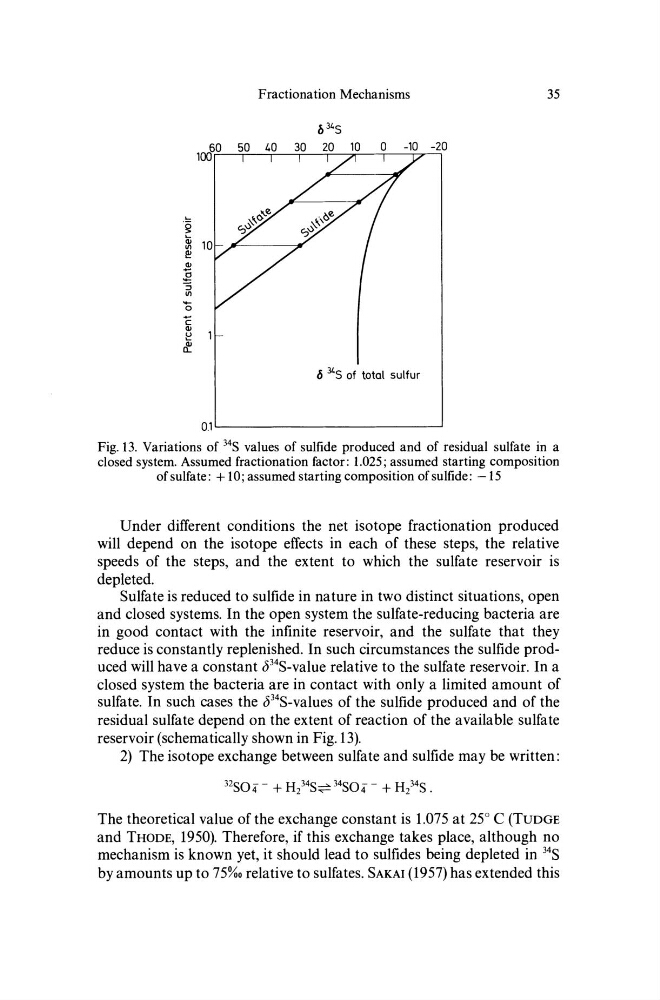
Fig. 13. Variations of 34S values of sulfide produced and of residual sulfate in a
closed system. Assumed fractionation factor: 1.025; assumed starting composition
of sulfate: + 10; assumed starting composition of sulfide: -15
Under different conditions the net isotope fractionation produced
will depend on the isotope effects in each of these steps, the relative
speeds of the steps, and the extent to which the sulfate reservoir is
depleted.
Sulfate is reduced to sulfide in nature in two distinct situations, open
and closed systems. In the open system the sulfate-reducing bacteria are
in good contact with the infinite reservoir, and the sulfate that they
reduce is constantly replenished. In such circumstances the sulfide produced will have a constant £534S-value relative to the sulfate reservoir. In a
closed system the bacteria are in contact with only a limited amount of
sulfate. In such cases the £534S-values of the sulfide produced and of the
residual sulfate depend on the extent of reaction of the available sulfate
reservoir (schematically shown in Fig. 13).
2) The isotope exchange between sulfate and sulfide may be written:
The theoretical value of the exchange constant is 1.075 at 25° C (TUDGE
and THODE, 1950). Therefore, if this exchange takes place, although no
mechanism is known yet, it should lead to sulfides being depleted in 34S
by amounts up to 75%0 relative to sulfates. SAKAI (1957) has extended this
35
/j 31.S of total sulfur
0 . 1 ' - - - - - - - - - - - - - - - - - - '
Fig. 13. Variations of 34S values of sulfide produced and of residual sulfate in a
closed system. Assumed fractionation factor: 1.025; assumed starting composition
of sulfate: + 10; assumed starting composition of sulfide: -15
Under different conditions the net isotope fractionation produced
will depend on the isotope effects in each of these steps, the relative
speeds of the steps, and the extent to which the sulfate reservoir is
depleted.
Sulfate is reduced to sulfide in nature in two distinct situations, open
and closed systems. In the open system the sulfate-reducing bacteria are
in good contact with the infinite reservoir, and the sulfate that they
reduce is constantly replenished. In such circumstances the sulfide produced will have a constant £534S-value relative to the sulfate reservoir. In a
closed system the bacteria are in contact with only a limited amount of
sulfate. In such cases the £534S-values of the sulfide produced and of the
residual sulfate depend on the extent of reaction of the available sulfate
reservoir (schematically shown in Fig. 13).
2) The isotope exchange between sulfate and sulfide may be written:
The theoretical value of the exchange constant is 1.075 at 25° C (TUDGE
and THODE, 1950). Therefore, if this exchange takes place, although no
mechanism is known yet, it should lead to sulfides being depleted in 34S
by amounts up to 75%0 relative to sulfates. SAKAI (1957) has extended this