

456
w
~
60~--~----~----~--~----~--~----+
..•..............•...
40
-20
-40
-60
....
. ........................... .
t"(:·~:·:.:::::::::::::::::::;:;::::::;;;;.::;;:i:;;;;:::::::::;;;;;;;;;;;;;;;;~:':'>:::':':i"i;;
-40
-20
o
20
Latitude [0]
40
60
80
P. Schliissel
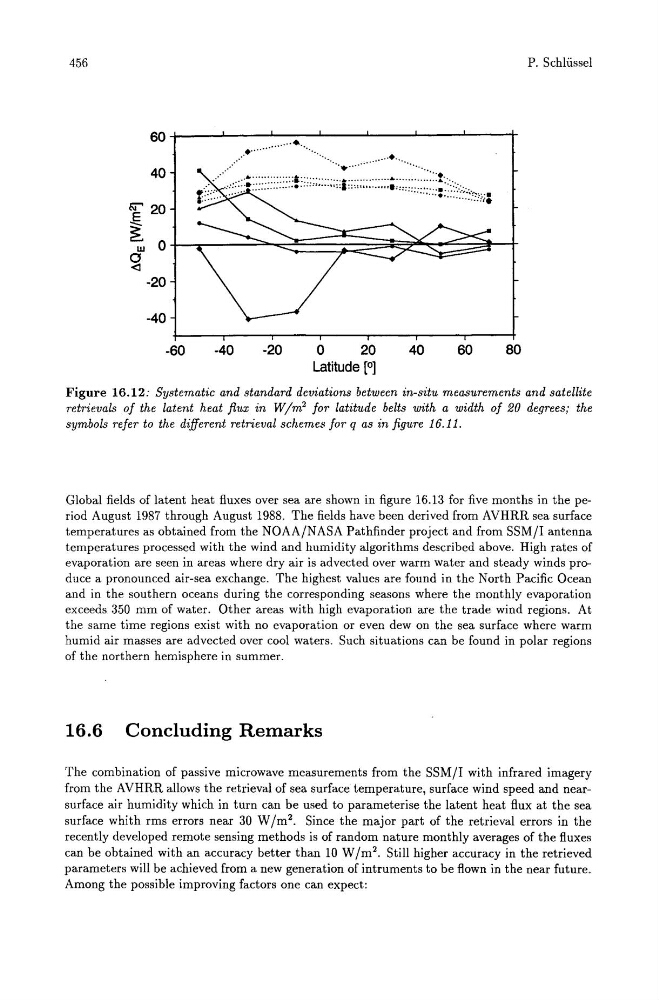
Figure 16.12: Systematic and standard deviations between in-situ measurements and satellite
retrievals of the latent heat flux in W 1m 2 for latitude belts with a width of 20 degrees; the
symbols refer to the different retrieval schemes for q as in figure 16.11.
Global fields of latent heat fluxes over sea are shown in figure 16.13 for five months in the period August 1987 through August 1988. The fields have been derived from AVHRR sea surface
temperatures as obtained from the NOAA/NASA Pathfinder project and from SSM/I antenna
temperatures processed with the wind and humidity algorithms described above. High rates of
evaporation are seen in areas where dry air is advected over warm water and steady winds produce a pronounced air-sea exchange. The highest values are found in the North Pacific Ocean
and in the southern oceans during the corresponding seasons where the monthly evaporation
exceeds 350 mm of water. Other areas with high evaporation are the trade wind regions. At
the same time regions exist with no evaporation or even dew on the sea surface where warm
humid air masses are advected over cool waters. Such situations can be found in polar regions
of the northern hemisphere in summer.
16.6 Concluding Remarks
The combination of passive microwave measurements from the SSM/I with infrared imagery
from the AVHRR allows the retrieval of sea surface temperature, surface wind speed and nearsurface air humidity which in turn can be used to parameterise the latent heat flux at the sea
surface whith rms errors near 30 W /m 2 . Since the major part of the retrieval errors in the
recently developed remote sensing methods is of random nature monthly averages of the fluxes
can be obtained with an accuracy better than 10 W /m2. Still higher accuracy in the retrieved
parameters will be achieved from a new generation of intruments to be flown in the near future.
Among the possible improving factors one can expect:
w
~
60~--~----~----~--~----~--~----+
..•..............•...
40
-20
-40
-60
....
. ........................... .
t"(:·~:·:.:::::::::::::::::::;:;::::::;;;;.::;;:i:;;;;:::::::::;;;;;;;;;;;;;;;;~:':'>:::':':i"i;;
-40
-20
o
20
Latitude [0]
40
60
80
P. Schliissel
Figure 16.12: Systematic and standard deviations between in-situ measurements and satellite
retrievals of the latent heat flux in W 1m 2 for latitude belts with a width of 20 degrees; the
symbols refer to the different retrieval schemes for q as in figure 16.11.
Global fields of latent heat fluxes over sea are shown in figure 16.13 for five months in the period August 1987 through August 1988. The fields have been derived from AVHRR sea surface
temperatures as obtained from the NOAA/NASA Pathfinder project and from SSM/I antenna
temperatures processed with the wind and humidity algorithms described above. High rates of
evaporation are seen in areas where dry air is advected over warm water and steady winds produce a pronounced air-sea exchange. The highest values are found in the North Pacific Ocean
and in the southern oceans during the corresponding seasons where the monthly evaporation
exceeds 350 mm of water. Other areas with high evaporation are the trade wind regions. At
the same time regions exist with no evaporation or even dew on the sea surface where warm
humid air masses are advected over cool waters. Such situations can be found in polar regions
of the northern hemisphere in summer.
16.6 Concluding Remarks
The combination of passive microwave measurements from the SSM/I with infrared imagery
from the AVHRR allows the retrieval of sea surface temperature, surface wind speed and nearsurface air humidity which in turn can be used to parameterise the latent heat flux at the sea
surface whith rms errors near 30 W /m 2 . Since the major part of the retrieval errors in the
recently developed remote sensing methods is of random nature monthly averages of the fluxes
can be obtained with an accuracy better than 10 W /m2. Still higher accuracy in the retrieved
parameters will be achieved from a new generation of intruments to be flown in the near future.
Among the possible improving factors one can expect: