

138
Ronald E. Stewart
3.00
- - dry bulb
- - wet bulb
~
::::::::--::::::-._._:::::: ~
._0_0 dew point
~
0.00
w
a:
V/
.... ~~
::::::~
:l
... 0<
a:
w
a..
:lE
w
...
w
a..
>... z
0
~
0<
... 0:
U w
a:
a..
/
.
y /
""//
-3.00
-6.00
1500
F
tL
I-RW tR
rZL
rZRW I-ZR
I-IPW I-IP
I-SG
I-SP
I-SW I-S
fBS
t1500
I
I
I
1200
I =~
I
1200
".~
:--.
'-.. ......
........... _----I
,
0900
0600
0300
I
I
1. very light
-
2. Iigh1
-
3. moder.'e
4. heavy
=
-
-
I
I
0900
0600
0300
TIME (GMT)
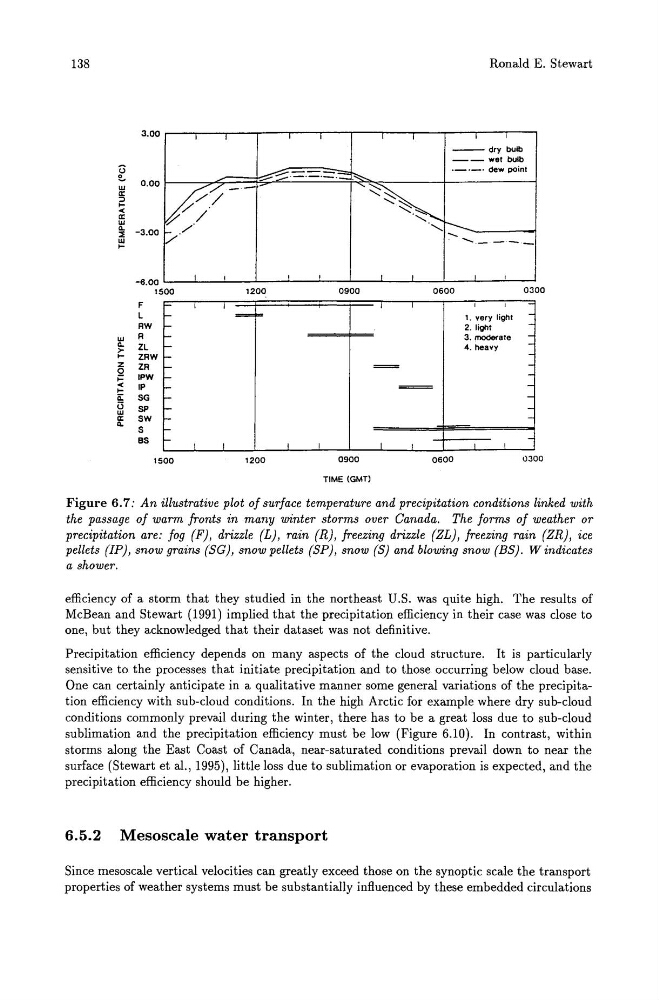
Figure 6.7: An illustrative plot of surface temperature and precipitation conditions linked with
the passage of warm fronts in many winter storms over Canada. The forms of weather or
precipitation are: fog (F), drizzle (L), rain (R), freezing drizzle (ZL), freezing rain (ZR), ice
pellets (IP), snow grains (SG), snow pellets (SP), snow (S) and blowing snow (ES). W indicates
a shower.
efficiency of a storm that they studied in the northeast U.S. was quite high. The results of
McBean and Stewart (1991) implied that the precipitation efficiency in their case was close to
one, but they acknowledged that their dataset was not definitive.
Precipitation efficiency depends on many aspects of the cloud structure. It is particularly
sensitive to the processes that initiate precipitation and to those occurring below cloud base.
One can certainly anticipate in a qualitative manner some general variations of the precipitation efficiency with sub-cloud conditions. In the high Arctic for example where dry sub-cloud
conditions commonly prevail during the winter, there has to be a great loss due to sub-cloud
sublimation and the precipitation efficiency must be low (Figure 6.10). In contrast, within
storms along the East Coast of Canada, near-saturated conditions prevail down to near the
surface (Stewart et al., 1995), little loss due to sublimation or evaporation is expected, and the
precipitation efficiency should be higher.
6.5.2 Mesoscale water transport
Since mesoscale vertical velocities can greatly exceed those on the synoptic scale the transport
properties of weather systems must be substantially influenced by these embedded circulations
Ronald E. Stewart
3.00
- - dry bulb
- - wet bulb
~
::::::::--::::::-._._:::::: ~
._0_0 dew point
~
0.00
w
a:
V/
.... ~~
::::::~
:l
... 0<
a:
w
a..
:lE
w
...
w
a..
>... z
0
~
0<
... 0:
U w
a:
a..
/
.
y /
""//
-3.00
-6.00
1500
F
tL
I-RW tR
rZL
rZRW I-ZR
I-IPW I-IP
I-SG
I-SP
I-SW I-S
fBS
t1500
I
I
I
1200
I =~
I
1200
".~
:--.
'-.. ......
........... _----I
,
0900
0600
0300
I
I
1. very light
-
2. Iigh1
-
3. moder.'e
4. heavy
=
-
-
I
I
0900
0600
0300
TIME (GMT)
Figure 6.7: An illustrative plot of surface temperature and precipitation conditions linked with
the passage of warm fronts in many winter storms over Canada. The forms of weather or
precipitation are: fog (F), drizzle (L), rain (R), freezing drizzle (ZL), freezing rain (ZR), ice
pellets (IP), snow grains (SG), snow pellets (SP), snow (S) and blowing snow (ES). W indicates
a shower.
efficiency of a storm that they studied in the northeast U.S. was quite high. The results of
McBean and Stewart (1991) implied that the precipitation efficiency in their case was close to
one, but they acknowledged that their dataset was not definitive.
Precipitation efficiency depends on many aspects of the cloud structure. It is particularly
sensitive to the processes that initiate precipitation and to those occurring below cloud base.
One can certainly anticipate in a qualitative manner some general variations of the precipitation efficiency with sub-cloud conditions. In the high Arctic for example where dry sub-cloud
conditions commonly prevail during the winter, there has to be a great loss due to sub-cloud
sublimation and the precipitation efficiency must be low (Figure 6.10). In contrast, within
storms along the East Coast of Canada, near-saturated conditions prevail down to near the
surface (Stewart et al., 1995), little loss due to sublimation or evaporation is expected, and the
precipitation efficiency should be higher.
6.5.2 Mesoscale water transport
Since mesoscale vertical velocities can greatly exceed those on the synoptic scale the transport
properties of weather systems must be substantially influenced by these embedded circulations