

136
Ronald E. Stewart
at DOC and so the cloud will be liquid. Remote sensing techniques such as polarized radar and
radiometers are critical to properly observing such areas.
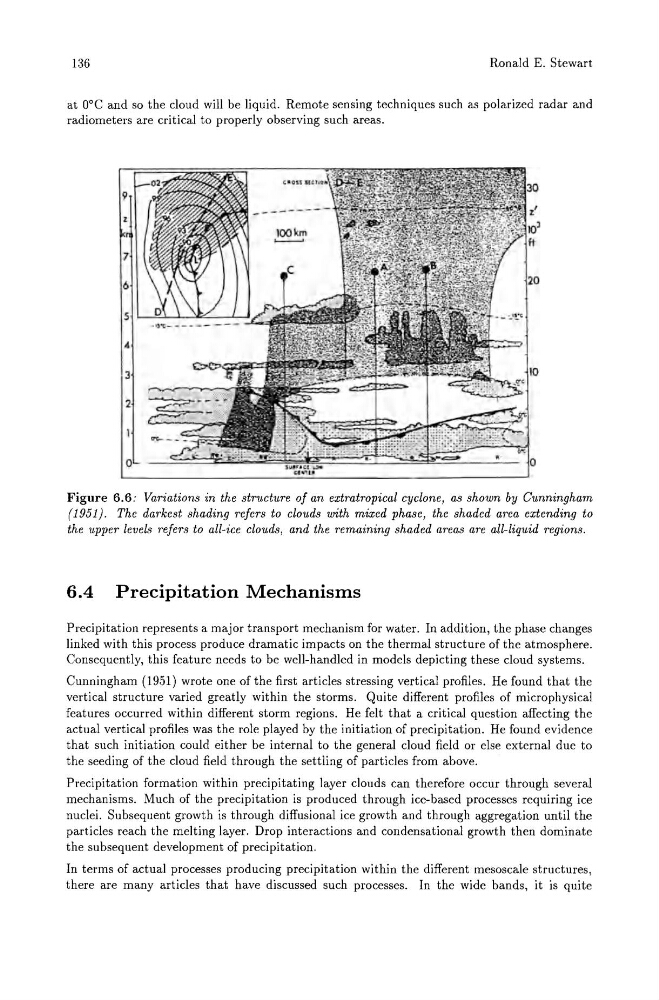
Figure 6.6: Variations in the structure of an extratropical cyclone, as shown by Cunningham
(1951). The darkest shading refers to clouds with mixed phase, the shaded area extending to
the upper levels refers to all-ice clouds, and the remaining shaded areas are all-liquid regions.
6.4 Precipitation Mechanisms
Precipitation represents a major transport mechanism for water. In addition, the phase changes
linked with this process produce dramatic impacts on the thermal structure of the atmosphere.
Consequently, this feature needs to be well-handled in models depicting these cloud systems.
Cunningham (1951) wrote one of the first articles stressing vertical profiles. He found that the
vertical structure varied greatly within the storms. Quite different profiles of microphysical
features occurred within different storm regions. He felt that a critical question affecting the
actual vertical profiles was the role played by the initiation of precipitation. He found evidence
that such initiation could either be internal to the general cloud field or else external due to
the seeding of the cloud field through the settling of particles from above.
Precipitation formation within precipitating layer clouds can therefore occur through several
mechanisms. Much of the precipitation is produced through ice-based processes requiring ice
nuclei. Subsequent growth is through diffusional ice growth and through aggregation until the
particles reach the melting layer. Drop interactions and condensational growth then dominate
the subsequent development of precipitation.
In terms of actual processes producing precipitation within the different mesoscale structures,
there are many articles that have discussed such processes. In the wide bands, it is quite
Ronald E. Stewart
at DOC and so the cloud will be liquid. Remote sensing techniques such as polarized radar and
radiometers are critical to properly observing such areas.
Figure 6.6: Variations in the structure of an extratropical cyclone, as shown by Cunningham
(1951). The darkest shading refers to clouds with mixed phase, the shaded area extending to
the upper levels refers to all-ice clouds, and the remaining shaded areas are all-liquid regions.
6.4 Precipitation Mechanisms
Precipitation represents a major transport mechanism for water. In addition, the phase changes
linked with this process produce dramatic impacts on the thermal structure of the atmosphere.
Consequently, this feature needs to be well-handled in models depicting these cloud systems.
Cunningham (1951) wrote one of the first articles stressing vertical profiles. He found that the
vertical structure varied greatly within the storms. Quite different profiles of microphysical
features occurred within different storm regions. He felt that a critical question affecting the
actual vertical profiles was the role played by the initiation of precipitation. He found evidence
that such initiation could either be internal to the general cloud field or else external due to
the seeding of the cloud field through the settling of particles from above.
Precipitation formation within precipitating layer clouds can therefore occur through several
mechanisms. Much of the precipitation is produced through ice-based processes requiring ice
nuclei. Subsequent growth is through diffusional ice growth and through aggregation until the
particles reach the melting layer. Drop interactions and condensational growth then dominate
the subsequent development of precipitation.
In terms of actual processes producing precipitation within the different mesoscale structures,
there are many articles that have discussed such processes. In the wide bands, it is quite