

Scenario Results
(Landscape analysis in view of achieving the goal of sustainable development
and conservation of biological diversity in Mountains of Indian Himalayan region)
Ex-post and ex-ante analysis
•Environmental
Resources
•Socioeconomic
resources
•Policies
•National
economy
Agent
(Decision Maker)
Soil/water/air
Topography
Climate
Labour
Capital
Socio-economic
change
Agriculture
Nature conservation
AG
MAPs
AH
FR
T
OC
Agriculture: the main land use distributed in the matrix of the forests
and entirely depend on the forest resources to sustain. About 80 %
population is depend on the agriculture hence main stay of the
people in the mountains.
Medicinal and aromatic plants: This is the new human adaptation
mechanism in the mountains of the Indian Himalayan region. These
crops are high value low volume crops have potential to maximize
the farmers’
income in particular socio-political scenario.
Animal Husbandry: The lifestyle of the mountain societies revolved around
their livestock based farming system. Hence animal husbandry is an
important constituent of the farm management and other way this is
subsidiary occupation of the people
Non Timber Forest Products (such as medicinal and aromatic plants
collection other wild edibles and plants for variety of purposes): play an
crucial role in the livelihood of the local people residing in the mountains of
the Indian Himalayan region. The magnitude of use and exploit ofthese
resources vary in different socioeconomic and political scenario.
Tourism: Considered as a high valued branch of the landscape management.
The tourism potential is vary in region to region and developed in a variety
of way. Several political scenario such as policies implementation are not
much supportive to tourism activities in the region
Other Occupation: Interests for labour in daily wages is the component of
the farm management. Scenario development influence this activity and
some time tend to be involved in illegal collection of the resources from
surrounding forests
Horticulture: New innovation of the farmers in the way to find out
some feasible solution to maximize their income
HR
VEG
Vegetable cultivation: This is new paradigm shift under main land
use in the mountains of the Himalayan region. Potential to fetch
many fold income but under specific circumstances
MR
Migration: This is one of the final option always have with farmers. But
depends how to migrate, it mean for short term going around for the
income or move to near by areas in case of high risk. This further lead to
the process of ecosystem imbalances
Forest resources: Important for the mountain people as their main occupation
(agriculture) is forest based. Farmers collect leaf liter to sustain their
agriculture, fuel wool, fodder and timber.
NTFPs
Influence and provide
opportunity to migrate in other
sector/region or pressure on the
production systems may
increase to enhance to
economy of the local farmer
Biodiversity
Farmland
T
1
T
3
T
2
T
5
T
6
T
4
Socioeconomic indicators
0
2
4
6
8
10
Income
Labour
Land
Stable
Capital
Ecological indicators
0
2
4
6
8
10
Soil erosion
Biodiversity
Nutrients cycling
Pollution
Soil fertility
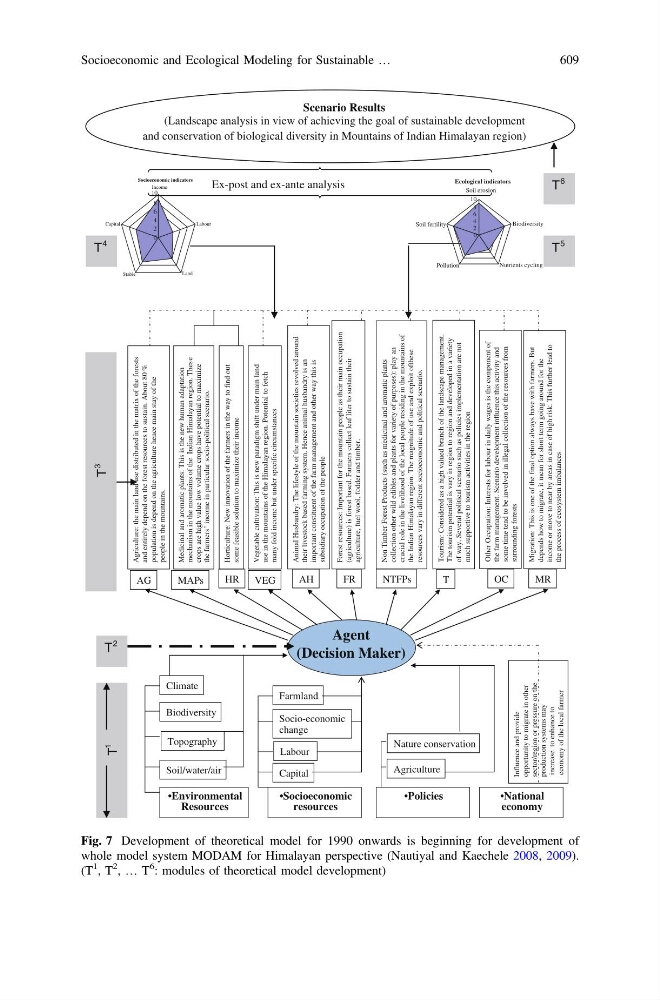
Fig. 7 Development of theoretical model for 1990 onwards is beginning for development of
whole model system MODAM for Himalayan perspective (Nautiyal and Kaechele 2008, 2009).
(T
1
, T
2
, … T
6
: modules of theoretical model development)
Socioeconomic and Ecological Modeling for Sustainable …
609