

required than after burning (Singh et al. 2008). The options for crop residue
management may include developing systems to plant residue into bailing and
removal for use as animal feed or for industry. Enhanced decomposition of
machine-harvested straw to improve nutrients in the soil can be useful. The use of
microbial sprays that can speed decomposition of residue is also an option. The
option of planting into residue needs further investigation of inorganic nitrogen and
its adverse effect due to nitrogen deficiency.
Rice straw is a major field-based residue that is produced in large amounts in
Asia. In fact the total amount of 668 tons could produce theoretically 187 gallons of
bioethanol if the technology were available (Kim and Dale 2004). However, an
increasing proportion of this rice straw currently undergoes field burning. This
waste of energy seems inapt, given the high fuel prices and the great demand for
reducing greenhouse gas emissions as well as air pollution. As climate change is
extensively recognized as a threat to development, there is growing interest in
alternative uses of field-based residues for energy applications.
There are primarily two types of residues from rice cultivation that have
potential in terms of energy—straw and husk. Although the technology of using
rice husk is well established in many Asian countries, rice straw is rarely used as a
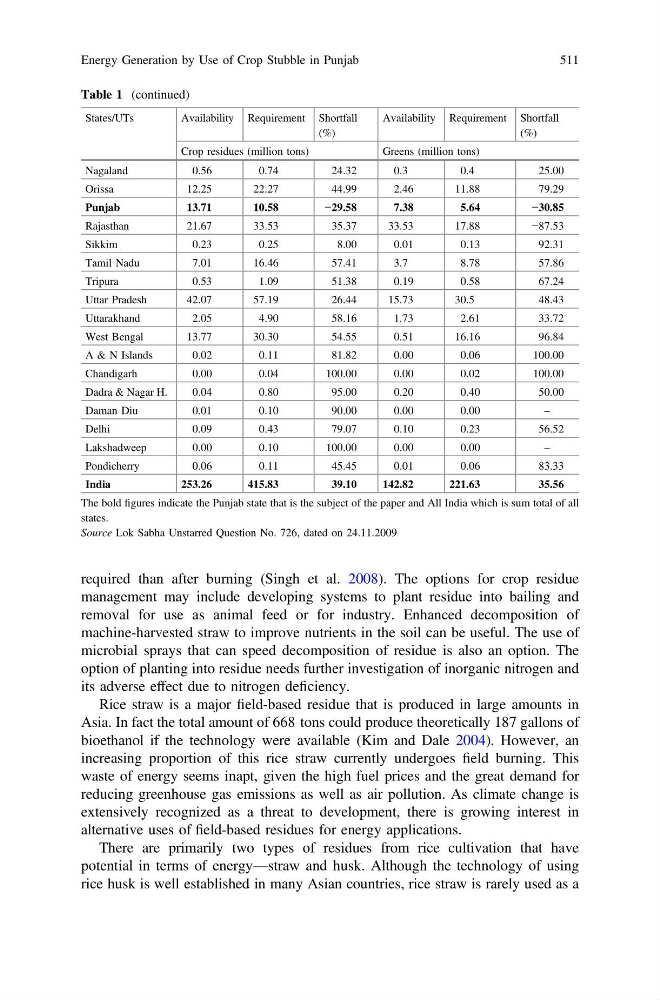
Table 1 (continued)
States/UTs
Availability Requirement Shortfall
(%)
Availability Requirement Shortfall
(%)
Crop residues (million tons)
Greens (million tons)
Nagaland
0.56
0.74
24.32
0.3
0.4
25.00
Orissa
12.25
22.27
44.99
2.46
11.88
79.29
Punjab
13.71
10.58
−29.58
7.38
5.64
−30.85
Rajasthan
21.67
33.53
35.37
33.53
17.88
−87.53
Sikkim
0.23
0.25
8.00
0.01
0.13
92.31
Tamil Nadu
7.01
16.46
57.41
3.7
8.78
57.86
Tripura
0.53
1.09
51.38
0.19
0.58
67.24
Uttar Pradesh
42.07
57.19
26.44
15.73
30.5
48.43
Uttarakhand
2.05
4.90
58.16
1.73
2.61
33.72
West Bengal
13.77
30.30
54.55
0.51
16.16
96.84
A & N Islands
0.02
0.11
81.82
0.00
0.06
100.00
Chandigarh
0.00
0.04
100.00
0.00
0.02
100.00
Dadra & Nagar H.
0.04
0.80
95.00
0.20
0.40
50.00
Daman Diu
0.01
0.10
90.00
0.00
0.00
–
Delhi
0.09
0.43
79.07
0.10
0.23
56.52
Lakshadweep
0.00
0.10
100.00
0.00
0.00
–
Pondicherry
0.06
0.11
45.45
0.01
0.06
83.33
India
253.26
415.83
39.10
142.82
221.63
35.56
The bold figures indicate the Punjab state that is the subject of the paper and All India which is sum total of all
states.
Source Lok Sabha Unstarred Question No. 726, dated on 24.11.2009
Energy Generation by Use of Crop Stubble in Punjab
511
management may include developing systems to plant residue into bailing and
removal for use as animal feed or for industry. Enhanced decomposition of
machine-harvested straw to improve nutrients in the soil can be useful. The use of
microbial sprays that can speed decomposition of residue is also an option. The
option of planting into residue needs further investigation of inorganic nitrogen and
its adverse effect due to nitrogen deficiency.
Rice straw is a major field-based residue that is produced in large amounts in
Asia. In fact the total amount of 668 tons could produce theoretically 187 gallons of
bioethanol if the technology were available (Kim and Dale 2004). However, an
increasing proportion of this rice straw currently undergoes field burning. This
waste of energy seems inapt, given the high fuel prices and the great demand for
reducing greenhouse gas emissions as well as air pollution. As climate change is
extensively recognized as a threat to development, there is growing interest in
alternative uses of field-based residues for energy applications.
There are primarily two types of residues from rice cultivation that have
potential in terms of energy—straw and husk. Although the technology of using
rice husk is well established in many Asian countries, rice straw is rarely used as a
Table 1 (continued)
States/UTs
Availability Requirement Shortfall
(%)
Availability Requirement Shortfall
(%)
Crop residues (million tons)
Greens (million tons)
Nagaland
0.56
0.74
24.32
0.3
0.4
25.00
Orissa
12.25
22.27
44.99
2.46
11.88
79.29
Punjab
13.71
10.58
−29.58
7.38
5.64
−30.85
Rajasthan
21.67
33.53
35.37
33.53
17.88
−87.53
Sikkim
0.23
0.25
8.00
0.01
0.13
92.31
Tamil Nadu
7.01
16.46
57.41
3.7
8.78
57.86
Tripura
0.53
1.09
51.38
0.19
0.58
67.24
Uttar Pradesh
42.07
57.19
26.44
15.73
30.5
48.43
Uttarakhand
2.05
4.90
58.16
1.73
2.61
33.72
West Bengal
13.77
30.30
54.55
0.51
16.16
96.84
A & N Islands
0.02
0.11
81.82
0.00
0.06
100.00
Chandigarh
0.00
0.04
100.00
0.00
0.02
100.00
Dadra & Nagar H.
0.04
0.80
95.00
0.20
0.40
50.00
Daman Diu
0.01
0.10
90.00
0.00
0.00
–
Delhi
0.09
0.43
79.07
0.10
0.23
56.52
Lakshadweep
0.00
0.10
100.00
0.00
0.00
–
Pondicherry
0.06
0.11
45.45
0.01
0.06
83.33
India
253.26
415.83
39.10
142.82
221.63
35.56
The bold figures indicate the Punjab state that is the subject of the paper and All India which is sum total of all
states.
Source Lok Sabha Unstarred Question No. 726, dated on 24.11.2009
Energy Generation by Use of Crop Stubble in Punjab
511