

a certain “area” are taken as the indicators of an individual farmer’s losses within
that area. Insured farmers receive indemnity based upon the difference between the
threshold yield and the yield of the crop-cutting experiments in their area. Crop
yields naturally vary even over small areas and even localized natural calamities can
cause distress. While such situations are not un-common farmers may not be
compensated for their loss. Therefore, a farmer is wary about getting compensation,
as he rightly feels that he/she may be paying insurance premium unnecessarily. If
there is a large scale calamity, he would in most cases get government compensation without any insurance cover. Thus, a farmer considers an individual, his or
her own land based insurance as the best option. However, such options have much
higher level of premium implications which they fail to grasp. Given this scenario,
it is necessary to take the farmers into confidence while formulating crop insurance
policies. What can be the premium related implications of an individual based
insurance should also be discussed; otherwise, the entire exercise is going to be
futile.
8 Non Farm Activities
When a farmer faces a situation of depressed income, he can at least get over the
distress condition, if he has any gainful nonfarm activities. Most of the farmers in
our sample do not have non-farm activities. Therefore, the study has also sought
information from the respondents about the possible non-farm activities they would
like to take up.
An interesting fact revealed in our survey is that farmers seldom have the
knowledge or imagination about diverse non-farm activities available (Fig. 7). Most
farmers consider certain petty businesses like opening a small shop or buying
capital goods such as a tractor or truck for renting is the only option. Thus, there is a
Not interested
38%
Not aware of the
scheme
49%
Not cover of my crop
1%
Not able to pay
the premium
2%
Officials are not
Cooperating
10%
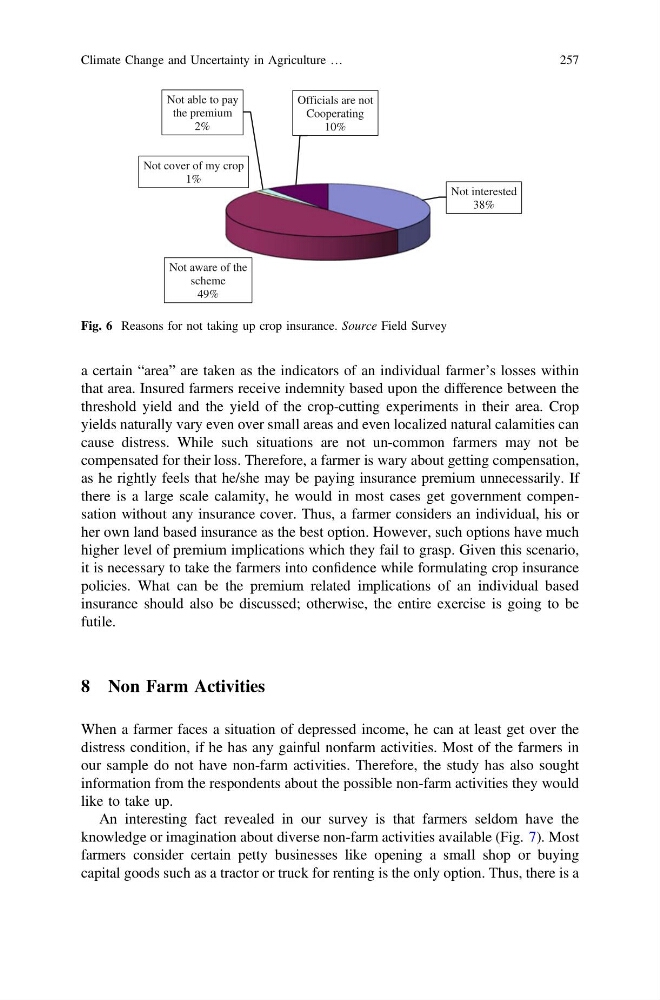
Fig. 6 Reasons for not taking up crop insurance. Source Field Survey
Climate Change and Uncertainty in Agriculture …
257
that area. Insured farmers receive indemnity based upon the difference between the
threshold yield and the yield of the crop-cutting experiments in their area. Crop
yields naturally vary even over small areas and even localized natural calamities can
cause distress. While such situations are not un-common farmers may not be
compensated for their loss. Therefore, a farmer is wary about getting compensation,
as he rightly feels that he/she may be paying insurance premium unnecessarily. If
there is a large scale calamity, he would in most cases get government compensation without any insurance cover. Thus, a farmer considers an individual, his or
her own land based insurance as the best option. However, such options have much
higher level of premium implications which they fail to grasp. Given this scenario,
it is necessary to take the farmers into confidence while formulating crop insurance
policies. What can be the premium related implications of an individual based
insurance should also be discussed; otherwise, the entire exercise is going to be
futile.
8 Non Farm Activities
When a farmer faces a situation of depressed income, he can at least get over the
distress condition, if he has any gainful nonfarm activities. Most of the farmers in
our sample do not have non-farm activities. Therefore, the study has also sought
information from the respondents about the possible non-farm activities they would
like to take up.
An interesting fact revealed in our survey is that farmers seldom have the
knowledge or imagination about diverse non-farm activities available (Fig. 7). Most
farmers consider certain petty businesses like opening a small shop or buying
capital goods such as a tractor or truck for renting is the only option. Thus, there is a
Not interested
38%
Not aware of the
scheme
49%
Not cover of my crop
1%
Not able to pay
the premium
2%
Officials are not
Cooperating
10%
Fig. 6 Reasons for not taking up crop insurance. Source Field Survey
Climate Change and Uncertainty in Agriculture …
257