

In addition, respondents were asked about the extent to which they followed the
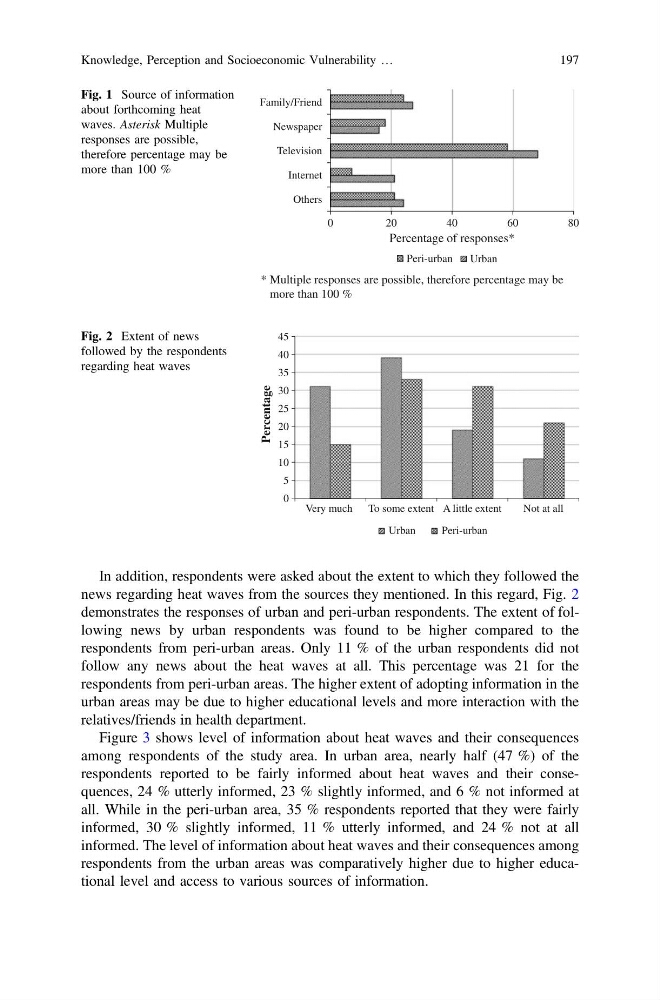
news regarding heat waves from the sources they mentioned. In this regard, Fig. 2
demonstrates the responses of urban and peri-urban respondents. The extent of following news by urban respondents was found to be higher compared to the
respondents from peri-urban areas. Only 11 % of the urban respondents did not
follow any news about the heat waves at all. This percentage was 21 for the
respondents from peri-urban areas. The higher extent of adopting information in the
urban areas may be due to higher educational levels and more interaction with the
relatives/friends in health department.
Figure 3 shows level of information about heat waves and their consequences
among respondents of the study area. In urban area, nearly half (47 %) of the
respondents reported to be fairly informed about heat waves and their consequences, 24 % utterly informed, 23 % slightly informed, and 6 % not informed at
all. While in the peri-urban area, 35 % respondents reported that they were fairly
informed, 30 % slightly informed, 11 % utterly informed, and 24 % not at all
informed. The level of information about heat waves and their consequences among
respondents from the urban areas was comparatively higher due to higher educational level and access to various sources of information.
0
2 0
4 0
6 0
8 0
Others
Internet
Television
Newspaper
Family/Friend
Percentage of responses*
Peri-urban
Urban
* Multiple responses are possible, therefore percentage may be
more than 100 %
Fig. 1 Source of information
about forthcoming heat
waves. Asterisk Multiple
responses are possible,
therefore percentage may be
more than 100 %
0
5
10
15
20
25
30
35
40
45
Very much To some extent A little extent
Not at all
Percentage
Urban
Peri-urban
Fig. 2 Extent of news
followed by the respondents
regarding heat waves
Knowledge, Perception and Socioeconomic Vulnerability …
197
news regarding heat waves from the sources they mentioned. In this regard, Fig. 2
demonstrates the responses of urban and peri-urban respondents. The extent of following news by urban respondents was found to be higher compared to the
respondents from peri-urban areas. Only 11 % of the urban respondents did not
follow any news about the heat waves at all. This percentage was 21 for the
respondents from peri-urban areas. The higher extent of adopting information in the
urban areas may be due to higher educational levels and more interaction with the
relatives/friends in health department.
Figure 3 shows level of information about heat waves and their consequences
among respondents of the study area. In urban area, nearly half (47 %) of the
respondents reported to be fairly informed about heat waves and their consequences, 24 % utterly informed, 23 % slightly informed, and 6 % not informed at
all. While in the peri-urban area, 35 % respondents reported that they were fairly
informed, 30 % slightly informed, 11 % utterly informed, and 24 % not at all
informed. The level of information about heat waves and their consequences among
respondents from the urban areas was comparatively higher due to higher educational level and access to various sources of information.
0
2 0
4 0
6 0
8 0
Others
Internet
Television
Newspaper
Family/Friend
Percentage of responses*
Peri-urban
Urban
* Multiple responses are possible, therefore percentage may be
more than 100 %
Fig. 1 Source of information
about forthcoming heat
waves. Asterisk Multiple
responses are possible,
therefore percentage may be
more than 100 %
0
5
10
15
20
25
30
35
40
45
Very much To some extent A little extent
Not at all
Percentage
Urban
Peri-urban
Fig. 2 Extent of news
followed by the respondents
regarding heat waves
Knowledge, Perception and Socioeconomic Vulnerability …
197