

Climate, Climate Variability and Impacts in the Mediterranean Area: An Overview
71
7.3 Which Relationships Exist Between the Mediterranean Basin and
the Earth System?
The outflow of heavy bottom water from the Mediterranean sea to the North
Atlantic ocean is an important driver for the global conveyor belt and thus for North
Atlantic SSTs and the NAO. The influx of Atlantic surface water not only
compensates this outflow but in addition makes a large contribution to the
Mediterranean water budget. During winter Mediterranean weather is strongly
coupled with the large scale circulation system which is influenced by the state of
the North Atlantic Ocean and the position and strength of the pressure systems
which develop over the North Atlantic Ocean which in turn is coupled to the tropical
system. The Mediterranean sea contributes to atmospheric humidity and labilization,
but its influence decreases during winter. Extreme wet situations seem to be caused
by an acceleration of the hydrological cycle which is a world wide phenomenon but
no quantitative data are presently available for the Mediterranean. During summer
the basin is topped by the sinking motion in the upper tropospheric high pressure
belt and internal processes dominate underneath. Saharan dust outbreaks and
regional emissions of industrial pollution, burning of vegetational debris, forest fires,
and VOCs determine air quality, affect cloudiness, and net radiation.
Whether the Mediterranean basin is a sink or source for the global carbon
PRECIPITATION
BVOC's
INTERACTING
WITH AIR
CHEMISTRY
LAND
CO 2 EXCHANGE
ADVECTION
STRONGLY COUPLED
AND DEPENDENT ON :
"fUNCTIONAL · ECOSYSTEM TYPE
(VEGETATION-COVER, SOIL TYPE),
SOIL MOISTURE 6: FAUNA, GRAZING ,
ATMOSPHERIC HUMIDITY, N ~! PAR,
NET RADIATION , TEM PERATuRE
PRECIPITATION
~
EA
CO 2 EXCHANGE
CARBON
SINK
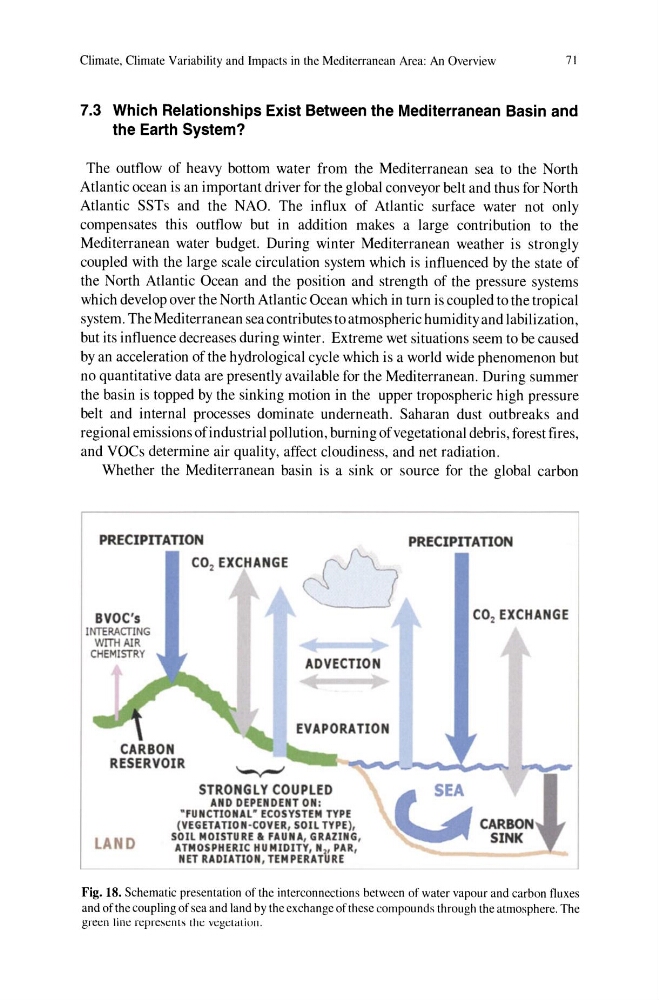
Fig. 18. Schematic presentation of the interconnections between of water vapour and carbon fluxes
and of the coupling of sea and land by the exchange of these compounds through the atmosphere. The
green line represents the vegetatiun.
71
7.3 Which Relationships Exist Between the Mediterranean Basin and
the Earth System?
The outflow of heavy bottom water from the Mediterranean sea to the North
Atlantic ocean is an important driver for the global conveyor belt and thus for North
Atlantic SSTs and the NAO. The influx of Atlantic surface water not only
compensates this outflow but in addition makes a large contribution to the
Mediterranean water budget. During winter Mediterranean weather is strongly
coupled with the large scale circulation system which is influenced by the state of
the North Atlantic Ocean and the position and strength of the pressure systems
which develop over the North Atlantic Ocean which in turn is coupled to the tropical
system. The Mediterranean sea contributes to atmospheric humidity and labilization,
but its influence decreases during winter. Extreme wet situations seem to be caused
by an acceleration of the hydrological cycle which is a world wide phenomenon but
no quantitative data are presently available for the Mediterranean. During summer
the basin is topped by the sinking motion in the upper tropospheric high pressure
belt and internal processes dominate underneath. Saharan dust outbreaks and
regional emissions of industrial pollution, burning of vegetational debris, forest fires,
and VOCs determine air quality, affect cloudiness, and net radiation.
Whether the Mediterranean basin is a sink or source for the global carbon
PRECIPITATION
BVOC's
INTERACTING
WITH AIR
CHEMISTRY
LAND
CO 2 EXCHANGE
ADVECTION
STRONGLY COUPLED
AND DEPENDENT ON :
"fUNCTIONAL · ECOSYSTEM TYPE
(VEGETATION-COVER, SOIL TYPE),
SOIL MOISTURE 6: FAUNA, GRAZING ,
ATMOSPHERIC HUMIDITY, N ~! PAR,
NET RADIATION , TEM PERATuRE
PRECIPITATION
~
EA
CO 2 EXCHANGE
CARBON
SINK
Fig. 18. Schematic presentation of the interconnections between of water vapour and carbon fluxes
and of the coupling of sea and land by the exchange of these compounds through the atmosphere. The
green line represents the vegetatiun.