

Thermal Land-surface Variables From METEOSAT-IR Data
289
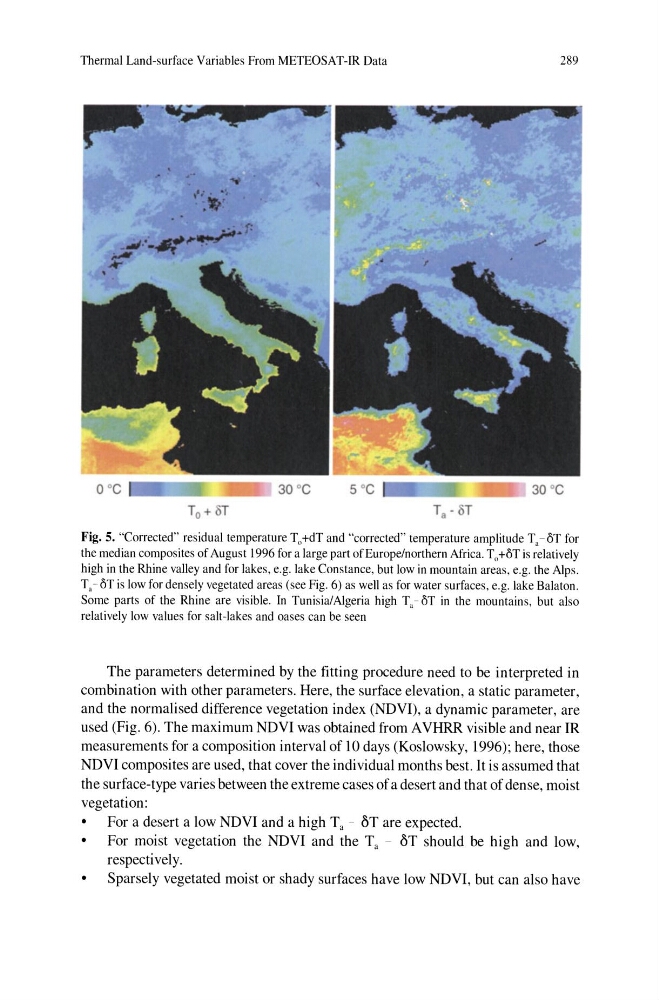
Fig. 5. "Corrected" residual temperature To+dT and "corrected" temperature amplitude Ta-aT for
the median composites of August 1996 for a large part ofEuropeinorthern Africa. To+aT is relatively
high in the Rhine valley and for lakes, e.g. lake Constance, but low in mountain areas, e.g. the Alps.
To - aT is low for densely vegetated areas (see Fig. 6) as well as for water surfaces, e.g. lake Balaton.
Some parts of the Rhine are visible. In Tunisia/Algeria high T"- aT in the mountains, but also
relatively low values for salt -lakes and oases can be seen
The parameters determined by the fitting procedure need to be interpreted in
combination with other parameters. Here, the surface elevation, a static parameter,
and the normalised difference vegetation index (NDVI), a dynamic parameter, are
used (Fig. 6). The maximum NDVI was obtained from A VHRR visible and near IR
measurements for a composition interval of 10 days (Koslowsky, 1996); here, those
NDVI composites are used, that cover the individual months best. It is assumed that
the surface-type varies between the extreme cases of a desert and that of dense, moist
vegetation:
For a desert a low NDVI and a high Ta - en are expected.
• For moist vegetation the NDVI and the Ta - aT should be high and low,
respectively.
Sparsely vegetated moist or shady surfaces have low NDVI, but can also have
289
Fig. 5. "Corrected" residual temperature To+dT and "corrected" temperature amplitude Ta-aT for
the median composites of August 1996 for a large part ofEuropeinorthern Africa. To+aT is relatively
high in the Rhine valley and for lakes, e.g. lake Constance, but low in mountain areas, e.g. the Alps.
To - aT is low for densely vegetated areas (see Fig. 6) as well as for water surfaces, e.g. lake Balaton.
Some parts of the Rhine are visible. In Tunisia/Algeria high T"- aT in the mountains, but also
relatively low values for salt -lakes and oases can be seen
The parameters determined by the fitting procedure need to be interpreted in
combination with other parameters. Here, the surface elevation, a static parameter,
and the normalised difference vegetation index (NDVI), a dynamic parameter, are
used (Fig. 6). The maximum NDVI was obtained from A VHRR visible and near IR
measurements for a composition interval of 10 days (Koslowsky, 1996); here, those
NDVI composites are used, that cover the individual months best. It is assumed that
the surface-type varies between the extreme cases of a desert and that of dense, moist
vegetation:
For a desert a low NDVI and a high Ta - en are expected.
• For moist vegetation the NDVI and the Ta - aT should be high and low,
respectively.
Sparsely vegetated moist or shady surfaces have low NDVI, but can also have