

268
c)
Observed
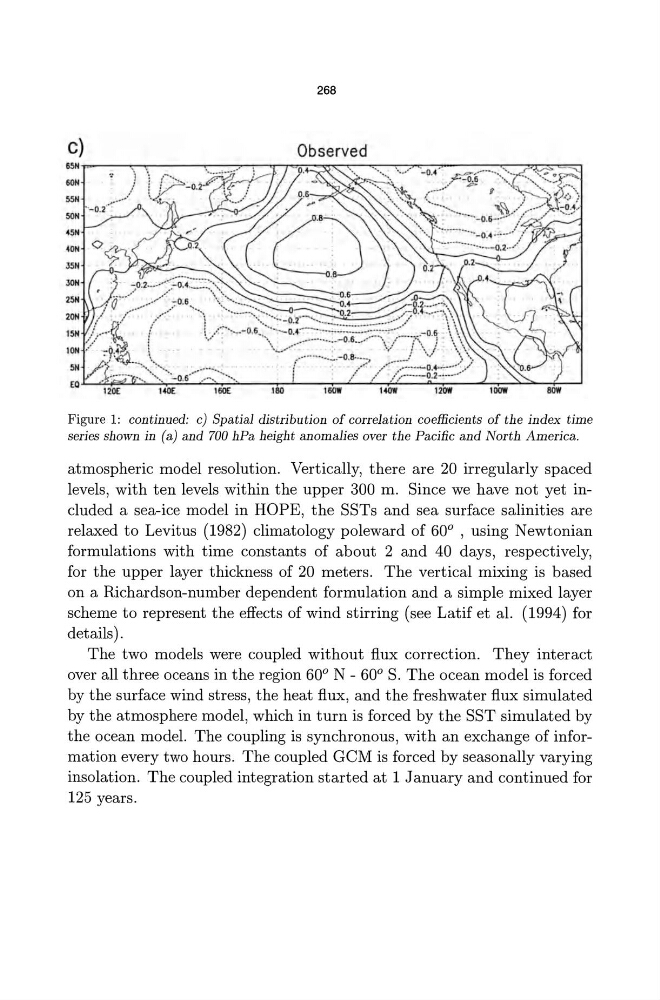
Figure 1: continued: c) Spatial distribution of correlation coefficients of the index time
series shown in (a) and 700 hPa height anomalies over the Pacific and North America.
atmospheric model resolution. Vertically, there are 20 irregularly spaced
levels, with ten levels within the upper 300 m. Since we have not yet included a sea-ice model in HOPE, the SSTs and sea surface salinities are
relaxed to Levitus (1982) climatology poleward of 60° , using Newtonian
formulations with time constants of about 2 and 40 days, respectively,
for the upper layer thickness of 20 meters. The vertical mixing is based
on a Richardson-number dependent formulation and a simple mixed layer
scheme to represent the effects of wind stirring (see Latif et al. (1994) for
details).
The two models were coupled without flux correction. They interact
over all three oceans in the region 60° N - 60° S. The ocean model is forced
by the surface wind stress, the heat flux, and the freshwater flux simulated
by the atmosphere model, which in turn is forced by the SST simulated by
the ocean model. The coupling is synchronous, with an exchange of information every two hours. The coupled GeM is forced by seasonally varying
insolation. The coupled integration started at 1 January and continued for
125 years.
c)
Observed
Figure 1: continued: c) Spatial distribution of correlation coefficients of the index time
series shown in (a) and 700 hPa height anomalies over the Pacific and North America.
atmospheric model resolution. Vertically, there are 20 irregularly spaced
levels, with ten levels within the upper 300 m. Since we have not yet included a sea-ice model in HOPE, the SSTs and sea surface salinities are
relaxed to Levitus (1982) climatology poleward of 60° , using Newtonian
formulations with time constants of about 2 and 40 days, respectively,
for the upper layer thickness of 20 meters. The vertical mixing is based
on a Richardson-number dependent formulation and a simple mixed layer
scheme to represent the effects of wind stirring (see Latif et al. (1994) for
details).
The two models were coupled without flux correction. They interact
over all three oceans in the region 60° N - 60° S. The ocean model is forced
by the surface wind stress, the heat flux, and the freshwater flux simulated
by the atmosphere model, which in turn is forced by the SST simulated by
the ocean model. The coupling is synchronous, with an exchange of information every two hours. The coupled GeM is forced by seasonally varying
insolation. The coupled integration started at 1 January and continued for
125 years.