

122
3
... 'j' ..
2
.... ... .............. ... .
....................
. -... ~ ... " ,
. . r·· ·· ····~· ....... ~, ... . -I
-4 ~~~--~~~--~~--L--L~ __ ~-L __ L-~~~
1 4 7 1 0 1 4 7 1 0 1
4 7 IO
1
4
7 IO
- 2
Year(9)
Year( lO)
Year( I l)
Year( 12)
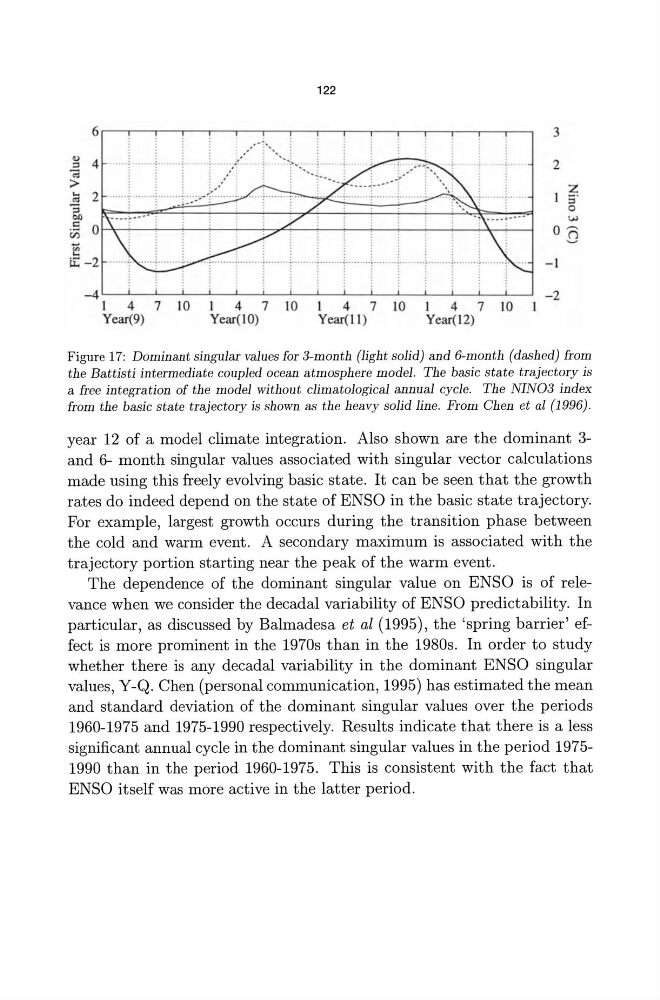
Figure 17: Dominant singular values for 3-month (light solid) and 6-month (dashed) from
the Battisti intermediate coupled ocean atmosphere model. The basic state trajectory is
a free integration of the model without climatological annual cycle. The NIN03 index
from the basic state trajectory is shown as the heavy solid line. From Chen et al (1996).
year 12 of a model climate integration. Also shown are the dominant 3and 6- month singular values associated with singular vector calculations
made using this freely evolving basic state. It can be seen that the growth
rates do indeed depend on the state of ENSO in the basic state trajectory.
For example, largest growth occurs during the transition phase between
the cold and warm event. A secondary maximum is associated with the
trajectory portion starting near the peak of the warm event.
The dependence of the dominant singular value on ENSO is of relevance when we consider the decadal variability of ENSO predictability. In
particular, as discussed by Balmadesa et at (1995), the 'spring barrier' effect is more prominent in the 1970s than in the 1980s. In order to study
whether there is any decadal variability in the dominant ENSO singular
values, Y-Q. Chen (personal communication, 1995) has estimated the mean
and standard deviation of the dominant singular values over the periods
1960-1975 and 1975-1990 respectively. Results indicate that there is a less
significant annual cycle in the dominant singular values in the period 19751990 than in the period 1960-1975. This is consistent with the fact that
ENSO itself was more active in the latter period.
3
... 'j' ..
2
.... ... .............. ... .
....................
. -... ~ ... " ,
. . r·· ·· ····~· ....... ~, ... . -I
-4 ~~~--~~~--~~--L--L~ __ ~-L __ L-~~~
1 4 7 1 0 1 4 7 1 0 1
4 7 IO
1
4
7 IO
- 2
Year(9)
Year( lO)
Year( I l)
Year( 12)
Figure 17: Dominant singular values for 3-month (light solid) and 6-month (dashed) from
the Battisti intermediate coupled ocean atmosphere model. The basic state trajectory is
a free integration of the model without climatological annual cycle. The NIN03 index
from the basic state trajectory is shown as the heavy solid line. From Chen et al (1996).
year 12 of a model climate integration. Also shown are the dominant 3and 6- month singular values associated with singular vector calculations
made using this freely evolving basic state. It can be seen that the growth
rates do indeed depend on the state of ENSO in the basic state trajectory.
For example, largest growth occurs during the transition phase between
the cold and warm event. A secondary maximum is associated with the
trajectory portion starting near the peak of the warm event.
The dependence of the dominant singular value on ENSO is of relevance when we consider the decadal variability of ENSO predictability. In
particular, as discussed by Balmadesa et at (1995), the 'spring barrier' effect is more prominent in the 1970s than in the 1980s. In order to study
whether there is any decadal variability in the dominant ENSO singular
values, Y-Q. Chen (personal communication, 1995) has estimated the mean
and standard deviation of the dominant singular values over the periods
1960-1975 and 1975-1990 respectively. Results indicate that there is a less
significant annual cycle in the dominant singular values in the period 19751990 than in the period 1960-1975. This is consistent with the fact that
ENSO itself was more active in the latter period.