

106
a) >CJ 50
a: 40
w
Z 30
w
....I 20
ct 10
tO
0
tO
5
10
15
20
N WAVE NUMBER
b)>~ 50
a: 40
UJ
z 30
uJ
...J 20
« 10
tO
0
tO
5
10
15
20
N WAVE NUMBER
c) >CJ 50
a: 40
w
z 30.
w
....I 20
0
tO
5
10
15
20
N WAVE NUMBER
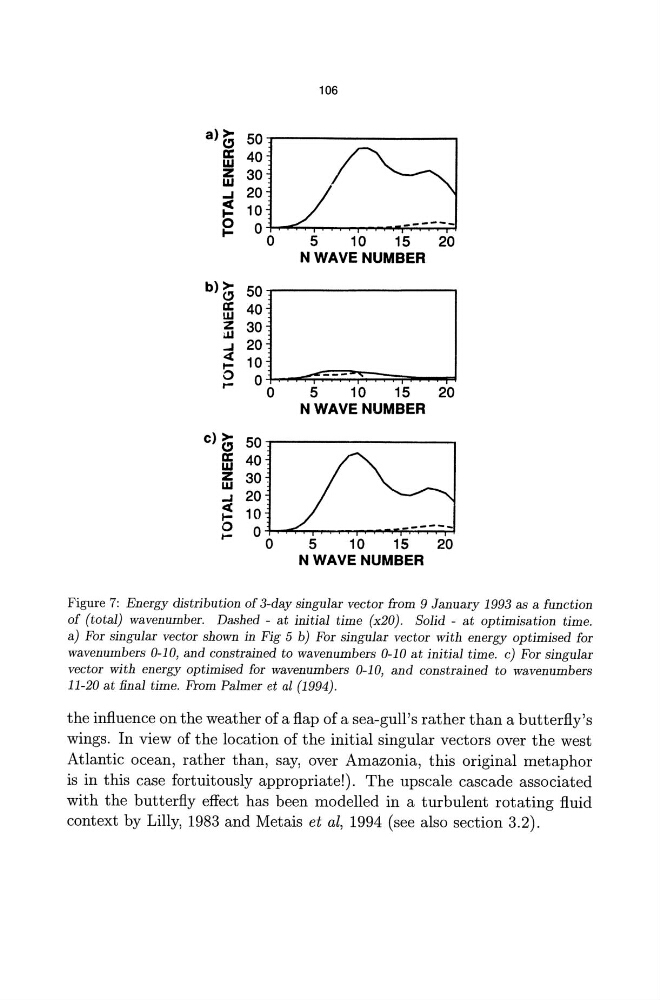
Figure 7: Energy distribution of 3-day singular vector from 9 January 1993 as a function
of (total) wavenumber. Dashed - at initial time (x20). Solid - at optimisation time.
a) For singular vector shown in Fig 5 b) For singular vector with energy optimised for
wavenumbers 0-10, and constrained to wavenumbers 0-10 at initial time. c) For singular
vector with energy optimised for wavenumbers 0-10, and constrained to wavenumbers
11-20 at final time. From Palmer et al (1994).
the influence on the weather of a flap of a sea-gull's rather than a butterfly's
wings. In view of the location of the initial singular vectors over the west
Atlantic ocean, rather than, say, over Amazonia, this original metaphor
is in this case fortuitously appropriate!). The upscale cascade associated
with the butterfly effect has been modelled in a turbulent rotating fluid
context by Lilly, 1983 and Metais et al, 1994 (see also section 3.2).
a) >CJ 50
a: 40
w
Z 30
w
....I 20
ct 10
tO
0
tO
5
10
15
20
N WAVE NUMBER
b)>~ 50
a: 40
UJ
z 30
uJ
...J 20
« 10
tO
0
tO
5
10
15
20
N WAVE NUMBER
c) >CJ 50
a: 40
w
z 30.
w
....I 20
0
tO
5
10
15
20
N WAVE NUMBER
Figure 7: Energy distribution of 3-day singular vector from 9 January 1993 as a function
of (total) wavenumber. Dashed - at initial time (x20). Solid - at optimisation time.
a) For singular vector shown in Fig 5 b) For singular vector with energy optimised for
wavenumbers 0-10, and constrained to wavenumbers 0-10 at initial time. c) For singular
vector with energy optimised for wavenumbers 0-10, and constrained to wavenumbers
11-20 at final time. From Palmer et al (1994).
the influence on the weather of a flap of a sea-gull's rather than a butterfly's
wings. In view of the location of the initial singular vectors over the west
Atlantic ocean, rather than, say, over Amazonia, this original metaphor
is in this case fortuitously appropriate!). The upscale cascade associated
with the butterfly effect has been modelled in a turbulent rotating fluid
context by Lilly, 1983 and Metais et al, 1994 (see also section 3.2).