

2.4 Capital Analytical Properties
aa a
Sampling ~~p1~
Stdtistics
a g a
g D
(hemometries
55
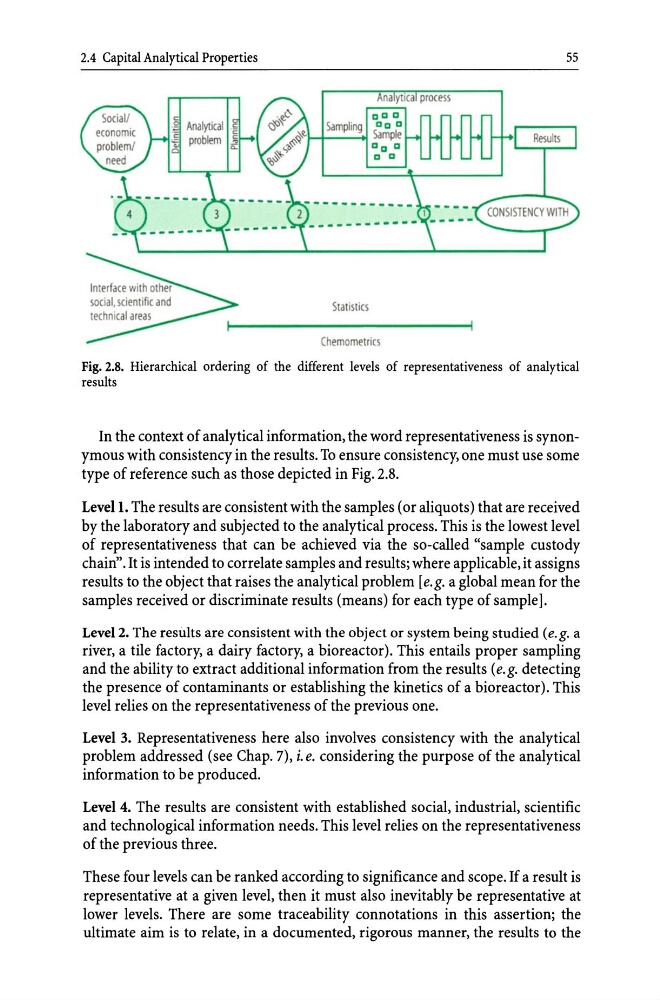
Fig. 2.8. Hierarchical ordering of the different levels of representativeness of analytical
results
In the context of analytical information, the word representativeness is synonymous with consistency in the results. To ensure consistency, one must use some
type of reference such as those depicted in Fig. 2.B.
Levell. The results are consistent with the samples (or aliquots) that are received
by the laboratory and subjected to the analytical process. This is the lowest level
of representativeness that can be achieved via the so-called "sample custody
chain". It is intended to correlate samples and results; where applicable, it assigns
results to the object that raises the analytical problem [e. g. a global mean for the
samples received or discriminate results (means) for each type of sample].
Level 2. The results are consistent with the object or system being studied (e.g. a
river, a tile factory, a dairy factory, a bioreactor). This entails proper sampling
and the ability to extract additional information from the results (e.g. detecting
the presence of contaminants or establishing the kinetics of a bioreactor). This
level relies on the representativeness of the previous one.
Level 3. Representativeness here also involves consistency with the analytical
problem addressed (see Chap. 7), i. e. considering the purpose of the analytical
information to be produced.
Level 4. The results are consistent with established social, industrial, scientific
and technological information needs. This level relies on the representativeness
of the previous three.
These four levels can be ranked according to significance and scope. If a result is
representative at a given level, then it must also inevitably be representative at
lower levels. There are some traceability connotations in this assertion; the
ultimate aim is to relate, in a documented, rigorous manner, the results to the
aa a
Sampling ~~p1~
Stdtistics
a g a
g D
(hemometries
55
Fig. 2.8. Hierarchical ordering of the different levels of representativeness of analytical
results
In the context of analytical information, the word representativeness is synonymous with consistency in the results. To ensure consistency, one must use some
type of reference such as those depicted in Fig. 2.B.
Levell. The results are consistent with the samples (or aliquots) that are received
by the laboratory and subjected to the analytical process. This is the lowest level
of representativeness that can be achieved via the so-called "sample custody
chain". It is intended to correlate samples and results; where applicable, it assigns
results to the object that raises the analytical problem [e. g. a global mean for the
samples received or discriminate results (means) for each type of sample].
Level 2. The results are consistent with the object or system being studied (e.g. a
river, a tile factory, a dairy factory, a bioreactor). This entails proper sampling
and the ability to extract additional information from the results (e.g. detecting
the presence of contaminants or establishing the kinetics of a bioreactor). This
level relies on the representativeness of the previous one.
Level 3. Representativeness here also involves consistency with the analytical
problem addressed (see Chap. 7), i. e. considering the purpose of the analytical
information to be produced.
Level 4. The results are consistent with established social, industrial, scientific
and technological information needs. This level relies on the representativeness
of the previous three.
These four levels can be ranked according to significance and scope. If a result is
representative at a given level, then it must also inevitably be representative at
lower levels. There are some traceability connotations in this assertion; the
ultimate aim is to relate, in a documented, rigorous manner, the results to the