

8.6 Assessment of Analytical Quality
333
continued to be subject to a high uncertainty. Following discussion of the previous results, a
third round was conducted the results from which were excellent except for two laboratories;
data were close to the value held as true and subject to little uncertainty.
Box 8.12
An Example of Proficiency Testing
A competent international body organized a proficiency testing scheme for laboratories
concerned with the determination of cadmium traces in sea water. To this end. it previously
prepared homogeneous aliquots from an RM or CRM containing an analyte concentration of
2.6 !lg/L (,h after checking its stability. In requesting participation, the interested laboratories
implicitly accepted the rules set by the exercise sponsor. The sponsor distributed aliquots between the laboratories. which, within the scheduled deadline. returned the individual results
of i replicate determinations providing a mean XI' The z-score, defined mathematically as
X -X'
I
Z = - -
a
where a is the standard deviation of X' , was calculated for each individual laboratory. z can
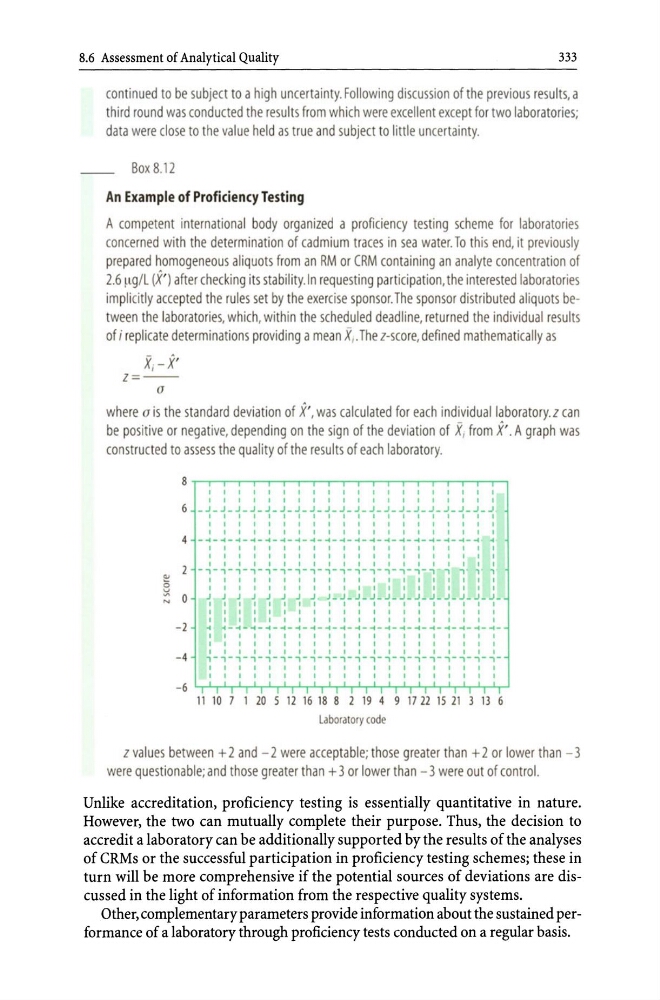
be positive or negative, depending on the sign of the deviation of X, from X'. A graph was
constructed to assess the quality of the results of each laboratory.
a..
I
I
I
I
I
I
I
I
I
I
I
I
I
I
I
I
I
I
I
I
I
1
I
I
I
I
I
t i l
I
I
I
I
I
I
I
I
I
I
6 _J_J_J_J_J_J_J_J_J_J_J_J_J_J_J_J_J_J_J_J
I
I
I
I
I
I
I
I
I
I
I
t
I
I
1
I
I
I
I
I
I
I
I
I
I
I
I
I
I
I
I
I
I
I
I
I
I
I
I
I
I
I
I
I
I
I
I
I
I
I
I
I
I
I
I
I
I
I
I
I
-~-~-~-~-~-~-~-~-~-~-~-~-~-~-~-~-~-~-~ ~
I
I
I
I
I
I
I
I
I
I
I
I
I
I
I
I
I
I
I
I
I
I
I
I
I
I
I
I
I
I
I
I
I
I
I
I
I
I
I
I
I
I
I
I
I
I
I
I
I
I
I
I
I
I
I
I
I
-,-,-,-,-,-, - ,-,-,-,-,-,-,-~-,-,
, , ,
I
I
I
I
I
I
I
I
I
t
I
I
I
I
I
I
I
I
I
o
:;(
N
0
I
I
1
I
I
t
I
I
I
I
I
I
I
I
I
I
I
I
I
J J J J J J J J_J_J_J_J_J_J_J_J_J_J_J_
I
I
I
I
I
I
I
I
I
I
I
I
I
I
I
I
I
I
I
-2
- 4
I
I
I
I
I
I
I
I
I
I
I
I
I
I
I
I
I
I
I
I
I
I
I
I
I
I
I
I
I
I
I
I
I
I
I
I
I
I
~-~-~-~-~-~-~-~-4-~-~-~-~-~-4-~-~-~-~_
I
I
I
I
I
I
I
I
I
I
I
I
I
I
I
I
t
I
I
I
I
I
I
I
I
I
I
I
I
I
I
I
I
I
I
t
I
I
I
I
I
I
I
I
I
I
I
I
I
•
I
I
1
I
I
~
I
I
,-,-,-,-,-,-,-,-,-,-,-,-,-,-,-,-,-,-,-,I
I
I
I
I
I
I
I
I
I
I
1
I
I
I
I
I
I
I
I
I
I
I
I
I
I
I
1
I
I
I
I
I
I
,
I
I
I
I
I
11 10 7 1 20 5 12 16 18 8 2 19 4 9 17 22 15 21 3 13 6
Laboratory (ode
z values between + 2 and - 2 were acceptable; those greater than + 2 or lower than - 3
were questionable; and those greater than + 3 or lower than - 3 were out of control.
Unlike accreditation, proficiency testing is essentially quantitative in nature.
However, the two can mutually complete their purpose. Thus, the decision to
accredit a laboratory can be additionally supported by the results of the analyses
of CRMs or the successful participation in proficiency testing schemes; these in
turn will be more comprehensive if the potential sources of deviations are discussed in the light of information from the respective quality systems.
Other, complementary parameters provide information about the sustained performance of a laboratory through proficiency tests conducted on a regular basis.
333
continued to be subject to a high uncertainty. Following discussion of the previous results, a
third round was conducted the results from which were excellent except for two laboratories;
data were close to the value held as true and subject to little uncertainty.
Box 8.12
An Example of Proficiency Testing
A competent international body organized a proficiency testing scheme for laboratories
concerned with the determination of cadmium traces in sea water. To this end. it previously
prepared homogeneous aliquots from an RM or CRM containing an analyte concentration of
2.6 !lg/L (,h after checking its stability. In requesting participation, the interested laboratories
implicitly accepted the rules set by the exercise sponsor. The sponsor distributed aliquots between the laboratories. which, within the scheduled deadline. returned the individual results
of i replicate determinations providing a mean XI' The z-score, defined mathematically as
X -X'
I
Z = - -
a
where a is the standard deviation of X' , was calculated for each individual laboratory. z can
be positive or negative, depending on the sign of the deviation of X, from X'. A graph was
constructed to assess the quality of the results of each laboratory.
a..
I
I
I
I
I
I
I
I
I
I
I
I
I
I
I
I
I
I
I
I
I
1
I
I
I
I
I
t i l
I
I
I
I
I
I
I
I
I
I
6 _J_J_J_J_J_J_J_J_J_J_J_J_J_J_J_J_J_J_J_J
I
I
I
I
I
I
I
I
I
I
I
t
I
I
1
I
I
I
I
I
I
I
I
I
I
I
I
I
I
I
I
I
I
I
I
I
I
I
I
I
I
I
I
I
I
I
I
I
I
I
I
I
I
I
I
I
I
I
I
I
-~-~-~-~-~-~-~-~-~-~-~-~-~-~-~-~-~-~-~ ~
I
I
I
I
I
I
I
I
I
I
I
I
I
I
I
I
I
I
I
I
I
I
I
I
I
I
I
I
I
I
I
I
I
I
I
I
I
I
I
I
I
I
I
I
I
I
I
I
I
I
I
I
I
I
I
I
I
-,-,-,-,-,-, - ,-,-,-,-,-,-,-~-,-,
, , ,
I
I
I
I
I
I
I
I
I
t
I
I
I
I
I
I
I
I
I
o
:;(
N
0
I
I
1
I
I
t
I
I
I
I
I
I
I
I
I
I
I
I
I
J J J J J J J J_J_J_J_J_J_J_J_J_J_J_J_
I
I
I
I
I
I
I
I
I
I
I
I
I
I
I
I
I
I
I
-2
- 4
I
I
I
I
I
I
I
I
I
I
I
I
I
I
I
I
I
I
I
I
I
I
I
I
I
I
I
I
I
I
I
I
I
I
I
I
I
I
~-~-~-~-~-~-~-~-4-~-~-~-~-~-4-~-~-~-~_
I
I
I
I
I
I
I
I
I
I
I
I
I
I
I
I
t
I
I
I
I
I
I
I
I
I
I
I
I
I
I
I
I
I
I
t
I
I
I
I
I
I
I
I
I
I
I
I
I
•
I
I
1
I
I
~
I
I
,-,-,-,-,-,-,-,-,-,-,-,-,-,-,-,-,-,-,-,I
I
I
I
I
I
I
I
I
I
I
1
I
I
I
I
I
I
I
I
I
I
I
I
I
I
I
1
I
I
I
I
I
I
,
I
I
I
I
I
11 10 7 1 20 5 12 16 18 8 2 19 4 9 17 22 15 21 3 13 6
Laboratory (ode
z values between + 2 and - 2 were acceptable; those greater than + 2 or lower than - 3
were questionable; and those greater than + 3 or lower than - 3 were out of control.
Unlike accreditation, proficiency testing is essentially quantitative in nature.
However, the two can mutually complete their purpose. Thus, the decision to
accredit a laboratory can be additionally supported by the results of the analyses
of CRMs or the successful participation in proficiency testing schemes; these in
turn will be more comprehensive if the potential sources of deviations are discussed in the light of information from the respective quality systems.
Other, complementary parameters provide information about the sustained performance of a laboratory through proficiency tests conducted on a regular basis.