

238
5 Qualitative Aspects of Analytical Chemistry
ASS
210nm
12
15
18
21
24
27
30
33
Time (minJ
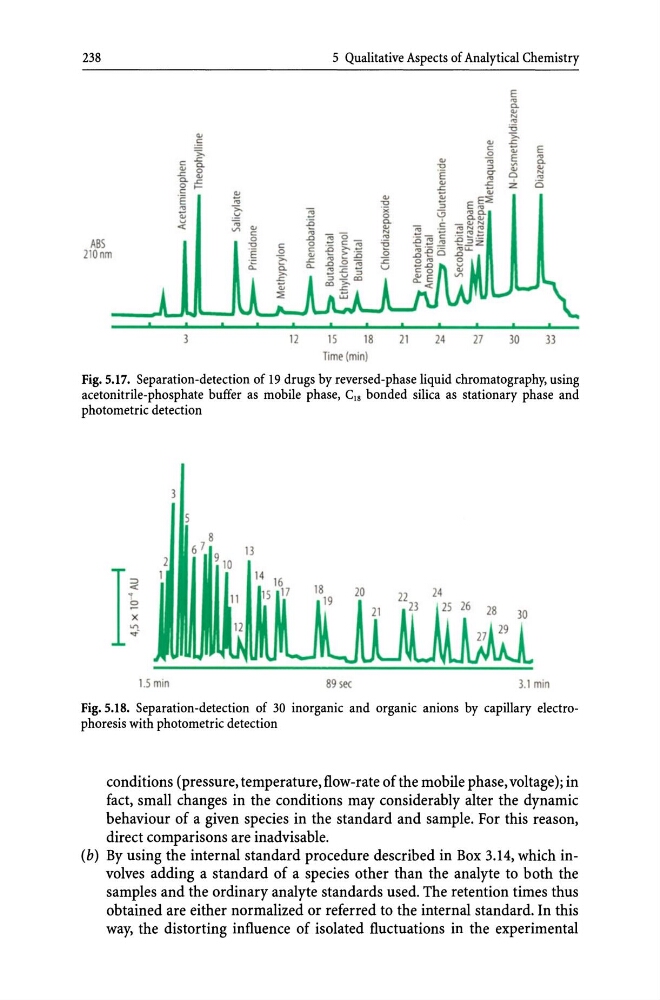
Fig. 5.17. Separation-detection of 19 drugs by reversed-phase liquid chromatography, using
acetonitrile-phosphate buffer as mobile phase, CIS bonded silica as stationary phase and
photometric detection
3
6 7
8
9 10
13
14 16
15 17
18
20
22
24
11
19
21
23
25 26 28
1.5 min
89 sec
3.1 min
Fig. 5.18. Separation-detection of 30 inorganic and organic anions by capillary electrophoresis with photometric detection
conditions (pressure, temperature, flow-rate of the mobile phase, voltage); in
fact, small changes in the conditions may considerably alter the dynamic
behaviour of a given species in the standard and sample. For this reason,
direct comparisons are inadvisable.
(b) By using the internal standard procedure described in Box 3.14, which involves adding a standard of a species other than the analyte to both the
samples and the ordinary analyte standards used. The retention times thus
obtained are either normalized or referred to the internal standard. In this
way, the distorting influence of isolated fluctuations in the experimental
5 Qualitative Aspects of Analytical Chemistry
ASS
210nm
12
15
18
21
24
27
30
33
Time (minJ
Fig. 5.17. Separation-detection of 19 drugs by reversed-phase liquid chromatography, using
acetonitrile-phosphate buffer as mobile phase, CIS bonded silica as stationary phase and
photometric detection
3
6 7
8
9 10
13
14 16
15 17
18
20
22
24
11
19
21
23
25 26 28
1.5 min
89 sec
3.1 min
Fig. 5.18. Separation-detection of 30 inorganic and organic anions by capillary electrophoresis with photometric detection
conditions (pressure, temperature, flow-rate of the mobile phase, voltage); in
fact, small changes in the conditions may considerably alter the dynamic
behaviour of a given species in the standard and sample. For this reason,
direct comparisons are inadvisable.
(b) By using the internal standard procedure described in Box 3.14, which involves adding a standard of a species other than the analyte to both the
samples and the ordinary analyte standards used. The retention times thus
obtained are either normalized or referred to the internal standard. In this
way, the distorting influence of isolated fluctuations in the experimental