

212
5 Qualitative Aspects of Analytical Chemistry
• Note that the concentrations are accompanied by their uncertainties. This supports the
choice of a cut-off concentration below CLOD as it lies within the range CLOD ± ULOQ .
• Interestingly, reliability increased with increasing concentration; in fact, at an analyte concentration of 2 CLOD, identifications were absolutely reliable (0 % of false negatives).
5.3 Types of Qualitative Identification
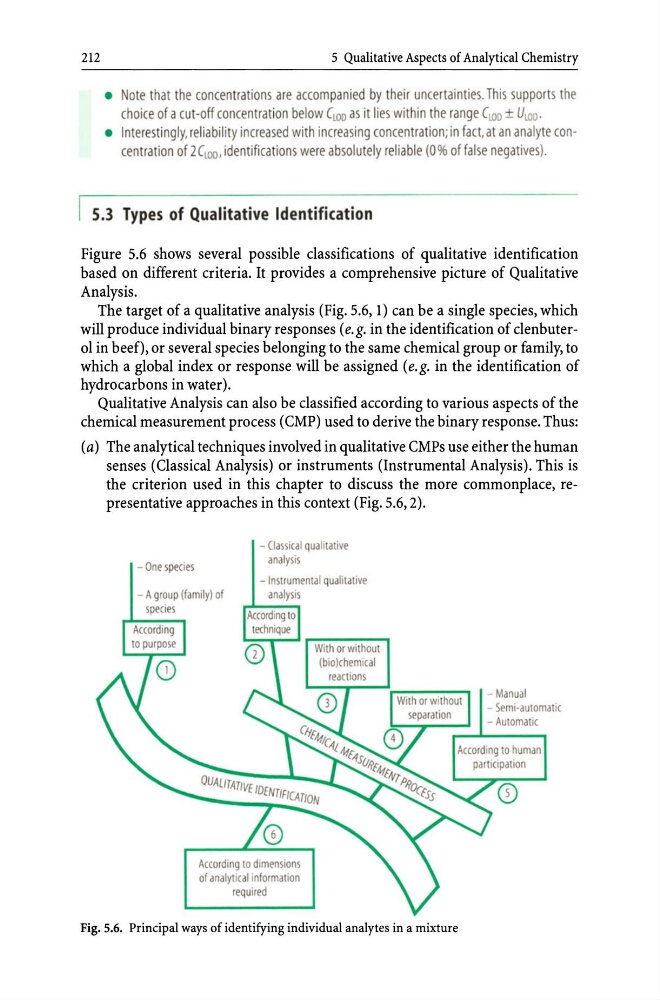
Figure 5.6 shows several possible classifications of qualitative identification
based on different criteria. It provides a comprehensive picture of Qualitative
Analysis.
The target of a qualitative analysis (Fig. 5.6, 1) can be a single species, which
will produce individual binary responses (e.g. in the identification of clenbuter01 in beef), or several species belonging to the same chemical group or family, to
which a global index or response will be assigned (e.g. in the identification of
hydrocarbons in water).
Qualitative Analysis can also be classified according to various aspects of the
chemical measurement process (CMP) used to derive the binary response. Thus:
(a) The analytical techniques involved in qualitative CMPs use either the human
senses (Classical Analysis) or instruments (Instrumental Analysis). This is
the criterion used in this chapter to discuss the more commonplace, representative approaches in this context (Fig. 5.6, 2).
- One species
- A group (family) of
- Classical qualitative
analysis
- Instrumental qualitative
analysis
With or without
(bio)chemical
Fig. 5.6. Principal ways of identifying individual analytes in a mixture
- Manual
- Semi-automatic
- Automatic
5 Qualitative Aspects of Analytical Chemistry
• Note that the concentrations are accompanied by their uncertainties. This supports the
choice of a cut-off concentration below CLOD as it lies within the range CLOD ± ULOQ .
• Interestingly, reliability increased with increasing concentration; in fact, at an analyte concentration of 2 CLOD, identifications were absolutely reliable (0 % of false negatives).
5.3 Types of Qualitative Identification
Figure 5.6 shows several possible classifications of qualitative identification
based on different criteria. It provides a comprehensive picture of Qualitative
Analysis.
The target of a qualitative analysis (Fig. 5.6, 1) can be a single species, which
will produce individual binary responses (e.g. in the identification of clenbuter01 in beef), or several species belonging to the same chemical group or family, to
which a global index or response will be assigned (e.g. in the identification of
hydrocarbons in water).
Qualitative Analysis can also be classified according to various aspects of the
chemical measurement process (CMP) used to derive the binary response. Thus:
(a) The analytical techniques involved in qualitative CMPs use either the human
senses (Classical Analysis) or instruments (Instrumental Analysis). This is
the criterion used in this chapter to discuss the more commonplace, representative approaches in this context (Fig. 5.6, 2).
- One species
- A group (family) of
- Classical qualitative
analysis
- Instrumental qualitative
analysis
With or without
(bio)chemical
Fig. 5.6. Principal ways of identifying individual analytes in a mixture
- Manual
- Semi-automatic
- Automatic