

210
5 Qualitative Aspects of Analytical Chemistry
purchasing and maintenance costs. Such is the case with immunoassay reagents
and sophisticated instruments (e.g. those used in chromatography-mass
spectrometry combinations).
Robustness. The reliability of a binary response produced by a CMP occasionally (e. g. when using biochemical or biological tools) depends strongly on
the stability of the reagents and on small changes in the operating conditions.
Developing robust CMPs of high sensitivity and selectivity is one current challenge of analytical chemical R&D work.
The hierarchical foundation, contradictory and complementary relationships
discussed in Sect. 2.7 are quite applicable in this context.
I 5.2.4 Errors: False Positives and False Negatives
The definition of the analytical property "reliability" in relation to the binary
response contains an implicit statement of the errors made in Qualitative Analysis: the relative proportion (as a fraction of unity or percentage) of wrong
YES/NO answers (i.e. of false positives and negatives that are obtained in subjecting n aliquots of the same sample to the same analytical process in order to
produce qualitative analytical information).
As shown in Fig. 5.3, the reliability of the binary response increases with
increasing concentration or amount of the target analyte (CA ). The proportion
of errors will be greater in the vicinity of the limit of detection (Cwo), consistent
with the integration of the properties accuracy and precision. The notion of
error usually employed in this context encompasses both systematic (determinate) and random (indeterminate) errors; however, the latter will obviously
predominate when the analyte concentration is near the limit of detection.
As noted earlier, the errors contained in qualitative information are specifically called "false positives" and "false negatives", which, based on statistical
principles, correspond to errors of the first kind (a, resulting from rejection of a
true hypothesis) and errors of the second kind (f3, made in holding a false hypothesis as true), respectively.
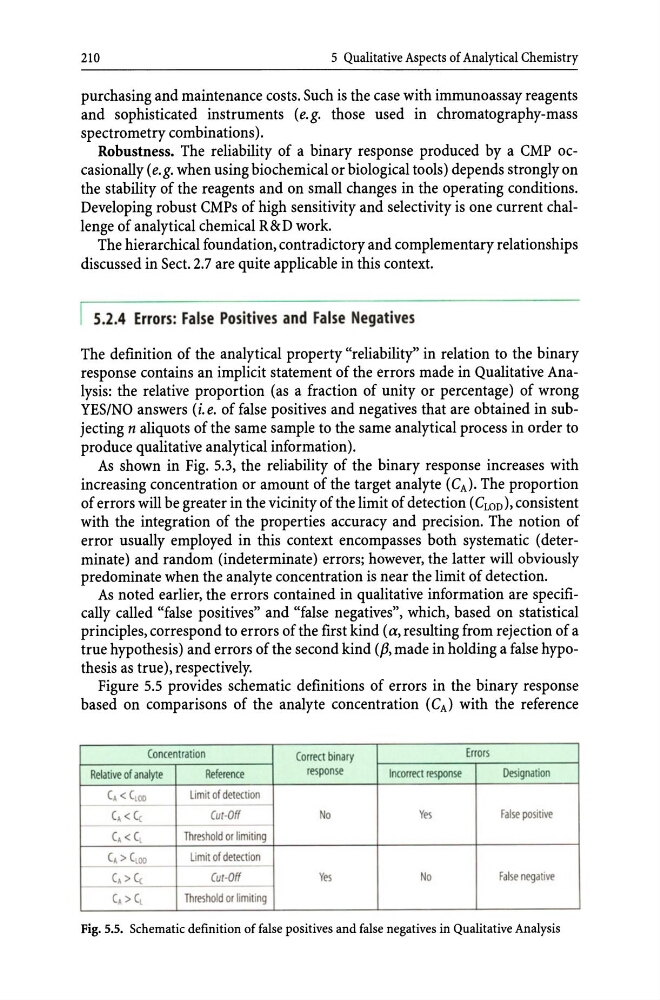
Figure 5.5 provides schematic definitions of errors in the binary response
based on comparisons of the analyte concentration (CA ) with the reference
Concentration
Corre< t bi na ry
Errors
Relative of a nalyte
Reference
response
Incorrect response
Designation
CA < ClOil
Limit of dete
CUI-Of(
No
Yes
False positive
CA < C,
Threshold or limiting
CA > CLOO
Limit of detection
CA> C(
CUI-Off
Yes
No
False negative
CA> Cl
Threshold or limiting
Fig. 5.5. Schematic definition of false positives and false negatives in Qualitative Analysis
5 Qualitative Aspects of Analytical Chemistry
purchasing and maintenance costs. Such is the case with immunoassay reagents
and sophisticated instruments (e.g. those used in chromatography-mass
spectrometry combinations).
Robustness. The reliability of a binary response produced by a CMP occasionally (e. g. when using biochemical or biological tools) depends strongly on
the stability of the reagents and on small changes in the operating conditions.
Developing robust CMPs of high sensitivity and selectivity is one current challenge of analytical chemical R&D work.
The hierarchical foundation, contradictory and complementary relationships
discussed in Sect. 2.7 are quite applicable in this context.
I 5.2.4 Errors: False Positives and False Negatives
The definition of the analytical property "reliability" in relation to the binary
response contains an implicit statement of the errors made in Qualitative Analysis: the relative proportion (as a fraction of unity or percentage) of wrong
YES/NO answers (i.e. of false positives and negatives that are obtained in subjecting n aliquots of the same sample to the same analytical process in order to
produce qualitative analytical information).
As shown in Fig. 5.3, the reliability of the binary response increases with
increasing concentration or amount of the target analyte (CA ). The proportion
of errors will be greater in the vicinity of the limit of detection (Cwo), consistent
with the integration of the properties accuracy and precision. The notion of
error usually employed in this context encompasses both systematic (determinate) and random (indeterminate) errors; however, the latter will obviously
predominate when the analyte concentration is near the limit of detection.
As noted earlier, the errors contained in qualitative information are specifically called "false positives" and "false negatives", which, based on statistical
principles, correspond to errors of the first kind (a, resulting from rejection of a
true hypothesis) and errors of the second kind (f3, made in holding a false hypothesis as true), respectively.
Figure 5.5 provides schematic definitions of errors in the binary response
based on comparisons of the analyte concentration (CA ) with the reference
Concentration
Corre< t bi na ry
Errors
Relative of a nalyte
Reference
response
Incorrect response
Designation
CA < ClOil
Limit of dete
CUI-Of(
No
Yes
False positive
CA < C,
Threshold or limiting
CA > CLOO
Limit of detection
CA> C(
CUI-Off
Yes
No
False negative
CA> Cl
Threshold or limiting
Fig. 5.5. Schematic definition of false positives and false negatives in Qualitative Analysis