

4.3 Preliminary Operations
155
BULK SAMPLE
Homogemzauon
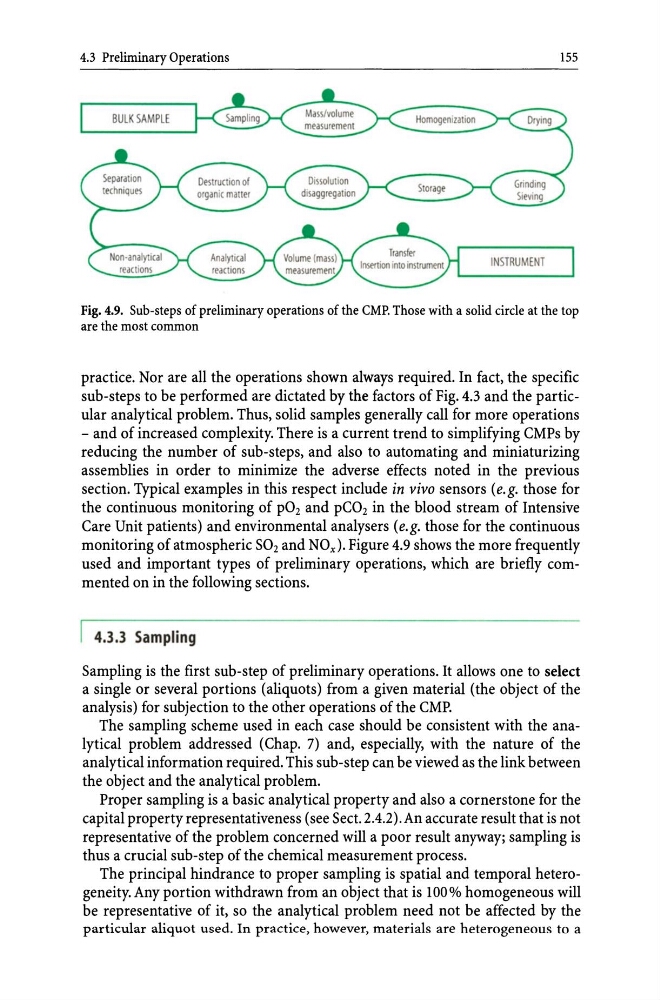
Fig. 4.9. Sub-steps of preliminary operations of the CMP. Those with a solid circle at the top
are the most common
practice. Nor are all the operations shown always required. In fact, the specific
sub-steps to be performed are dictated by the factors of Fig. 4.3 and the particular analytical problem. Thus, solid samples generally call for more operations
- and of increased complexity. There is a current trend to simplifying CMPs by
reducing the number of sub-steps, and also to automating and miniaturizing
assemblies in order to minimize the adverse effects noted in the previous
section. Typical examples in this respect include in vivo sensors (e. g. those for
the continuous monitoring of p02 and pC02 in the blood stream of Intensive
Care Unit patients) and environmental analysers (e.g. those for the continuous
monitoring of atmospheric S02 and NOx )' Figure 4.9 shows the more frequently
used and important types of preliminary operations, which are briefly commented on in the following sections.
I 4.3.3 Sampling
Sampling is the first sub-step of preliminary operations. It allows one to select
a single or several portions (aliquots) from a given material (the object of the
analysis) for subjection to the other operations of the CMP.
The sampling scheme used in each case should be consistent with the analytical problem addressed (Chap. 7) and, especially, with the nature of the
analytical information required. This sub-step can be viewed as the link between
the object and the analytical problem.
Proper sampling is a basic analytical property and also a cornerstone for the
capital property representativeness (see Sect. 2.4.2). An accurate result that is not
representative of the problem concerned will a poor result anyway; sampling is
thus a crucial sub-step of the chemical measurement process.
The principal hindrance to proper sampling is spatial and temporal heterogeneity. Any portion withdrawn from an object that is 100 % homogeneous will
be representative of it, so the analytical problem need not be affected by the
particular aliquot used. In practice, however, materials are heterogeneous to a
155
BULK SAMPLE
Homogemzauon
Fig. 4.9. Sub-steps of preliminary operations of the CMP. Those with a solid circle at the top
are the most common
practice. Nor are all the operations shown always required. In fact, the specific
sub-steps to be performed are dictated by the factors of Fig. 4.3 and the particular analytical problem. Thus, solid samples generally call for more operations
- and of increased complexity. There is a current trend to simplifying CMPs by
reducing the number of sub-steps, and also to automating and miniaturizing
assemblies in order to minimize the adverse effects noted in the previous
section. Typical examples in this respect include in vivo sensors (e. g. those for
the continuous monitoring of p02 and pC02 in the blood stream of Intensive
Care Unit patients) and environmental analysers (e.g. those for the continuous
monitoring of atmospheric S02 and NOx )' Figure 4.9 shows the more frequently
used and important types of preliminary operations, which are briefly commented on in the following sections.
I 4.3.3 Sampling
Sampling is the first sub-step of preliminary operations. It allows one to select
a single or several portions (aliquots) from a given material (the object of the
analysis) for subjection to the other operations of the CMP.
The sampling scheme used in each case should be consistent with the analytical problem addressed (Chap. 7) and, especially, with the nature of the
analytical information required. This sub-step can be viewed as the link between
the object and the analytical problem.
Proper sampling is a basic analytical property and also a cornerstone for the
capital property representativeness (see Sect. 2.4.2). An accurate result that is not
representative of the problem concerned will a poor result anyway; sampling is
thus a crucial sub-step of the chemical measurement process.
The principal hindrance to proper sampling is spatial and temporal heterogeneity. Any portion withdrawn from an object that is 100 % homogeneous will
be representative of it, so the analytical problem need not be affected by the
particular aliquot used. In practice, however, materials are heterogeneous to a