

150
4 The Measurement Process in Chemistry
This section provides a general picture of the first step of the eMP. Following
a brief description of its general features, it discusses its major sub-steps
(sampling and sample treatment).
I 4.3.1 General Features
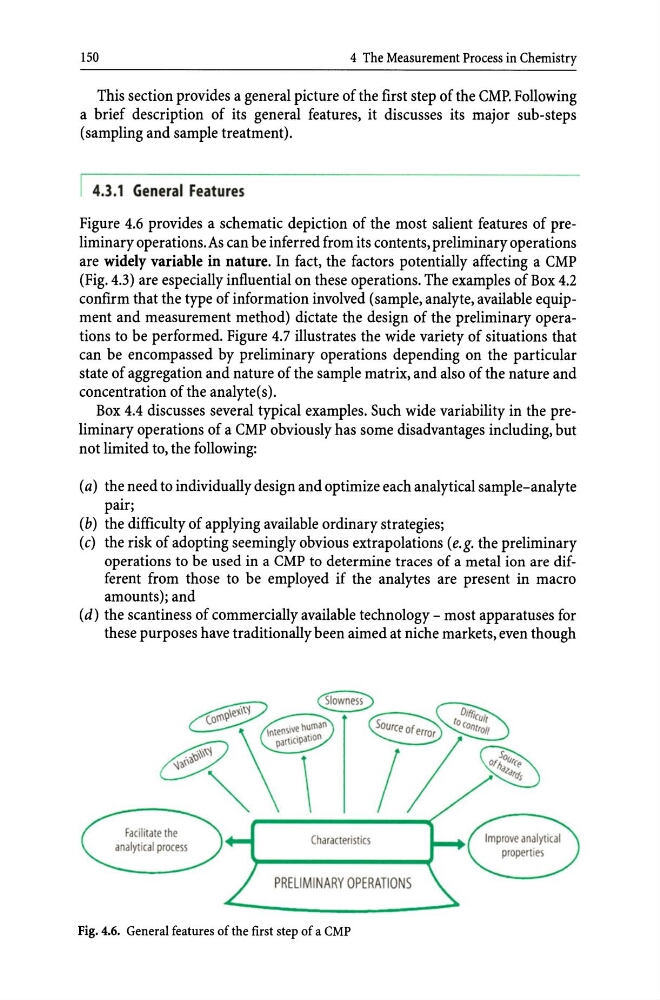
Figure 4.6 provides a schematic depiction of the most salient features of preliminary operations. As can be inferred from its contents, preliminary operations
are widely variable in nature. In fact, the factors potentially affecting a eMP
(Fig. 4.3) are especially influential on these operations. The examples of Box 4.2
confirm that the type of information involved (sample, analyte, available equipment and measurement method) dictate the design of the preliminary operations to be performed. Figure 4.7 illustrates the wide variety of situations that
can be encompassed by preliminary operations depending on the particular
state of aggregation and nature of the sample matrix, and also of the nature and
concentration of the analyte(s).
Box 4.4 discusses several typical examples. Such wide variability in the preliminary operations of a eMP obviously has some disadvantages including, but
not limited to, the following:
(a) the need to individually design and optimize each analytical sample-analyte
pair;
(b) the difficulty of applying available ordinary strategies;
(c) the risk of adopting seemingly obvious extrapolations (e.g. the preliminary
operations to be used in a eMP to determine traces of a metal ion are different from those to be employed if the analytes are present in macro
amounts); and
(d) the scantiness of commercially available technology - most apparatuses for
these purposes have traditionally been aimed at niche markets, even though
Characteristics
PRELIMINARY OPERATIONS
Fig. 4.6. General features of the first step of a CMP
4 The Measurement Process in Chemistry
This section provides a general picture of the first step of the eMP. Following
a brief description of its general features, it discusses its major sub-steps
(sampling and sample treatment).
I 4.3.1 General Features
Figure 4.6 provides a schematic depiction of the most salient features of preliminary operations. As can be inferred from its contents, preliminary operations
are widely variable in nature. In fact, the factors potentially affecting a eMP
(Fig. 4.3) are especially influential on these operations. The examples of Box 4.2
confirm that the type of information involved (sample, analyte, available equipment and measurement method) dictate the design of the preliminary operations to be performed. Figure 4.7 illustrates the wide variety of situations that
can be encompassed by preliminary operations depending on the particular
state of aggregation and nature of the sample matrix, and also of the nature and
concentration of the analyte(s).
Box 4.4 discusses several typical examples. Such wide variability in the preliminary operations of a eMP obviously has some disadvantages including, but
not limited to, the following:
(a) the need to individually design and optimize each analytical sample-analyte
pair;
(b) the difficulty of applying available ordinary strategies;
(c) the risk of adopting seemingly obvious extrapolations (e.g. the preliminary
operations to be used in a eMP to determine traces of a metal ion are different from those to be employed if the analytes are present in macro
amounts); and
(d) the scantiness of commercially available technology - most apparatuses for
these purposes have traditionally been aimed at niche markets, even though
Characteristics
PRELIMINARY OPERATIONS
Fig. 4.6. General features of the first step of a CMP